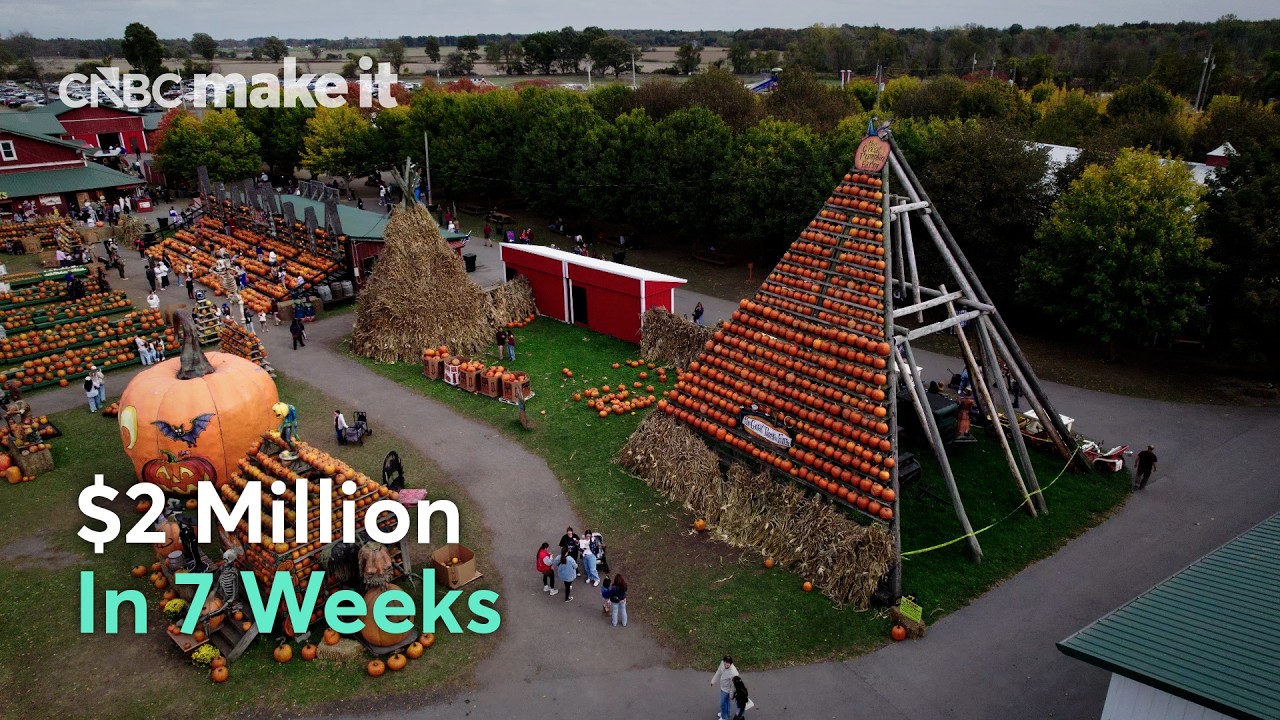
The Great Pumpkin Farm is open for barely seven weeks a year, runs a $20 weekend gate, and in 2025 it pulled in over $2 million in gross revenue before Halloween even arrived. The math only makes sense once you understand the man behind it: a lifelong antique and auction dealer who walked onto a muddy competitor’s lot decades ago and decided he could do it better. He had never grown pumpkins commercially. He did not let that stop him.
A cow farm, a crazy idea, and a world record in year one
The founder bought the property around 1990. It was a cow farm then, just old barns and open land in western New York. He opened The Great Pumpkin Farm in 1996, and from the beginning he was thinking about attention, not agriculture. Before the first season, he called the organizer of the World Pumpkin Weigh-Off and asked him to move the competition to the new site. Then he bought an insurance policy that would pay out $50,000 to anyone who brought in a pumpkin weighing 1,000 pounds. At that point in history, the heaviest pumpkin ever grown had topped out at roughly 800 pounds. The insurer took his money and wrote the policy.
The first year a competitor arrived with a 1,061-pound pumpkin and walked away with $50,000. The story did not stay local. It landed in magazines and newspapers internationally, and the farm had its name in front of an audience that no ad budget could have bought.
He put it plainly looking back: ‘I could do this better than this.’
A seven-week sprint built on 300 acres and three generations
The farm runs from mid-September through October 31st. Weekdays are free to enter. Weekends cost $20 a person. During that window, well over 100,000 people pass through, a number that has grown nearly every year. The operation employs around 100 people during the season, with another 20 to 25 full-time workers running the adjacent businesses year-round, including 700 storage units and the original antique and auction operation that funds the whole ecosystem.
The pumpkin supply is a hybrid model. The farm grows some of its own and contracts with local farmers to handle the volume, stocking everything from minis and gourds to jumbos. The trees lining the property were planted about 25 years ago, which means they were saplings when the first World Pumpkin Weigh-Off crowd showed up.
His son Ben has worked alongside him since childhood. Two of Ben’s sons now work on the farm as well. The founder is candid that without his son’s involvement, he likely would not still be running it. A potential ice cream parlor and additional event buildings are already in conversation for future seasons. Of the roughly 300 acres owned, only about 75 are currently in use.
A grilled cheese sandwich eaten maybe every day
Mid-tour, he stopped at the farm’s food stand, accepted a grilled cheese sandwich from a colleague named Joe, and offered the guests tater tots with it. Asked how often he indulges, he said probably once a week or so, then immediately revised: ‘Or maybe it’s every day or so.’
The most rewarding part of the season, he said, is not the revenue figure. It is watching small children sprint between the pumpkin displays, laughing, pointing, barely able to decide what to look at next. The farm closes hard on October 31st, and the crew spends roughly a month cleaning and storing everything before the antique and auction calendar takes over until September comes around again.
Somewhere on the property, a pumpkin house sits slightly short of its full seasonal display. He noted it on a walkthrough: ‘We could use some more pumpkins up here on this pumpkin house.’ Seven weeks, and there is still more to fill.
 Wake up to Only Happy News!