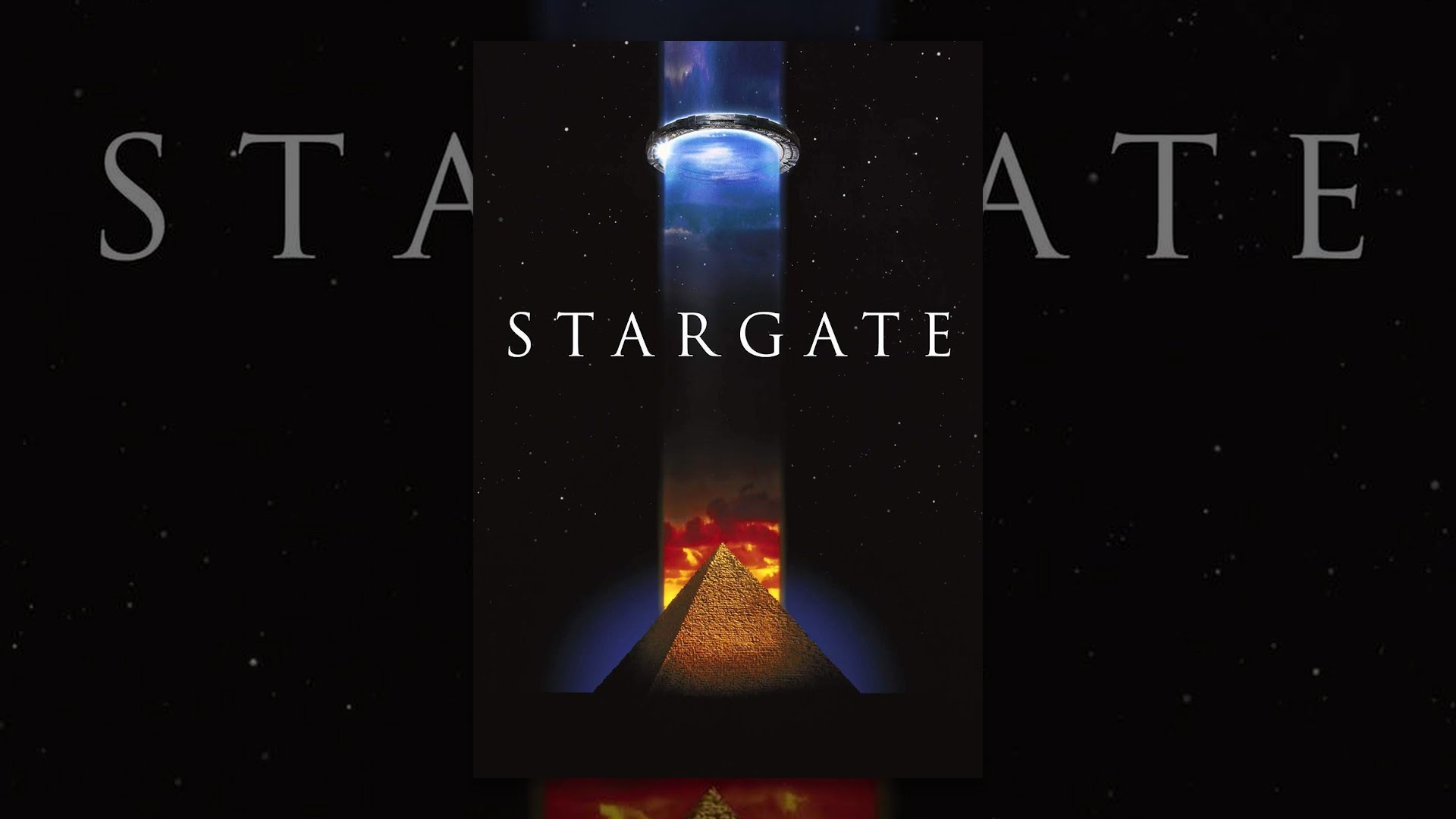
Dr. Daniel Jackson had just been evicted from his apartment when a woman in a black car pulled up outside a rain-soaked academic lecture hall and changed everything. Jackson, a discredited Egyptologist who had spent his career arguing that the fourth dynasty pharaohs did not build the great pyramid, owned nothing but two bags and a theory the academic world had laughed out of the room. What happens when the one person everyone dismissed turns out to be the only person who can read the most consequential inscription in human history matters not just to Jackson, but to every living soul on two planets.
The cover stone had been sitting in a converted nuclear missile silo since 1928, when Catherine Langford’s father pulled it from the Giza Plateau. Every expert who had attempted the translation had used the standard Budge reference texts, and every translation had been wrong. Jackson spotted the error inside a minute. The outer track was not a text to be read as language. It was a star map, six constellations arranged to fix a point in three-dimensional space, with a seventh symbol just below the cartouche marking the point of origin. The inner inscription did not say ‘door to heaven.’ It said ‘Stargate.’
What the device in the silo actually turned out to be
The Stargate itself, unearthed beneath the cover stones, was constructed from a mineral unlike anything found on Earth. When Jackson’s seventh symbol was programmed into the dialing computer, the seventh chevron locked, and a probe guided itself through the event horizon and transmitted back atmospheric readings from a point on the far side of the known universe: barometric pressure, temperature, and oxygen all compatible with human survival. A gate identical in function, but carrying different symbols, waited on the other side.
The military team that stepped through, led by Colonel Jack O’Neil, arrived inside a structure that was a precise replica of the great pyramid of Giza, built from the same mineral the Stargate was made of. The people living around it spoke a dialect of ancient Egyptian that had evolved in complete isolation for more than a thousand years, and they had preserved, in a hidden archive, the account of how they had come to be there. A dying alien intelligence, searching the galaxies for a way to extend its own life, had found Earth, possessed a human host, and used the Stargate to transport thousands of people across the universe as a labor force. Writing had been outlawed by Ra to prevent the population from remembering the truth. As Jackson put it after reading the inscriptions: ‘He didn’t want the people to remember.’
The seventh symbol and the 45 seconds that followed
The coordinates for the return journey home had been carved into a tablet the local people had hidden for generations, waiting for the gate on Earth to be reopened. The seventh symbol, the point of origin, was the one detail that had worn away. Jackson found it not in the inscription but in the sky above the planet: the configuration of its two moons, which matched the symbol for the world itself.
With a military bomb already armed and 45 seconds on the clock, the team had no path to disarmament. The solution that followed sent the device somewhere it could do no harm to either world, and the cheering that broke out across the pyramid floor needed no translation.
The lighter left behind
A boy named Skaara had held a small lighter through the final hours, the one piece of Earth technology that had crossed the threshold with the team. He kept it.
At the gate’s edge, before the event horizon sealed shut, Jackson handed Catherine’s amulet back to O’Neil with a message: ‘Tell Catherine this brought me luck.’ Then the wormhole closed, and the desert went quiet.