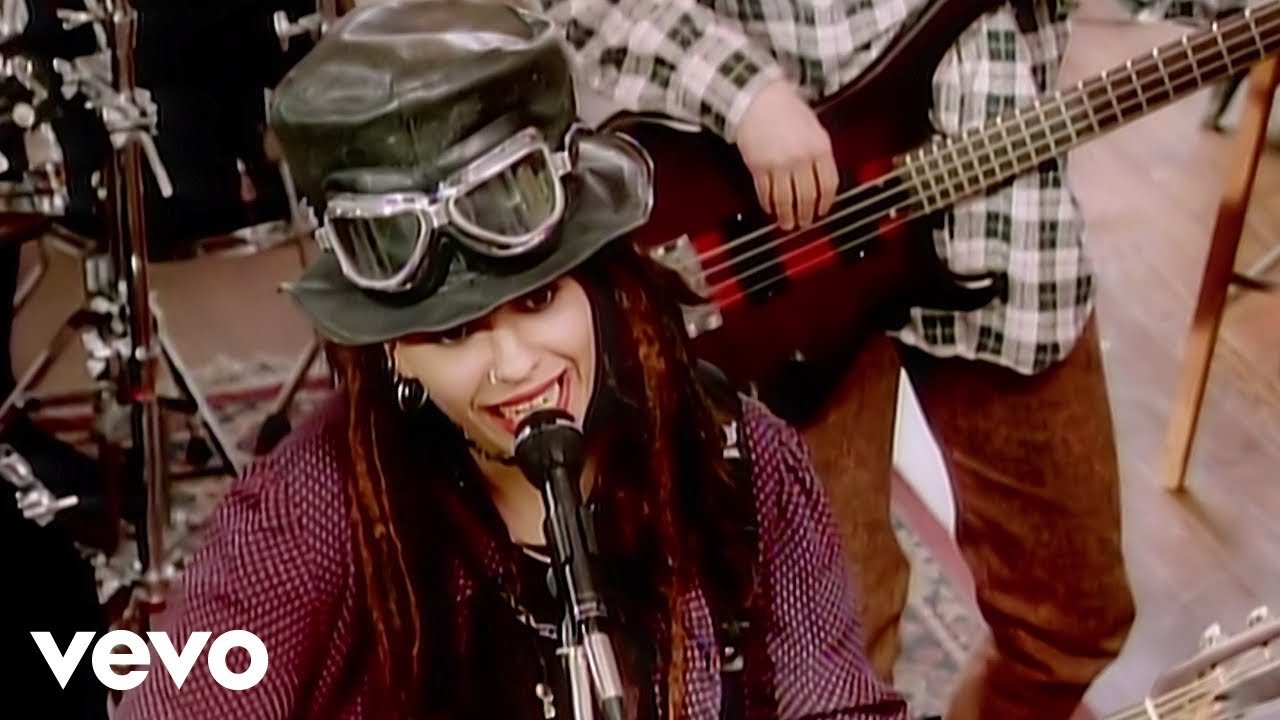
4 Non Blondes open with a line that lands like a confession: 25 years old and still trying to climb that great big hill of hope toward a destination that keeps moving. That kind of honest, unresolved longing is what made ‘What’s Up’ connect with listeners the moment it arrived, and what keeps it connecting now. The song doesn’t promise arrival. It promises the effort, the prayer, the scream from the top of the lungs when effort feels like all you have left.
The feeling that woke up a generation
The song builds its emotional case slowly and deliberately. It starts in a private place, crying in bed just to get it all out, the kind of release that anyone who has ever felt a little peculiar at an ordinary hour recognizes instantly. There is no dramatizing here, just an accurate account of what it feels like to carry something unnamed inside you and not quite know where to put it.
Then comes the turn. The narrator wakes, steps outside, takes a deep breath, and screams. Not in despair, but in demand. ‘What’s going on’ is not a question that expects a calm answer. It is the sound of someone who has tried and prayed and kept showing up, refusing to go quiet. The chorus is practically built from pure lung capacity, and that physical openness is the point.
Why the prayer for revolution keeps resonating
The song’s second emotional current runs deeper than the hook. Between choruses, the narrator admits to trying in an institution and praying every single day for a revolution. That pairing, effort inside a system alongside a longing to change the system entirely, captures something that tidy pop anthems tend to smooth over. ‘What’s Up’ leaves the tension intact. It does not resolve into triumph. It resolves into persistence.
Lead singer Linda Perry delivered the vocal with a rawness that was, by her own design, closer to a wail than a performance. The band chose to keep it that way, and that choice is why the song has aged without becoming a period piece. Desperation performed technically sounds like an era. Desperation performed honestly sounds like now.
The lyric circles back at the close exactly where it started: 25 years, the same hill, still climbing. No summit reached. No lesson wrapped up with a bow. Just the hill and the person on it, still moving.
The hill that never really goes away
Somewhere in that final return to the opening image, the great big hill of hope standing between the narrator and a destination she cannot quite name, the song does something unusual. It makes unfinished feel like enough.
Twenty-five years into a life still searching for its destination, and the answer to ‘what’s going on’ remains a scream, a prayer, and another morning stepping outside to try again.
 Wake up to Only Happy News!