[See the Full Article about Brett McFarland’s Story on Peter Santenello’s Documentary]
Somewhere between a father’s love for his child and a fisherman watching the last of his catch get replaced by a fish farm, a song found its center. The lyric arrives plainly: ‘I love my child, I’m a true believer, but I wonder what kind of world we’re going to leave.’ That one line does what the best folk writing has always done, it converts a political argument into a human one, and the room responds with something close to held breath.
The world the song is watching disappear
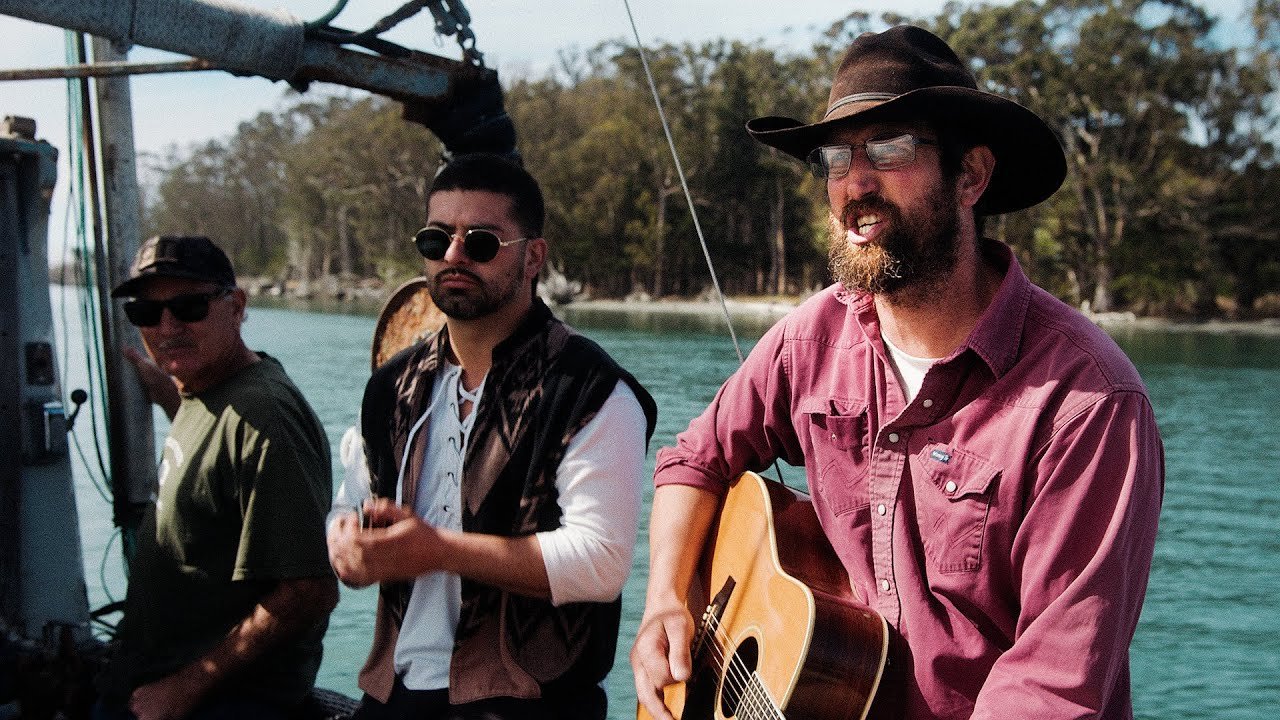
The track moves through a series of losses that feel deliberately ordinary rather than dramatic. The gold gets dug. The trees get cut. Now, the lyric warns, whoever did those things is coming back for the ocean breeze. The song names the biggest fish farm on the whole West Coast cooking GMO salmon while the fishermen sell their boats, placing an abstract economic shift inside a single transaction a person can picture.
Then it turns inward. ‘You and me are the GDP, buying debt in the land of the free.’ The verse describes ordinary people getting priced out across the country, moms and dads renting because they cannot afford to buy a house, living inside what the lyric calls a pyramid scheme on a hill of a lie. It does not offer a solution. It does not assign clean blame. It just reports what it sees.
The chorus keeps returning to the same honest admission: ‘I don’t know what’s right or wrong, but I’m going to cry when the country’s gone.’ That refusal to pretend certainty is the thing that makes the song land differently than a protest anthem. It is not a rally. It is a worry spoken aloud.
Why the uncertainty is the point
The song’s writer put it as plainly as anything else in the lyrics: ‘I used to think I knew, but now I ain’t too clear how we ever going to make it out of here.’ That line is the emotional engine of the whole piece, and it reads like something a person actually said to themselves at a kitchen table rather than something written to score points.
The city man arrives with a big scheme and a slick pitch, the song notes, and ‘we make the problems only we can fix.’ It is a lyric that implicates everyone, the listener included, without letting the abstraction swallow the human cost.
The fishermen who sold their boats
The detail that stays longest is the fishermen selling their boats beside the largest salmon operation on the West Coast. No number is given. No policy is named. Just a boat changing hands and a livelihood going quiet.
The chorus repeats a fourth time at the close, the phrase ‘when the country is gone’ cycling three times before the music stops. Not resolved. Not answered. Just said again, the way a real worry tends to work.
The song began with a father wondering what world he was leaving his child. It ends on the same unresolved question, which is the only honest place a song like this can stop.
 Wake up to Only Happy News!