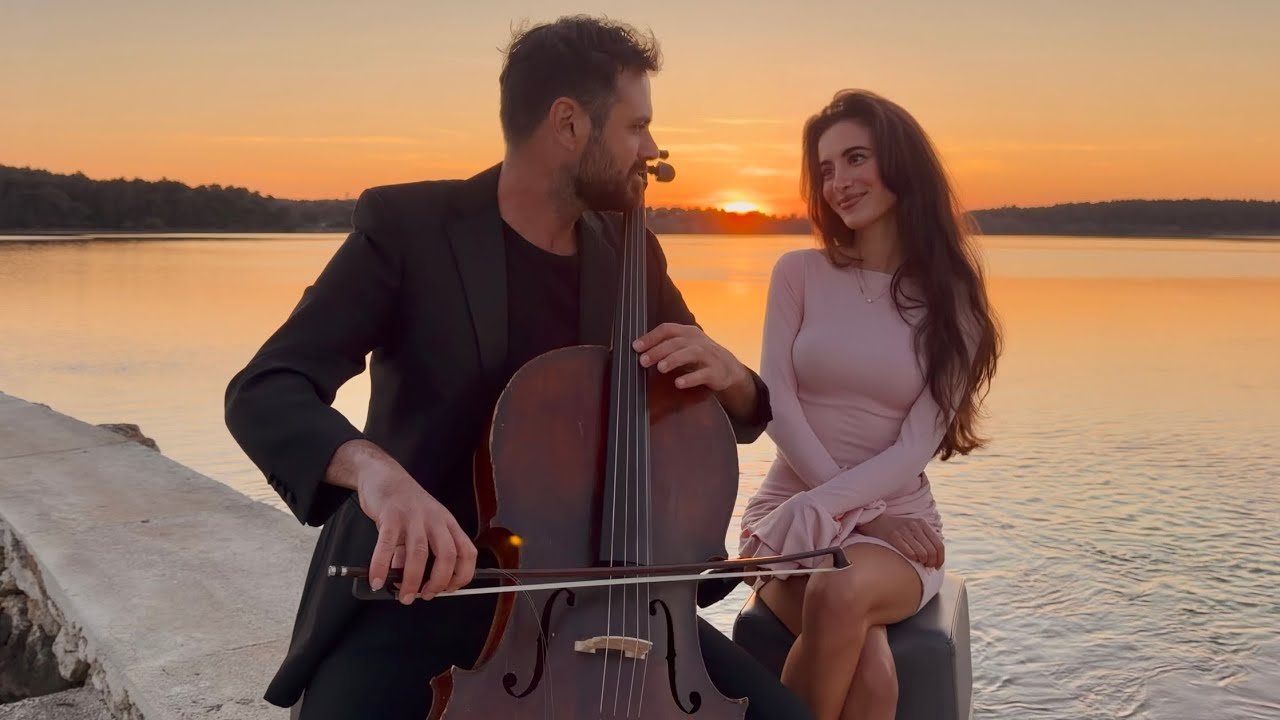
Benedetta Caretta opens with a single phrase, ‘Oh my love, my darling,’ and the room holds its breath. It is the kind of opening that reminds a listener how much weight a human voice can carry before a single instrument joins in. The Righteous Brothers wrote a standard; what Caretta and HAUSER do here is something closer to a conversation.
The song itself has survived decades precisely because its longing is universal. Anyone who has waited for someone, anyone who has counted the distance between themselves and another person, finds something personal inside those lyrics. That is the promise the performance makes from its first note.
Two voices, one current
Caretta takes the melody with an immediacy that never tips into melodrama. Her phrasing on ‘I’ve hungered for your touch, a long lonely time’ stays grounded, the emotion in the vowels rather than the volume. HAUSER’s contribution threads underneath and alongside, the cello registering the same ache the lyrics describe without doubling what the voice is already doing. The pairing works because neither performer is trying to outrun the other.
By the time the performance reaches ‘Lonely rivers flow to the sea, to the sea,’ the arrangement has built a quiet momentum. The lyric ‘Wait for me, wait for me’ lands not as a plea performed for an audience but as something said between two people who already understand the cost of distance. Caretta noted exactly what the song demands: ‘I need your love.’ The repetition is the point. She does not ornament it. She delivers it straight.
The moment the room closes in
The final movement pulls everything tight. ‘I’ll be coming home, wait for me’ resolves the tension that has been building since the opening bars, not with a showstopper high note but with a steadiness that feels earned. The restraint is the craft. A different pairing might have pushed for the climax; these two let the melody do what it has always done, which is arrive exactly when the listener is ready for it.
The cello sustains under Caretta’s last phrases, the two instruments, voice and strings, holding the same note a beat longer than expected. It is the kind of small decision that separates a cover from an interpretation.
What the final note left behind
The word ‘home’ hangs in the air after Caretta sings it, the cello still resonant underneath, neither sound fully released.
Somewhere between the opening ‘Oh my love’ and that final held note, the performance stopped being a familiar song and became its own argument for why the melody was unchained to begin with: because longing, sung honestly enough, belongs to whoever is listening.
 Wake up to Only Happy News!