Ann Wilson was standing in the wings of the Kennedy Center, two skull rings pressed together with her sister Nancy, when the gravity of what they were about to do hit her all at once. It was Christmas in Washington, they had met the president hours earlier, and now they were seconds away from performing ‘Stairway to Heaven’ in front of the men who wrote it. What unfolded became one of the most shared musical moments in recent memory, a performance so emotionally charged that it sent Led Zeppelin themselves to tears in the audience. That reaction, it turns out, was more layered than most people realized.
The night that felt like a pinball machine
The 24 hours leading up to the performance were punishing by any standard. Heart had played a full show in Florida the night before, then leased a private jet to make the Kennedy Center rehearsal in Washington, flew back down for the Florida concert, flew back to Washington overnight, attended a White House reception, and returned to the venue to prepare. ‘It was all so machine-like and very dreamlike,’ Ann recalled, ‘because here you are, it’s Christmas time, it’s Washington DC, it’s beautiful, and we’re meeting the president and Mrs. Obama.’ By the time the sisters were standing backstage, the accumulated exhaustion and awe had compressed into a single moment. They looked at each other and, in Ann’s words, both just went ‘jeez.’ They bumped their skull rings together as a kind of talisman for power, then used an old meditation technique she described as reaching out to gather all the pinballs in a spinning mind and gently bringing them back to center. Then they walked out.
The quiet focus that followed surprised even Ann herself. ‘It was a really quiet, timeless moment of actually doing the song,’ she said. ‘I felt really focused and pulled in and really in it.’ When it ended, that gathered calm dissolved instantly, and the emotions she had held together for 24 hours finally broke through.
Why Led Zeppelin’s tears were about more than the song
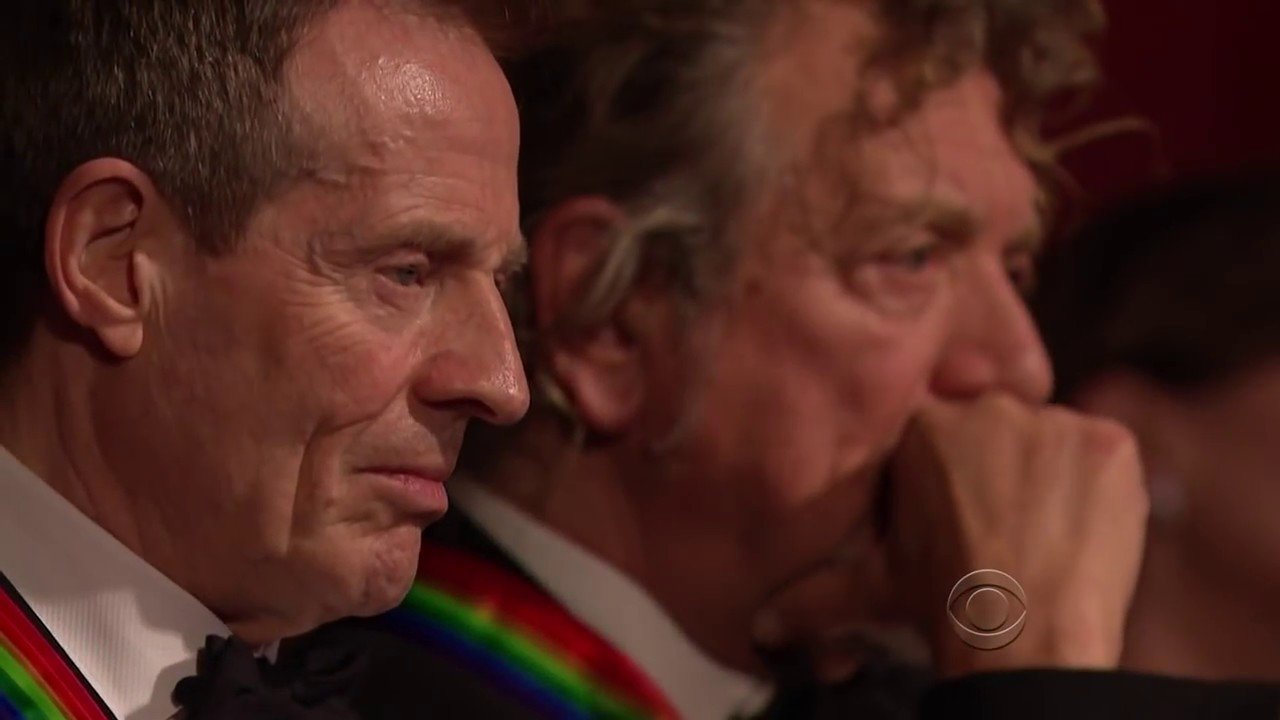
The image of Robert Plant, Jimmy Page, and John Paul Jones weeping in the Kennedy Center balcony circulated for years as proof that Heart’s performance had simply overwhelmed them. Ann offered a more specific reading of that moment. Jason Bonham, son of the band’s late drummer John Bonham, was behind the kit for the performance. ‘I don’t think it was only about that,’ she said. ‘I think it was a lot about their rock family and seeing the fruition and the beautiful echoing forward of the generations of their own rock family.’ The tears were grief and pride folded together, a son carrying the sound his father had made famous, given back to the men who built it.
Where Barracuda actually came from
The conversation moved to the stories behind Heart’s own catalog, and the origin of ‘Barracuda’ turned out to be equally specific and considerably less romantic. After a show, a man approached Ann and told her he was aroused by his fantasy that she and Nancy were in a relationship with each other. Her mother’s voice came to her immediately, warning her about exactly this kind of person in the music industry. ‘I felt they had attacked her honor and both our honors,’ Ann said. She went and wrote ‘Barracuda’ in that heat. ‘If I would have had a gun I might have reacted differently to the guy, but thank goodness I didn’t.’
Two skull rings, pressed together before the walk out
The skull rings stayed with her. Small, specific, unheroic, the kind of detail that disappears from the official version of a legendary night.
Somewhere in Washington that December, two women took a very deep breath, gathered their pinballs, and walked into the light.
 Wake up to Only Happy News!