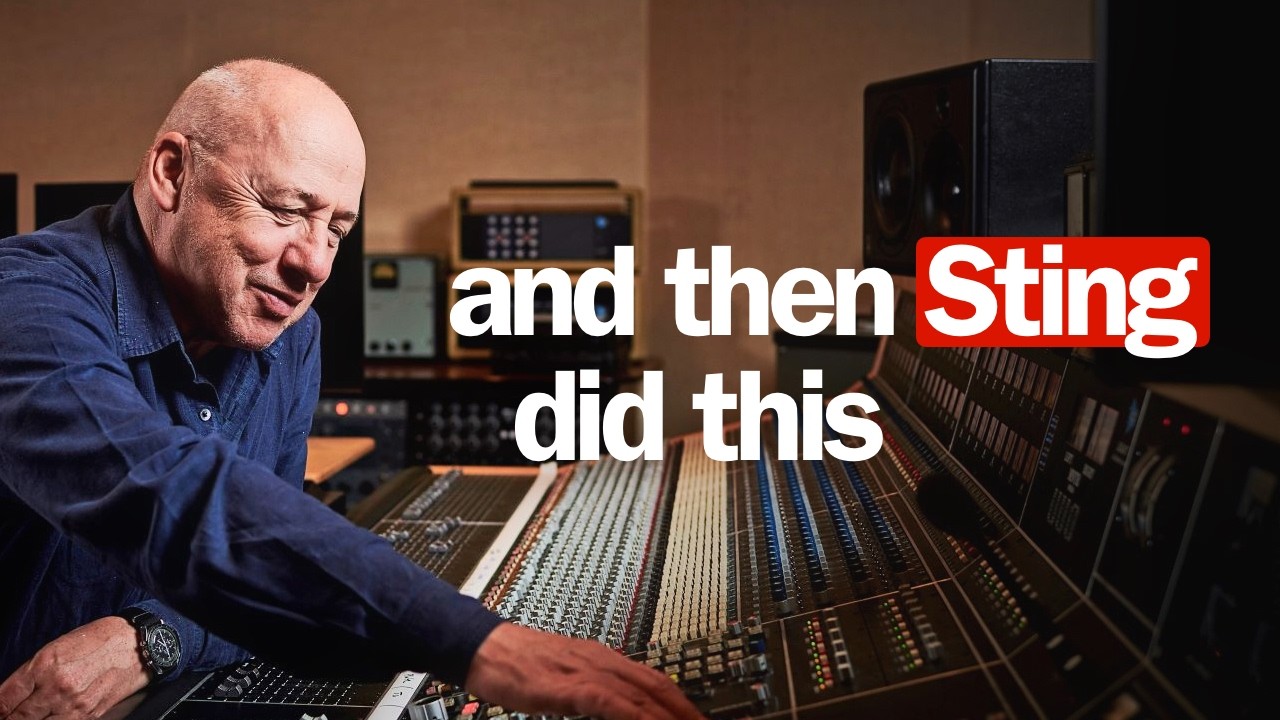
Mark Knopfler was standing in a kitchen appliance store in New York, surrounded by microwaves and a wall of televisions all tuned to MTV, when a hardware store worker somewhere near the back started ranting about rock musicians. The man had no idea he was talking in earshot of one of those very musicians. What he said in the next few minutes became the lyrical backbone of one of the most recognizable songs of the 1980s, built on a guitar riff that nobody has ever been able to recreate on purpose.
The two guys in the back of the store
Knopfler described the moment without hesitation: ‘I just thought it was so classic that I went and asked for a pen and paper and started writing the lines down.’ The worker’s complaints about MTV stars, the ‘that ain’t working’ and ‘that’s the way you do it’ lines, went straight onto the page almost verbatim. What made the concept sharper was the self-awareness behind it. Knopfler was himself one of those musicians making good money from the industry the worker was mocking, and he genuinely shared the man’s unease about music videos diluting something purer. Rather than write a lecture about MTV, he let two hardware store characters have the argument for him. In the finished song, Knopfler and Sting play those two men.
The guitar riff underneath that conversation arrived through its own strange path. Knopfler plays fingerstyle rather than with a pick, and the foundation of the ‘Money for Nothing’ riff is essentially a banjo roll applied to a heavily overdriven electric guitar. He was chasing the tone of ZZ Top guitarist Billy Gibbons. The album was recorded at Air Studios in Montserrat, a facility with limited space and little room for the ambient microphone setups that engineer Neil Dorman preferred. Everything had to be close-miked and heavily baffled. When it came time to record the guitar part, the microphone arrangement had been knocked out of position overnight. One mic was pointing at the floor, another was not quite on the speaker, a third had drifted elsewhere entirely. Knopfler moved to fix it. Dorman stopped him: ‘Don’t touch a thing, it’s perfect.’ The accidental configuration produced exactly the tone they had been searching for, and none of it was adjusted in mixing. Later, working in a different studio with identical equipment, the team tried to reproduce that sound and never could.
The visitor who happened to be on holiday
Knopfler already had the melodic hook for the chorus. He wanted to set the phrase ‘I Want My MTV’ to the melody of ‘Don’t Stand So Close to Me’ by The Police, having caught the band performing an MTV advertisement. As recording on Montserrat progressed, he mentioned out loud that he wished Sting were there to sing it. Someone in the room told him Sting was already on the island, on holiday. Knopfler recalled the exchange plainly: ‘I said oh great, I’d get him up here, because I can hear him singing on this thing.’ Sting came to the studio, the track was already in place, and he recorded the hook that turned a solo monologue into a genuine two-person conversation.
The addition came with a legal complication. Virgin Music, which held the publishing rights to ‘Don’t Stand So Close to Me,’ recognized Sting’s melody on the new recording. Despite Sting’s reluctance, they demanded he receive a co-writing credit and a share of the song’s royalties. It is the kind of outcome that follows an accident inside an accident.
The record, released on one of the first albums to reach CD format, became the first CD to sell over a million copies. Co-producer Neil Dorman was candid about his own expectations at the time: ‘I actually didn’t expect the record to do what it did. I knew the band was very popular but no one ever thought the album would turn out to be so huge.’
One microphone pointing at the floor
Somewhere in the Montserrat studio, that tilted microphone is still unaccounted for in the official record of how great guitar tones get made.
Back in the New York appliance store, the worker with the strong opinions about MTV never got a writing credit. His employer’s wall of televisions, all running the channel he was complaining about, supplied the stage. Knopfler borrowed a pen and paper and left with everything he needed.