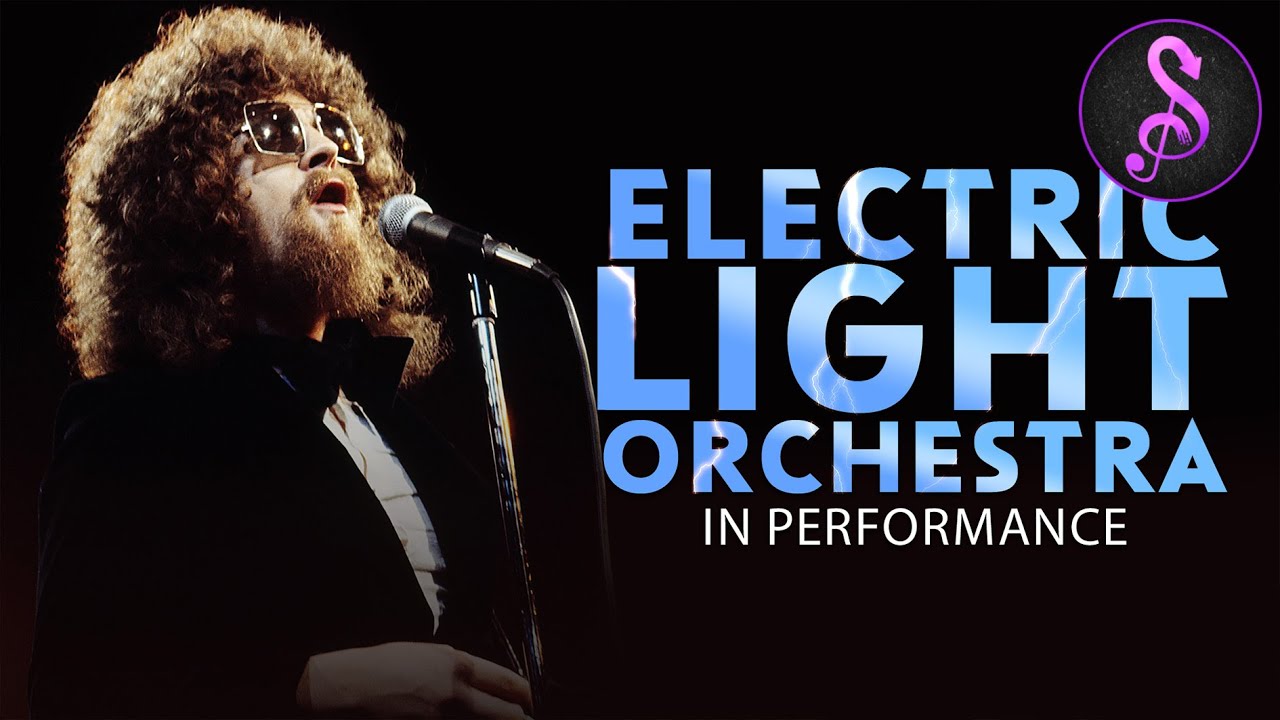
Roy Wood walked into a recording session with a cheap Chinese cello he had just bought, pressed record on a work-in-progress track, and started playing along. Jeff Lynne heard it back and said, essentially: why don’t we try that? Fifteen overdubs later, 10538 Overture existed, and so did the Electric Light Orchestra. What the two Birmingham songwriters were attempting had never been tried as a sustained project before: not strings bolted onto a rock track as a producer’s afterthought, not Deep Purple meeting an orchestra for one evening, but a band built from the inside out around cellos, violins, and French horns playing with the aggression of a lead guitar.
The move that was already becoming the Move
The Electric Light Orchestra grew directly out of the wreckage of The Move, a Birmingham pop-rock group that had ridden a string of hit singles through the late 1960s on the strength of Roy Wood’s songwriting. By the end of the decade, Wood and drummer Bev Bevan were the only original members left, and Wood was simultaneously being told to keep The Move’s golden-singles pipeline running while openly discussing a completely different project in the music press. Teenagers reading those stories and then watching him perform Move songs on Top of the Pops were, understandably, confused.
The crucial bridge between the two bands was a harmonic idea Wood had already been using. A blues sequence in the Move track ‘Wild Tiger Woman’ drops without warning into an E diminished chord, a move one analyst described as very much Roy Wood. Transfer that diminished chord to a string arrangement, and you can already hear ELO inside it. Producer Tony Visconti, who would later work with David Bowie, had also been arranging strings for The Move, which gave Wood a preview of what he might carry forward.
The founding concept, worked out between Wood and the recently joined Jeff Lynne, was to do what the Beatles had done on ‘I Am the Walrus’ not occasionally, but every single time, on every track, as the whole point of the band. Lynne later described the cello decision plainly: if you could blow it, pluck it, or bow it, Roy would play it.
Who was actually running this band
The first ELO album landed in 1972 with songwriting credits split almost evenly between Lynne and Wood, though the sonic identity was Wood’s almost entirely. He played the cellos, the violins, and whatever else was needed, layering them the way a guitarist thinks rather than the way an orchestral arranger thinks. He overdubbed to a degree that one observer called ‘overdubbed to oblivion’: four pianos meant playing one piano four separate times, each pass stacked on the last, creating a compressed, peculiar density that no four pianists sitting together could replicate.
The first album called ‘No Answer’ in America, a title it received because a secretary at United Artists phoned the UK office to ask what the record was called, found nobody in, and wrote ‘no answer’ on a notepad, which someone later mistook for an actual title. The chaos suited the record. Critics found it pretentious; audiences found it bewildering and then oddly compelling; John Lennon said what ELO was producing was more or less what the Beatles would have made had they stayed together. That endorsement, arriving at exactly the right moment, did the band considerable good.
Live, the early lineup was a logistical ordeal. Without contact microphones or reliable pickups, a row of cellists on a festival stage in a crosswind was not a controlled listening experience. One concert in Croydon was described as more or less the death knell for that version of the group, the sound collapsing under the weight of what Wood was trying to reproduce in real time.
The rivalry between Lynne and Wood had been building since the start. In Italy, a promoter announced ELO would not be performing that night, with no explanation given. Backstage, Lynne and Wood had reached an impasse over which of them should be first to walk onstage. By the time the decision was resolved, Wood had already grown bored with the whole project. He handed ELO to Lynne, went off to form Wizzard, and the two men apparently shook hands and parted on terms that remain, by rock-and-roll standards, remarkably civil.
The cello Roy Wood left behind
The cheap Chinese cello that started the experiment sits somewhere at the origin of a body of work that, under Lynne’s stewardship, became far more commercially successful and far more smoothly orchestrated than Wood’s rougher, heavier, baroque-flavored blueprint. Whether that trade represented progress or a narrowing depends on who is being asked.
Jeff Lynne went on to produce the Beatles’ ‘Anthology’ sessions, work with George Harrison on his final records, and travel with the Traveling Wilburys. Roy Wood, one commentator suggested, would have been called the second Brian Wilson had he been American.
The first ELO album, with its French horn cameo, its pharmaceutical middle section in ‘Queen of the Hours’, and its cover of ‘Great Balls of Fire’ that one observer plainly called better left in its original format, remains what it always was: a document of two extraordinary songwriters discovering, by colliding with each other, what one of them was actually going to build.