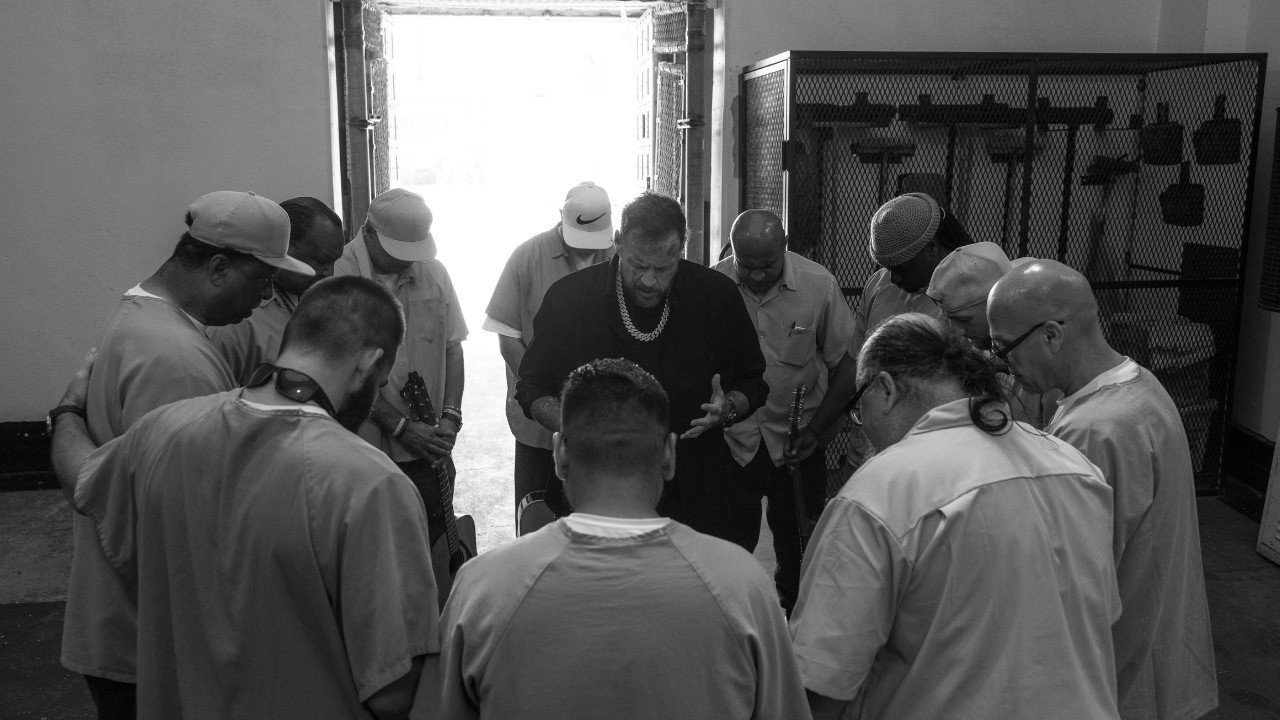
Jelly Roll stood outside Tower One at San Quentin, the most recognizable entrance to California‘s oldest prison, and said a prayer before the cameras rolled. He had been here before, singing on the yard, performing in the chapel, praying with the men inside. But this visit was different. Today, the crew had clearance to shoot a full music video on the grounds, something he described as ‘unreal,’ and the institution greeting them looked almost nothing like the one the world thought it knew.
A prison that stopped looking like one
The moment Jelly Roll and his team walked deeper into the grounds, the reaction was immediate. ‘Bro, that’s a college campus,’ someone said. Then again: ‘No, no, it’s not like it is. It’s a college campus.’ The new learning center, built on the grounds of what used to be called San Quentin State Prison, offers 24-hour access to education. Men who arrived with 20-year sentences are earning degrees. Others are working with dogs, completing diplomas, and entering vocational programs modeled after approaches used in Scandinavian prison systems, where reoffending rates are low. The warden framed it plainly: ‘We can still have a security mindset, but still treat people like people, which actually reduces the violence inside our institutions.’
Before any of that, though, Jelly Roll and his band played an hour-long concert on the West Block. Nobody outside the walls was going to know that part happened. ‘The best part is nobody’s going to believe those were real inmates,’ he said afterward. ‘They don’t know we did an hour concert before we did the video.’
What writing every single day in a cell eventually becomes
Between takes, Jelly Roll pulled one of the men aside and talked about a freestyle he posted online the first week he was out of prison. He had spent years inside writing constantly, whether it was a verse or just a chorus, something every single day. ‘When I did flip that camera open, I was like, I got something for you,’ he told the man. ‘I’ve been writing for three years.’ He said he still carries that habit today.
His Grand Ole Opry induction watch came up, too. A black ceramic piece that his friend John gave him the day the Opry surprised him with the membership announcement on a podcast. He wore it on the grounds of San Quentin without a trace of irony.
At the end of the shoot, before the crew packed out, Jelly Roll addressed the men directly. ‘The story of redemption is not just about music,’ he said. ‘For me it was music, but for you it could be art. For you it could be writing. For you it could just be being a better father, a better son. I promise you it can happen, baby.’
Then he looked up and addressed someone who could not hear him. ‘Johnny Cash, baby. I told your son I was going to do everything I could to honor your legacy. This is for you, Johnny.’
The bus dog made it inside
Somewhere in the middle of the production day, Jelly Roll’s tour bus dog cleared security and made it onto the grounds. Someone floated the idea of taking him to the dog training unit. The handlers there, the crew agreed, would have loved it.
The bus dog never made it to the dog unit. But for a few hours on a shoot day at California‘s oldest prison, a country star’s road companion wandered a yard where men are quietly building second lives, and the place felt, just briefly, like it belonged to everyone inside it.
 Wake up to Only Happy News!