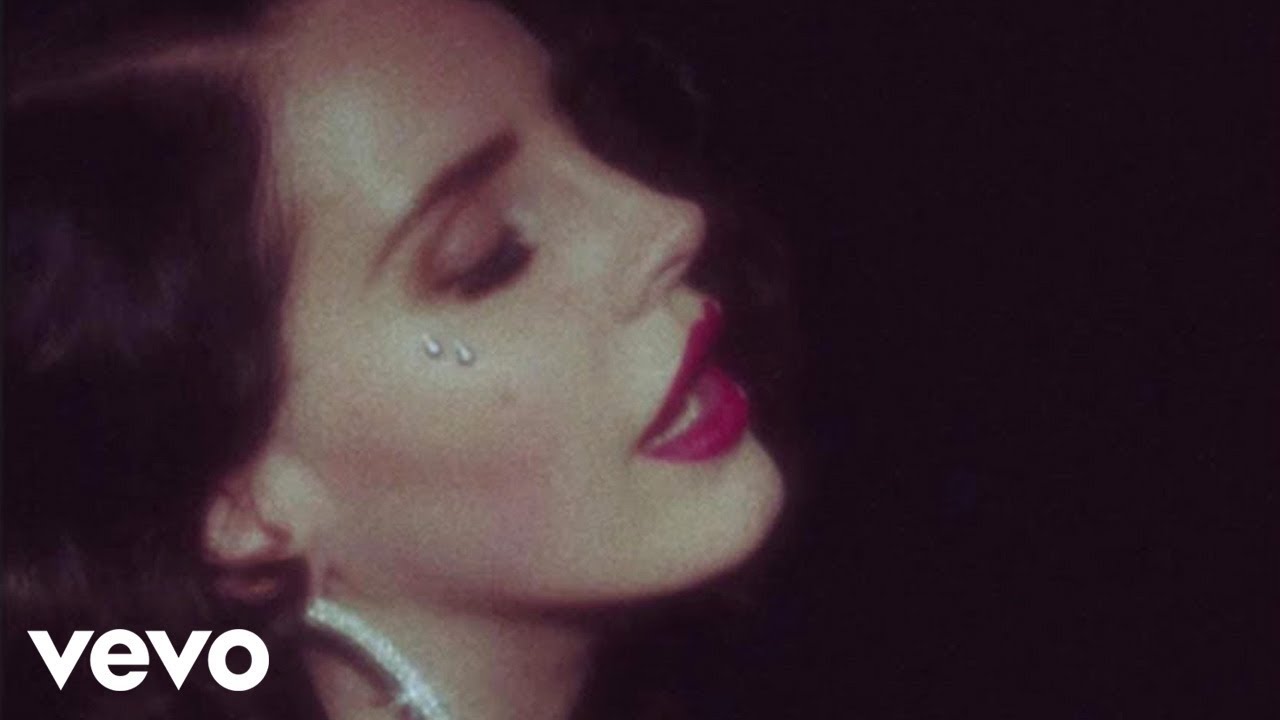
Lana Del Rey stands at the center of one of pop music’s most quietly devastating questions: will the person who loves you now still love you when the glow is gone? That question, wrapped in orchestral strings and delivered in her signature smoke-and-velvet tone, is what makes ‘Young and Beautiful’ linger long after the final note fades. It is not a song about vanity. It is a song about fear, the oldest kind, the fear that love is conditional on something as fragile as youth.
A prayer dressed up as a pop song
The track moves through three distinct emotional rooms. It opens in a world of abundance, hot summer nights, city lights, a life fully lived and fully felt. The narrator is not complaining about what she has had. She is reckoning with what she might lose. The bridge shifts the geography entirely, lifting the song into something almost liturgical. She addresses a higher power directly, asking that the man she loves be let into heaven alongside her, because she cannot imagine the next life without him either. It is a love declaration so complete it extends past death, and yet the central question never gets answered. The chorus circles back every time: the reassurance she sings to herself (‘I know you will, I know you will’) sounds less like certainty and more like a person trying to talk themselves into believing something they are not sure of.
What the song actually does to a room
Originally written for the soundtrack to a film adaptation of a classic American novel about wealth, obsession, and the green light at the end of a dock, ‘Young and Beautiful’ carries that source material’s weight without requiring the listener to know a single thing about it. Del Rey frames physical beauty and spiritual worth as two separate currencies in the same line, ‘all that grace, all that body, all that face,’ and then collapses the distance between them by asking whether love survives when one currency runs out. The answer the song provides is not a resolution. It is a repetition, which is its own kind of honesty.
Del Rey put her own reading of it simply in the lyric itself: ‘I got nothing but my aching soul.’ Strip everything else away, the diamonds, the Bel Air backdrop, the electric energy of a performer at their peak, and what remains is a person asking to be loved for that remainder.
The moment the prayer turns personal
The bridge, addressed directly to a heavenly father, carries an unusual specificity. She does not ask for peace or reunion in the abstract. She asks that her man be let in, as if she is advocating for him at a door she is not sure will open. It is a small, specific, almost domestic plea inside an enormous emotional landscape.
The final repetition of the chorus strips the arrangement back just enough to make the question feel naked rather than performed. By the last line, ‘will you still love me when I’m not young and beautiful,’ the word ‘young’ has been dropped from the phrasing, quietly, almost without notice.
That single missing word lands harder than any answer ever could.