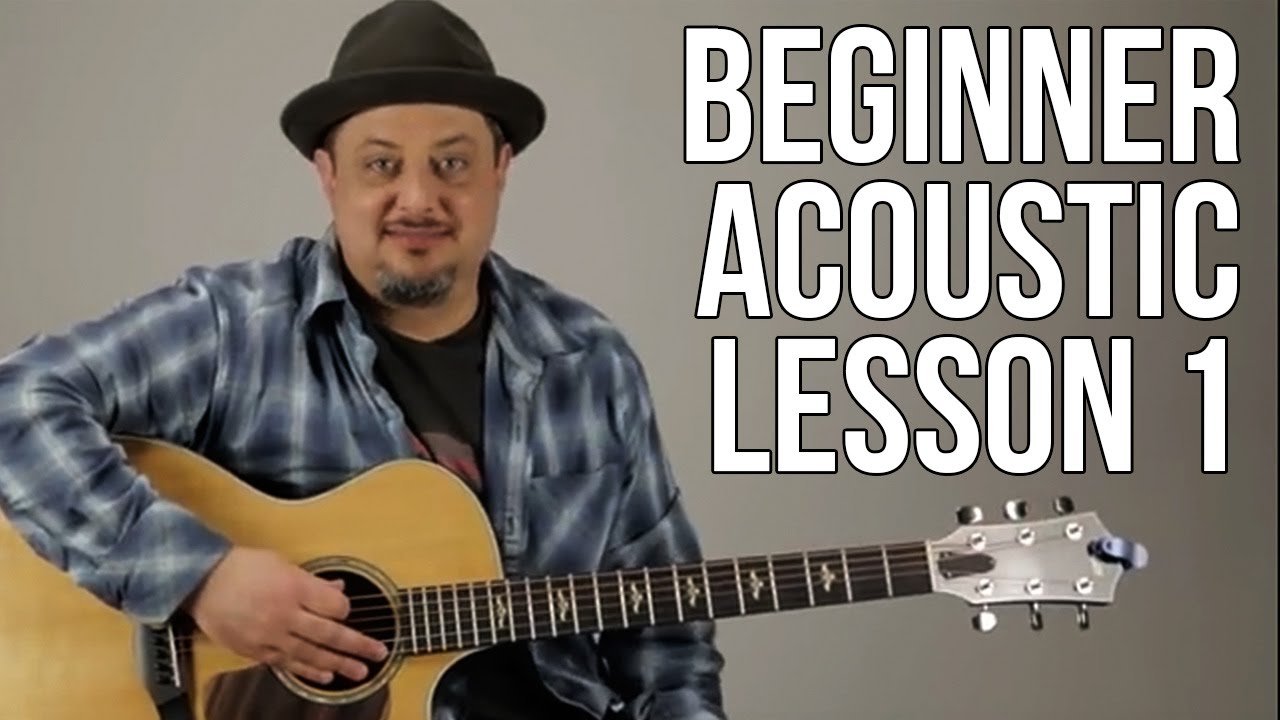
Marty Schwartz has a simple ask before a single string gets pressed: five minutes a day for two months. That is the entire barrier between a complete beginner and someone who can sit down and play actual music. For anyone who has always wanted to learn guitar but convinced themselves it was too hard or required some innate musical gift, Schwartz has spent years teaching the same first lesson he wishes someone had handed him, built around one movable two-finger shape that opens the door to songs by Nirvana, Pink Floyd, Metallica, Oasis, and Guns N’ Roses before the hour is up.
The guitar basics nobody thinks to explain first
Before fingers touch strings, Schwartz walks through the physical geography of the instrument using his Taylor 614. The neck connects to the headstock where the tuners live. The strings run down to the bridge on the body. The small piece of plastic or ivory where the strings begin their journey toward the headstock is called the nut. The metal lines running across the neck are the frets, and here is the part that trips up a lot of first-timers: when someone says ‘first fret,’ they do not mean the metal strip itself. They mean the space between two metal strips. That first open space after the nut is the first fret, the next space is the second fret, and so on. The single dots along the neck are visual reference points, and the double dots mark the twelfth fret, which is the octave of whichever open string sits above it. Tuning comes before any of this matters, and Schwartz recommends a light or extra-light pick for anyone just starting out.
Two chords, zero extra shapes to memorize
The first chord is E minor. Index finger presses the second fret of the A string, middle finger presses the second fret of the D string, both fingertips pointing straight down near the upper edge of the fret rather than sliding back toward the lower edge. The practical reason matters: sitting close to the next fret up means less finger pressure and no buzzing. Strum all six strings and E minor rings out, which Schwartz notes is also the opening chord of ‘Wonderwall’ by Oasis, ‘About A Girl’ by Nirvana, ‘Wish You Were Here’ by Pink Floyd, and ‘Nothing Else Matters’ by Metallica.
The second chord, A suspended two, requires learning nothing new at all. The same two-finger shape simply slides down one string set: index finger moves to the second fret of the D string, middle finger moves to the second fret of the G string. Strum from the A string downward and the chord changes completely. Schwartz put it plainly: ‘we don’t have to learn anything new. Nothing.’
With both chords, the practice pattern is straightforward. Strum E minor for four beats, switch to A sus 2 for four beats, and repeat. Then take the hand off the neck entirely while holding the finger shape in the air, put it back down, and repeat that too. That second drill is how muscle memory actually forms.
The callus problem, and why it is not a reason to stop
Fingertips on steel strings hurt at first. Schwartz is direct about it: if the pressure becomes painful, take a break, because building calluses takes time just the way gripping a pencil long enough produces one. The two-month, five-minutes-a-day window is the specific framing he returns to throughout the lesson. Within that window, five minutes of genuine practice often stretches naturally into twenty or more once a small breakthrough lands.
The strumming motion comes from a relaxed arm, pick angled slightly outward rather than flat or fully sideways, painting across the strings near the sound hole.
A Taylor 614 leaning against the studio chair
Schwartz’s Taylor 614 sits in the frame throughout, pick resting on the strings, the double-dot twelfth fret visible on the neck.
Two chords. One shape. Move it down a string and the music starts immediately.