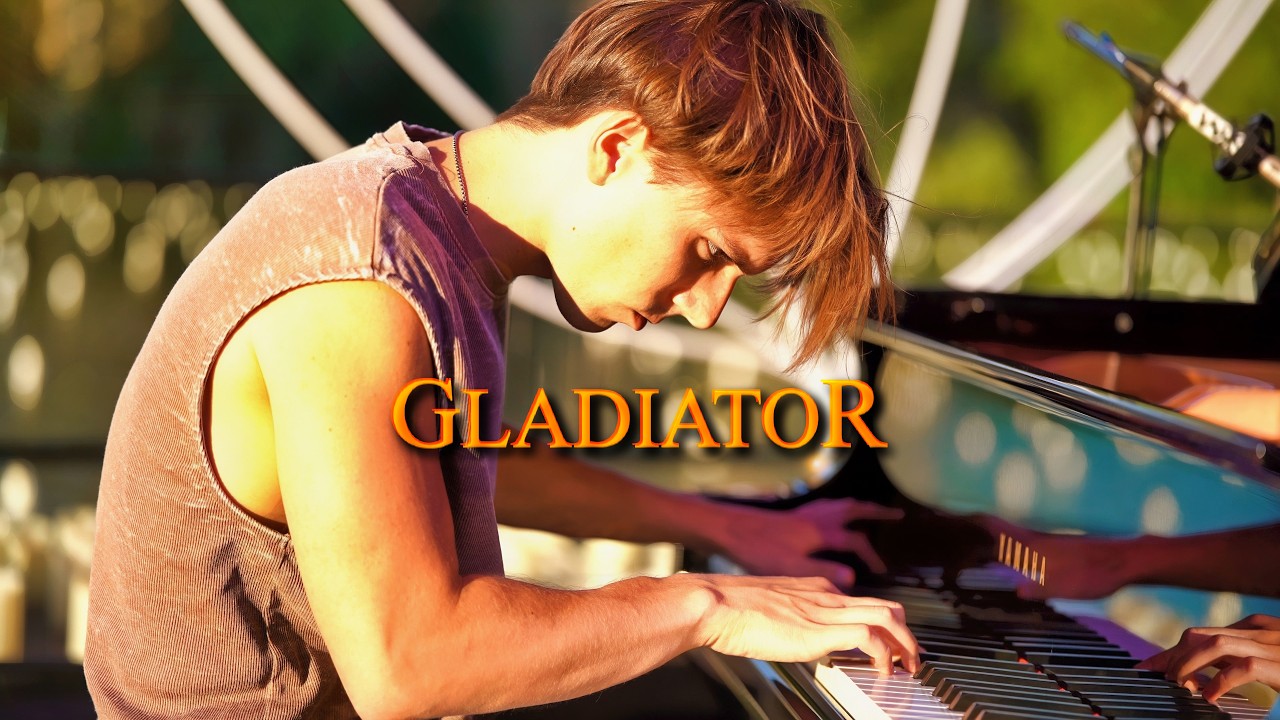
Peter Buka sits down at the piano and lets the opening notes of Hans Zimmer’s ‘Now We Are Free’ speak before a single word is needed. The piece, written for the film Gladiator, carries a specific kind of weight: the feeling of something enormous finally releasing its grip. That is precisely what a solo piano interpretation risks losing, and precisely what makes landing it so difficult.
A melody that was built to carry silence
The original composition leans on an orchestral swell and a vocal line that feels almost ancient, somewhere between a lament and a release. Stripping that down to 88 keys alone means every pause becomes louder, every transition more exposed. Buka plays into that exposure rather than away from it. The lighter passages stay genuinely light, not padded out with decorative runs, and the heavier moments build from the low end of the keyboard with enough restraint that the peak, when it arrives, lands with actual force rather than just volume. The dynamic range is doing the storytelling here, the same job the full orchestra does in the original, just through a single instrument and a single pair of hands.
Why a piano cover of this particular piece travels
Zimmer’s melodic writing has always translated cleanly to solo piano because the emotional architecture is baked into the intervals themselves, not the instrumentation. The sadness and the hope exist inside the notes, not the strings. What Buka adds is a pianist’s sense of time: the willingness to sit inside a held chord a beat longer than expected, or to let a phrase resolve slightly early, creating small moments of surprise inside a melody most listeners already know by feel. Those micro-decisions are what separate a technically correct cover from one that gives a person a reason to stop scrolling.
Buka himself has described his approach to well-known compositions as finding ‘the version that already lives inside the song’ rather than imposing a new reading on top of it. That instinct is audible here. Nothing about the arrangement announces itself; it simply unfolds.
The note that holds the longest
Near the end of the performance, a single sustained note in the upper register sits in the air longer than the phrase technically requires. It is not a flourish. It is closer to the musical equivalent of someone taking a breath before they are ready to move on.
The last notes of ‘Now We Are Free’ fade out the same way the piece has always ended, with something that sounds less like a conclusion and more like a door left open. On a single piano, in Peter Buka’s hands, that door feels a little closer to where the listener is standing.