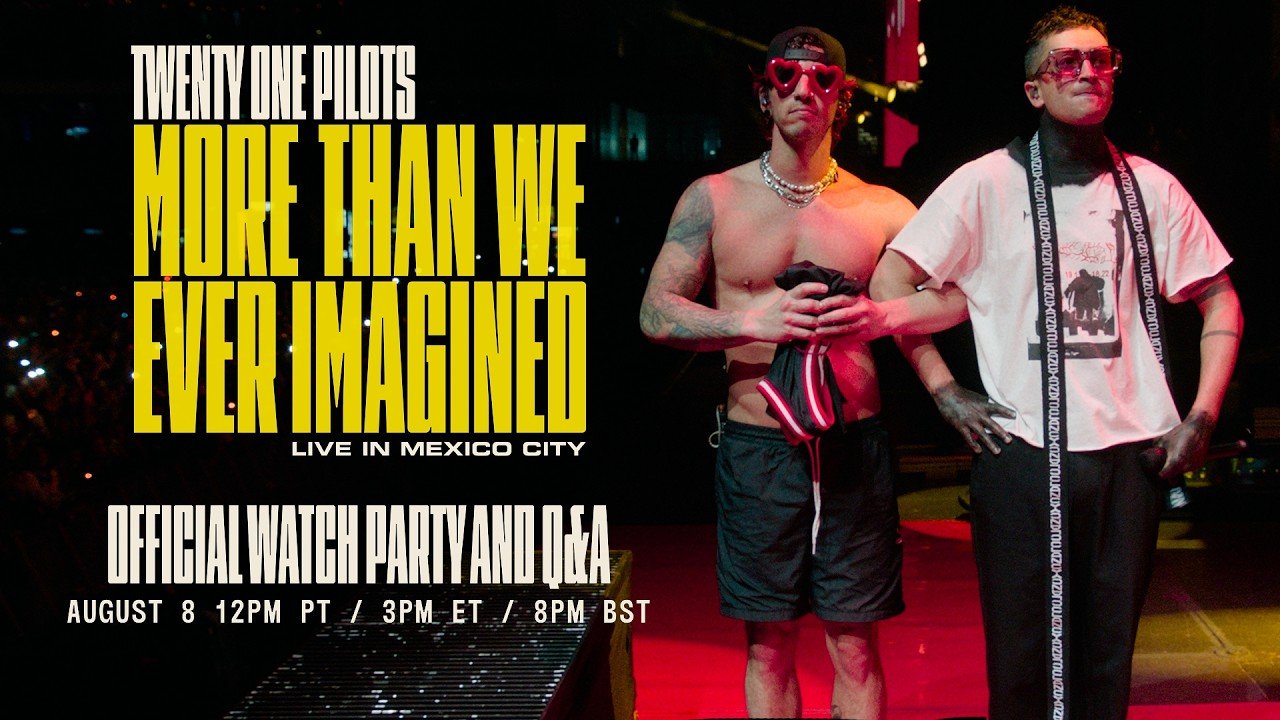
The cars ahead slowed, lights flashing, and someone in the vehicle asked whether this was a police escort or a traffic stop. The laughter that followed set the tone for what came next: a musician arriving at a venue so large that the crowd visible from the road was already a spectacle on its own. For anyone who has ever wondered what it actually feels like to perform at that scale, the answer turns out to be counterintuitive in the best possible way.
Why a smaller crowd hits harder
There is a physics to live performance that most people never consider. Standing in front of 10 people and playing the piano, one of the musicians explained, is more nerve-wracking than standing in front of 60,000. The logic holds when you sit with it. A vast crowd becomes its own kind of shelter, a living, breathing environment that wraps around a performer. A small room offers nowhere to hide and no shared momentum to borrow from. ‘Being surrounded by that many people while playing the piano,’ he said, ‘it’s the closest I get to remembering why I fell in love with music.’
That observation landed not as a boast about arena capacity but as an honest accounting of what draws a musician back to the stage night after night. The scale is not the point. The feeling the scale produces is.
Building a show that might not work
The creative partnership between the two musicians is built on a deliberate appetite for uncertainty. Tyler and his collaborator are, by their own description, always searching for ways to push the show into territory where the outcome is genuinely unknown. ‘We’ve always liked to put ourselves in situations where we don’t know if it’s going to work out or not live,’ one of them said. ‘That’s one thing that we really pride ourselves on.’
The honest admission about the audience size they originally imagined makes that risk-taking feel earned rather than calculated. The goal, one of them said plainly, was probably around a thousand people. Whatever followed was not the product of a master plan. It was the product of a stage philosophy that prioritized authenticity over safety, and an audience that responded by showing up in numbers neither of them had mapped out in advance. ‘They’re giving me a license to perform the way that I want,’ he said, ‘and become who I want to be on the stage.’
The moment that never gets old
Pulling up to a venue and seeing people already gathered outside.
Even at a scale that would have seemed impossible against the original thousand-person target, that first glimpse of a waiting crowd produces the same reaction it always did. The escort-or-traffic-stop joke faded. The music started. The rest followed from there.
 Wake up to Only Happy News!