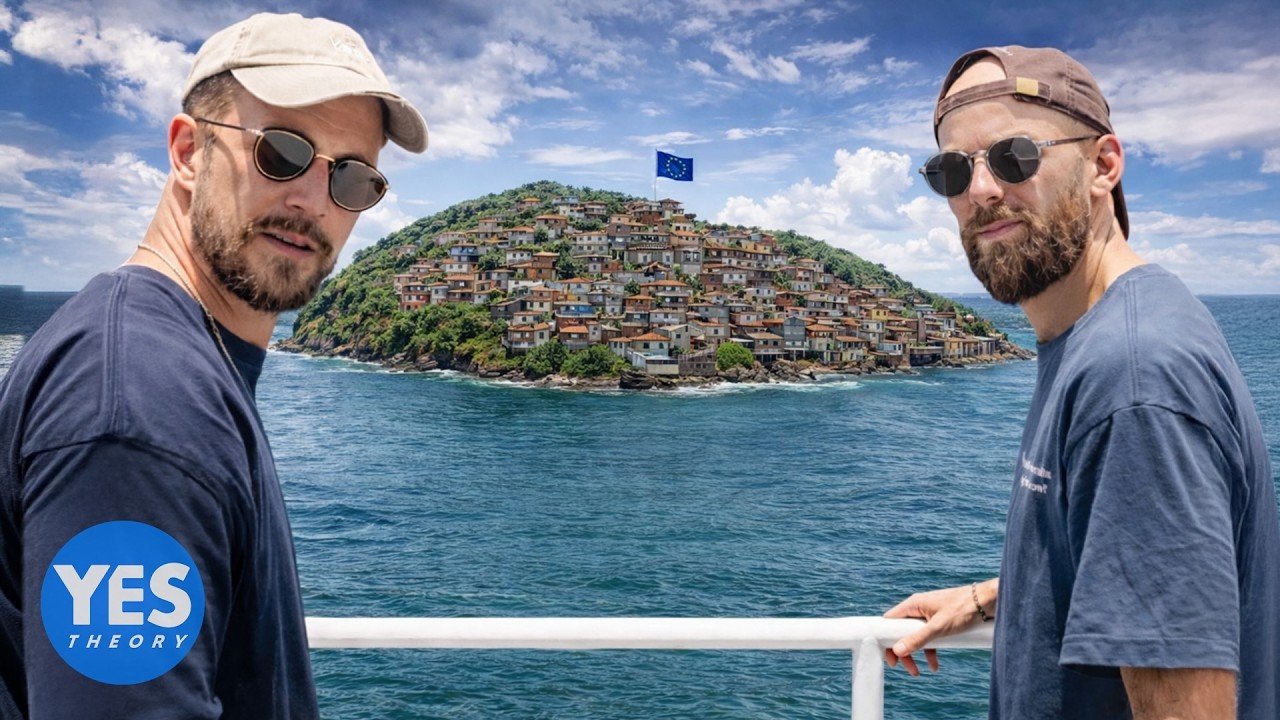
The ferry cost one euro. That detail alone says something about Mayotte — a place so thoroughly overlooked by the tourist infrastructure that its inter-island crossing is priced less than a bottle of water in Paris. The two-island geography catches most arrivals off guard, too. Land at the airport on the smaller island, look at a map for the first time, and suddenly the accommodation booked on the main island requires a boat ride nobody planned for.
That is more or less how the first hour unfolded for a group of travelers who had flown in from Kenya, two and a half hours away, after reading almost nothing concrete about the place beforehand. French territory. Indian Ocean. High crime. Stunning beaches. That was roughly the full briefing. Rental car websites returned no results. The tourism bureau was closed. It was mid-afternoon during Ramadan, and around 95 percent of Mayotte’s population is Muslim, which meant most businesses had already shut for the day. The goats on the road did not appear to belong to anyone in particular.
How a Sultan’s Decision in 1841 Put a Tropical Island Inside the European Union
Mayotte sits between Madagascar and the East African coast, roughly 8,000 kilometers from mainland France. For centuries it functioned as part of a broader network of trade routes shaped by African, Arab, and Malagasy cultures, governed by Muslim leaders, connected to the rhythm of the Indian Ocean. That changed when a local sultan, facing internal conflict and outside pressure, sold the island to France in 1841. Colonial rule gradually extended across the entire Comoros archipelago.
When independence movements swept Africa in the 1970s, the rest of the Comoros voted to leave France. Mayotte voted to stay — not once, but multiple times. It is now an overseas department of France, governed under French law, with the euro as its currency and its residents holding French citizenship. It is also, by most measures, the poorest department in the country, with an unemployment rate around 30 percent and roughly 80 percent of residents living in poverty. France has been repeatedly criticized for underinvesting in the island’s infrastructure relative to its mainland departments.
The crime situation is specific in its character. Young boys — some as young as 12 — organize into neighborhood and village-based gangs that carry out territorial attacks, with bystanders regularly caught in the crossfire. A local pharmacist named Jesse, who had been on the island seven months after relocating there, explained the pattern plainly: two months of relative calm, then a month where insecurity spreads across whole neighborhoods. The triggers are sometimes political, sometimes rooted in inter-village alliances that outsiders find difficult to parse. She described obstacles placed on remote roads to stop vehicles, and she was direct about what drivers should do if they see one: do not stop, go through it.
The timing of the visit turned out to matter. Three separate people mentioned that Ramadan was keeping things quieter than usual. During school periods, Jesse said, children wait along roadsides and throw rocks at passing cars. After Ramadan ends, the pattern tends to resume.
The Pharmacist Who Sent Them to a Futari They Had No Business Being Invited To
Jesse’s Instagram bio reads ‘I’m a dreamer. A world citizen.’ She mentioned, almost in passing at the end of a conversation about machetes and undocumented immigration, that there was a large monthly market the following morning at 8 a.m. She said she would text. She did.
The market draws people from across Mayotte once a month — local crafts, food, an energy that sits somewhere between a farmers market and a neighborhood gathering. Jesse walked through it explaining the social texture of the island: that the local language is Shimaoré, not French, meaning most residents cannot communicate in the official language of the country they belong to; that locals broadly support remaining French but resent the pressure from undocumented migrants arriving from the Comoros seeking nationality; that this tension has produced a bitterness between people who are, as Jesse put it, cousins treating each other like strangers.
At some point during the market stroll, Jesse made a call to a distant connection. That connection was hosting a futari that evening — a communal breaking of the Ramadan fast where an entire neighborhood pools meals prepared across different homes and gathers to eat together. Jesse could not attend herself. She sent an address, a contact name, and that was that.
What nobody had flagged in advance was that Mayotte’s social structure is heavily matriarchal. Property passes through women. Men typically move into their wife’s family’s household after marriage. Grandmothers and mothers anchor the household’s decisions. At the futari preparation site, that structure was visible in practice — women coordinating the cooking across multiple homes, organizing the layout, running the logistics of feeding an entire neighborhood. A guest was handed grilling duties he was transparently unqualified for. He was told it would be funny to watch him try.
One of the women’s fathers turned out to be something of a local legend — part of the first band to play electric guitar on the island, his recordings sitting on YouTube and slowly being forgotten as younger generations move on. He asked, through translation, whether anyone could help get his music in front of people again. A young kid from the neighborhood had spent the whole day quietly watching the cameras, and by evening had figured out how to focus the lens and hit record on his own.
The Moment Someone Rushed Over to Say It Was Time to Leave
The fast broke as the sun went down. People from the whole neighborhood — family, friends, strangers from adjacent streets — settled into corners of the courtyard with plates of food that had been in preparation for days. An elder mentioned that this kind of communal meal used to happen regularly, without any particular occasion to prompt it. Modernization had made it rarer. For the older residents, eating like this again meant something specific that they did not need to explain.
Then someone from the village came over looking genuinely worried, and it became clear that the sun had set and the roads after dark were a different situation entirely.
That one-euro ferry crossing at the start of the trip — taken blind, with no map, following strangers to a dock — turned out to be the most accurate preview of everything that followed. Mayotte does not offer a clear itinerary. It offers a ferry, a closed tourism bureau, a pharmacist who might change your plans entirely, and a neighborhood that will feed you if you show up at the right moment and mean it.