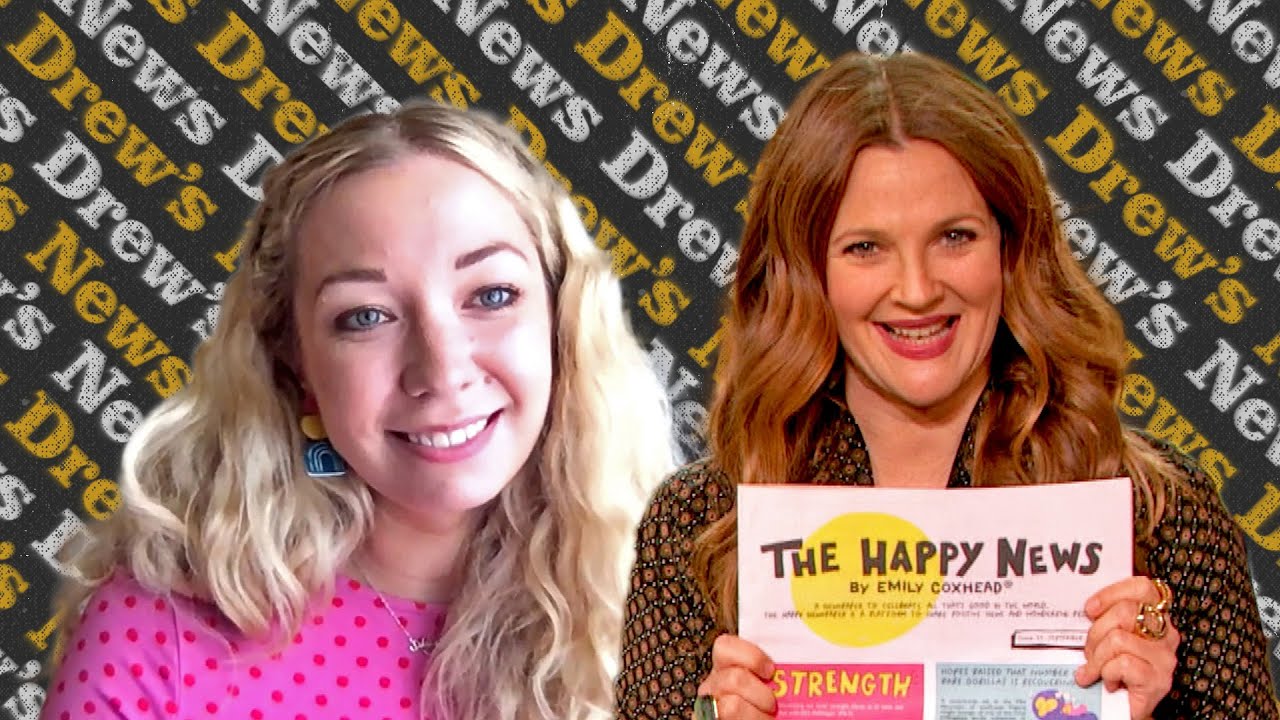
Emily Coxhead walked out to a studio audience already on its feet, introduced as the British soul sister of a host who lines her walls with magazine pages and makes her own zine. The Happy News, and https://thehappynewspaper.com/ – the print publication Coxhead founded in the United Kingdom, had landed on the desk of a team obsessed with good news, and the meeting that followed felt less like an interview and less like a television segment and more like two people discovering they had been running the same project on opposite sides of the Atlantic.
For anyone who has ever put down a newspaper feeling hollower than when they picked it up, what Coxhead built matters. A publication dedicated entirely to stories of kindness, comeback, and human effort is not a novelty item; it is a direct response to something measurable in the human body, the slow drain of energy and hope that comes from passive consumption of bad news.
Why a mental health struggle became a print newspaper
Coxhead did not launch The Happy News as a branding exercise. She was struggling with her own mental health, and she identified two things making it worse: social media and the news. When she started actively looking for good things and then sharing them, she noticed the effect on herself and on the people around her. That observation became a newspaper.
She was direct about the criticism that follows a project like this. ‘I never want to try and cover up the bad and pretend that the world is just full of sunshine and rainbows because it isn’t,’ she said, pushing back on the reflexive charge that focusing on good news means ignoring reality. The paper does not deny difficulty; it insists on also reporting what the dominant news cycle leaves out, the kind people, the recoveries, the quiet triumphs that are genuinely happening.
Her practical advice for anyone trying to manage a relentless news diet was specific: notice the impact first. Pay attention to how you feel after scrolling, after reading, after a session with the feed. The good things are there, she argued, but they require active searching rather than passive reception.
The study that gave the doom-scroll a name
A piece of research from Michigan State University landed in the same broadcast with a finding that fits Coxhead’s framework precisely. Social media can actually promote happiness, the study found, but only when users interact with it rather than passively scrolling through it. The mechanism is community: the same dynamic that makes in-person connection restorative applies online when the engagement is real rather than reflexive.
The same broadcast also carried animal news that carried its own quiet momentum. The World Wildlife Fund reported that tigers are making a significant comeback across South Asia, Russia, and China. Mount Rainier recorded its first wolverine sighting in over 100 years, with a mother wolverine and her two cubs spotted moving through the park.
A copy of The Happy News, still in its envelope
Somewhere in the production office, the copy of The Happy News that the news team brought in to prompt the introduction still exists, the physical paper that connected two people who make essentially the same thing in different countries and different formats.
Coxhead came to the project because the standard news cycle was depleting something in her. She built a corrective. The physical newspaper, with its design-forward pages and its editorial commitment to hope, is the artifact of that decision, sitting on a desk, its pages unfolded.
The two of them agreed to keep it going. ‘Let’s keep up the good fight,’ Coxhead said as the applause came back up, and it landed not as a slogan but as a straightforward logistical plan.