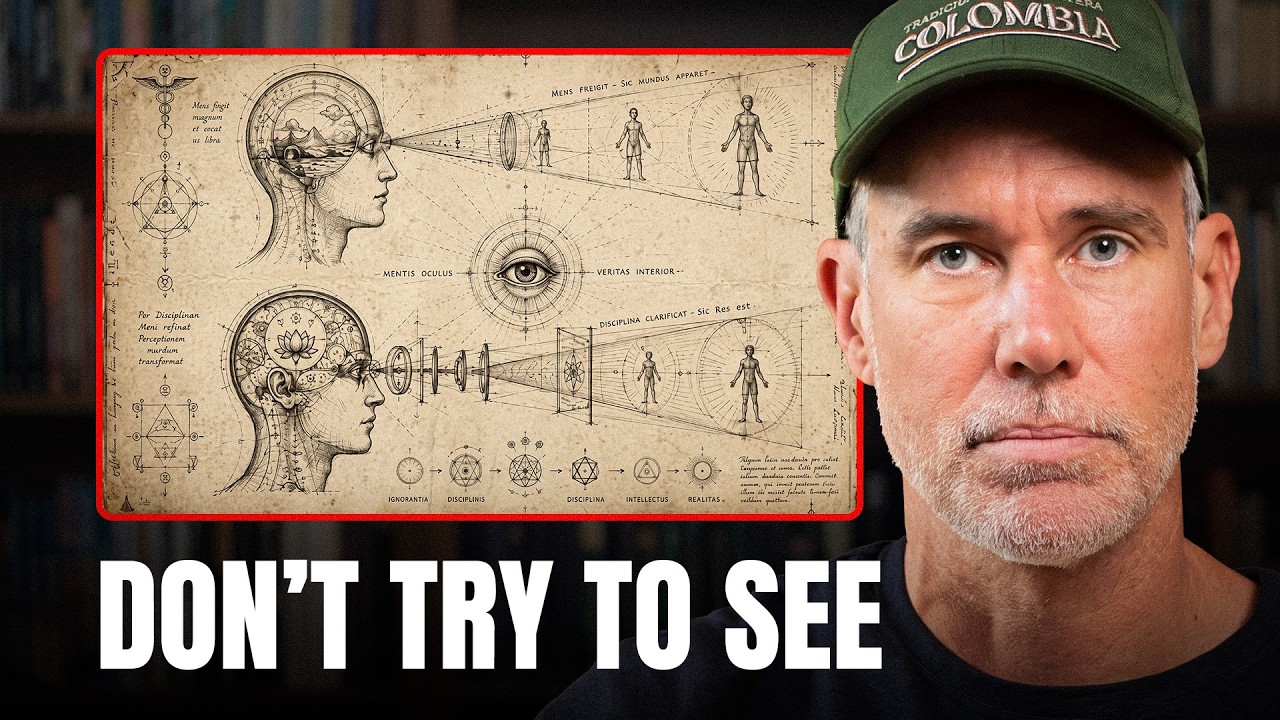
Something can begin to change in your brain before it ever changes in your life. That single idea sits at the center of a framework David Bayer has spent years developing, and it draws on a body of neuroscience research that most people applying visualization techniques have never encountered. The question he keeps returning to is a practical one: if imagination is genuinely powerful, why do so many people spend time visualizing the life they want and still wake up living the same one?
The vision you’re holding isn’t made up
Bayer’s first distinction challenges the most common objection to visualization practice. When someone tells you that you’re just pretending, he has a ready answer: ‘Yes, I am pretending. I am tending in advance to the future that I want.’ The reframe matters. In his view, a vision is not a fantasy you manufacture from nothing. It is a signal you tune into, a real possibility that already exists in what various spiritual and scientific traditions call the field, the akasha, the ether, source energy, or what physics might describe as the space of all potentials. The person practicing visualization is not inventing a future. They are, in Bayer’s framing, selecting one from the range of futures that already exist and holding that frequency long enough for it to become material.
He draws directly on Neville Goddard’s instruction to stay loyal to what you see in the fourth dimension, even when third-dimensional circumstances appear to contradict it. The loyalty, not the vividness of a single morning session, is what determines whether the vision survives long enough to produce a result.
What you visualize while driving to work matters as much as your morning practice
The second distinction is where the framework becomes genuinely uncomfortable. Bayer points out that visualization is not a practice you do once and then set aside. It is continuous. Every moment of directed thought, an argument mentally replayed on the commute, a catastrophe quietly rehearsed over coffee, an exciting outcome anticipated on the way to a meeting, qualifies as visualization. The deliberate morning session and the anxious afternoon spiral are running on the same mechanism.
This means the gestation period Bayer describes, the gap between a mental image and its physical materialization, is being fed around the clock. Withdraw attention from an unwanted vision, he argues, and you choke off the energy it needs to grow. Redirect that attention to a desired one, and the new image begins accumulating momentum.
The neuroscience behind mental rehearsal
The mechanism Bayer anchors to is a 2009 study featured in Time magazine and conducted at Harvard. Researchers brought in piano players, observed which parts of their brains activated while playing, then had the same players return and simply imagine playing. Nearly identical brain regions lit up. More recent research, according to Bayer, shows that 80% of the neural activity associated with an actual experience occurs when a person is only imagining that experience.
The practical implication is striking. The brain begins building new synaptic connections during mental rehearsal, connections that create what Bayer calls a memory of something that has not happened yet. That manufactured memory produces an identity shift: the person who has repeatedly imagined winning, connecting, or building starts to carry the neural architecture of someone who already has. The reticular activating system, the brain structure responsible for filtering what you notice in your environment, recalibrates accordingly. Opportunities, conversations, and decisions that previously went unregistered begin surfacing.
A quiet room and a recalled argument
Bayer describes a moment most people recognize without naming it: sitting in a car on the way to work, running a mental replay of a fight that happened at home an hour earlier, mapping out exactly how the next version of that fight will go. The visualization practice is fully active. It is simply pointed in the wrong direction.
The commute from the morning after a difficult conversation is where the framework either holds or collapses. It is not the closed eyes and the deliberate scene-setting that determines the outcome. It is what happens in the ordinary, unguarded minutes between.
Bayer puts the entire argument into one sentence that he treats as the load-bearing idea: your brain does not know the difference between imagination and reality. Everything else in the framework is downstream of that single neuroscientific observation, working outward into the small, continuous choices about where attention lands each ordinary hour of the day.
 Wake up to Only Happy News!