Activists hauled giant boulders into a stretch of UK sea that was supposed to be a protected haven for harbour porpoises but was instead being torn apart by industrial trawlers. What they did next sparked a chain of ocean wins, land protections, and human breakthroughs that most people scrolled straight past in November. Sam Bentley spent the month tracking them down, and the picture that emerges is quietly remarkable: governments, charities, students, and rescue dogs all moving in the same direction at once.
The ocean fights back, one boulder at a time
The problem with Marine Protected Areas in UK waters is that the protection exists mostly on paper. Last year, trawlers raked over 55,600 square kilometres of protected seabed around the UK, an area almost the size of West Virginia. So Greenpeace built a physical underwater barrier, placing massive boulders on the sea floor to block the heavy nets from passing through. The move was both practical and pointed: if the government would not enforce its own designations, the boulders would.
The ocean story did not stop there. Portugal created one of the largest marine reserves in the North-East Atlantic, the King Dom Carlos Marine Nature Reserve, covering an area of ocean nearly twice the size of Portugal itself. It shields a chain of underwater mountains and deep-sea coral gardens from destructive trawling while still allowing sustainable traditional fishing, pushing Portugal toward its goal of protecting 30% of its waters by 2028. And off the remote Cocos Islands in Australia, scientists revealed one of the largest coral colonies ever recorded: a rose coral stretching more than one and a half kilometres, thriving undiscovered in the deep for decades.
Back on land, the Amazon got a new guardian. A brand new reserve called Agua Dulce now gives lasting protection to more than 700,000 acres of rainforest, wetland, and river in the Bolivian Amazon, an area nearly the size of Yosemite National Park. More than 300 animal species have been recorded there, including jaguars, giant otters, harpy eagles, and the endangered black-faced spider monkey. Created alongside the more than 1,200 people who live beside the Itenez River, the reserve also forms a wildlife corridor linking up with several neighbouring parks.
Julie gained 100 kilos, and Chilli has one of the most important noses in the country
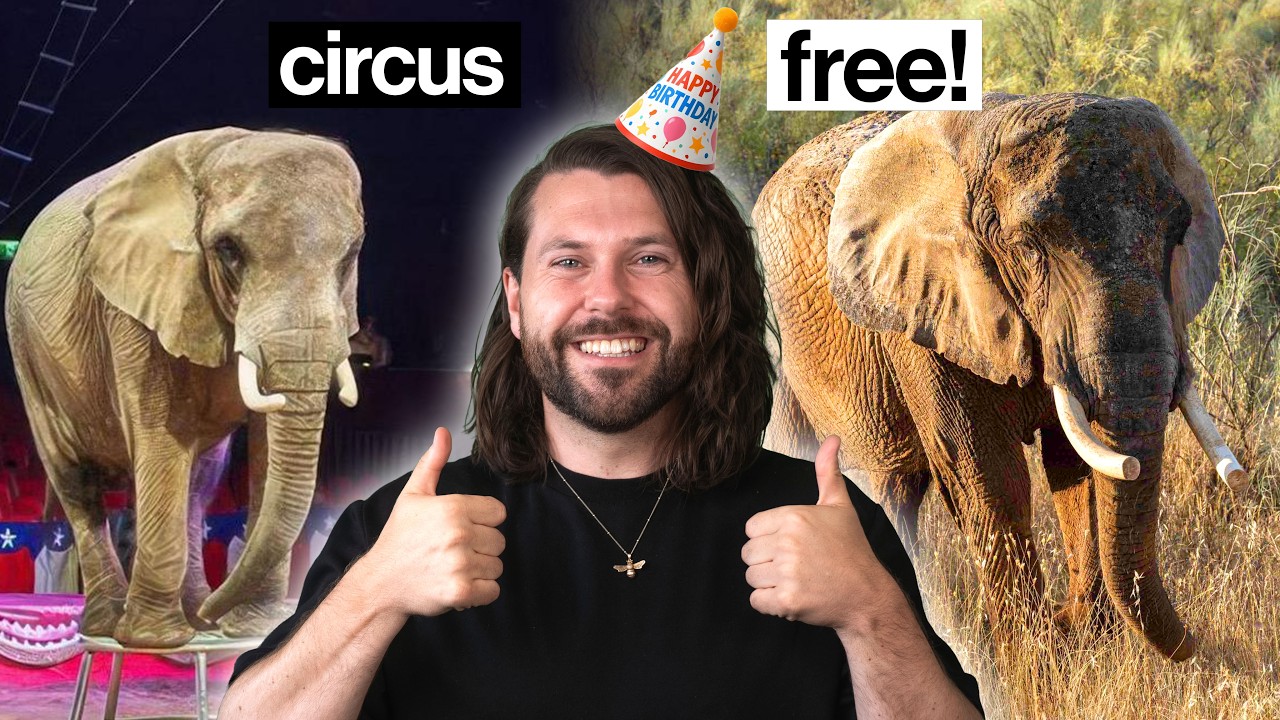
Julie, Portugal’s last circus elephant and the first resident of Pangea Elephant Sanctuary on a 400-hectare estate in the Alentejo region, has gained around 100 kilos since arriving earlier in the year. She now has round-the-clock access to shelter and outdoor habitats, and has developed a particular fondness for wallowing in mud pools. She has since been joined by Kariba, a 45-year-old elephant who arrived from a Belgian zoo after spending around four decades in European zoos following her capture as a baby in Zimbabwe. The sanctuary hopes to eventually house between 20 and 30 elephants.
Meanwhile in the UK, a rescue Labrador named Chilli, spotted at Battersea by staff who noticed he was confident, curious, and loved to sniff everything, is now training with a charity called Medical Detection Dogs near Milton Keynes. He is learning to detect Pseudomonas, a dangerous lung infection that is the biggest cause of lung damage in people with cystic fibrosis and affects around 60% of the 10,000 people living with the condition in the UK. The charity’s longer aim is not a dog in every waiting room but, as one of their team explained, ‘an electronic version of the dog’s nose’ that could work for millions of people around the world. For now, ‘Silly Chilli,’ as the team has taken to calling him, is doing just fine.
There were quieter wins too. In Houston, students at the Barbara Jordan Career Center opened a public auto shop fixing cars for between $20 and $35, with proceeds going back into opportunities for the students. In Barbados, the World Health Organization confirmed the country has eliminated mother-to-child transmission of HIV as a public health problem, with no reported cases of transmission between 2022 and 2024. And a wrist device called Neupulse, developed at the University of Nottingham, reduced tics in people with Tourette’s syndrome by around 25% on average across a clinical trial of 121 people. One teenager, Katie, described trying it for the first time as the best day of her life.
At COP31 in Antalya, the big deal collapsed over fossil fuels. A coalition including the UK, the EU, and island nations refused to sign an agreement that did not mention them once. Sam put it plainly: ‘it’s a bit like running a campaign to help people quit smoking without ever mentioning cigarettes.’ But away from the headline failure, satellites helped fix 46 methane leaks at oil and gas sites across 13 countries, equivalent in climate impact to taking 26 million cars off the road. More than 30 countries launched a plan to restore 30 million hectares of peatlands, which cover just 3% of the planet’s land but lock away nearly a third of all carbon in the soil.
The boulders, still on the sea floor
Somewhere off the coast of Britain, in a stretch of water that is officially protected and was until recently being industrially trawled, a line of granite boulders sits on the sea floor.
Greenpeace is now calling on the government to extend that logic to every Marine Protected Area in UK waters. The boulders are not moving.
 Wake up to Only Happy News!