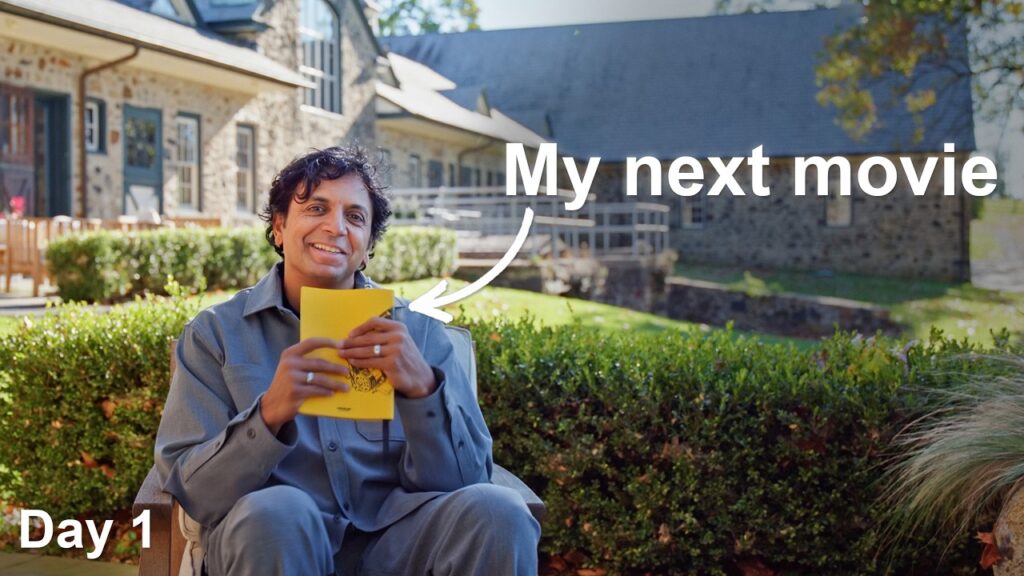
John Krasinski is standing at a customs desk when an agent asks who he is visiting. In less than 20 seconds, the story he tells about that moment has audiences leaning forward, laughing, completely inside the scene with him. What he does not do is summarize. He does not say the agent was surprised. He zooms straight into the physical moment, lets the silence hang, and trusts the room. That gap between a forgettable account and a story people replay for friends is smaller than most people think, and it comes down to five specific craft moves.
Start with where your feet are planted
The first technique is location. The best stories open by placing the listener somewhere physical: ‘Two weeks ago, I’m sitting on my couch in my living room’ or ‘September 2019, I’m standing in front of the conference room ready to walk inside.’ The moment a listener hears ‘conference room,’ they conjure their own version of it, complete with the table and the fluorescent lights they already know. That mental image does the heavy lifting, which is why beginner storytellers make a costly mistake when they pile on detail. Describing the big table, the television, the wooden floor kills the image the listener was already building. Name the location, then move on.
The second technique is action. Instead of loading the opening with context, name only what is happening right now: ‘I open my laptop and start reading a message from my manager’ or ‘I’m at the airport waiting in line at security.’ Verbs create forward momentum and signal immediately that no one’s time is being wasted.
Third comes thought, and this is where most storytellers play it too safe. Sharing a thought means sharing the raw, unfiltered version, not a polished one. ‘I thought, ah, this will be so cool, finally I can see her after all that time’ lands differently than ‘I was excited.’ The scruffier and more specific the thought, the more a listener recognizes their own inner voice in it. As the technique is explained in the guide: skip anything that sounds like ‘I thought this represents a supreme opportunity’ because no one’s actual brain talks that way.
Show the body, not the label
The fourth technique is emotion, and the guidance here is precise: do not announce it, show it on the body. ‘I was relieved’ is invisible. ‘I leaned backward and let out this big sigh’ is a film clip. ‘He was anxious’ tells nothing. ‘He kept tapping his pen on the table and glancing up at the clock every few seconds’ puts the listener in the room.
The fifth technique is dialogue. Quote the exact words a character used, and make them count. ‘My friend was disappointed’ evaporates. ‘My friend looked at me and said, Phillip, what on Earth was that?’ sticks. The same rule applies as with thoughts: choose the juicier, more concise version of what was actually said. A manager who announces being ‘very dissatisfied with the inadequate execution’ sounds like a press release. A manager who says ‘wow, that was really the best presentation you’ve ever given’ sounds like a human.
British entrepreneur Sarah Willingham demonstrates all five in a single minute. She walks into a meeting room two minutes late, and a lawyer on the other side of the table looks up and says, ‘Oh, thank goodness for that, mine’s white with one sugar please.’ She makes him the coffee, sets it in front of him, and then sits back down opposite him. Her next line captures the emotional payoff without once using the word ’embarrassed’: ‘I watched the colour drain from his face as he realized this enormous assumption that he’d made.’
The lawyer who wanted his coffee
Sarah Willingham sitting back down across from that lawyer, coffee in hand, watching the expression shift, is a moment that contains all five techniques at once, location, action, thought, emotion, dialogue, landing in the right order without any of them being announced.
Krasinski’s customs agent story runs 20 seconds. Willingham’s coffee moment runs about a minute. Neither wastes a word on summary, and neither has to.
 Wake up to Only Happy News!