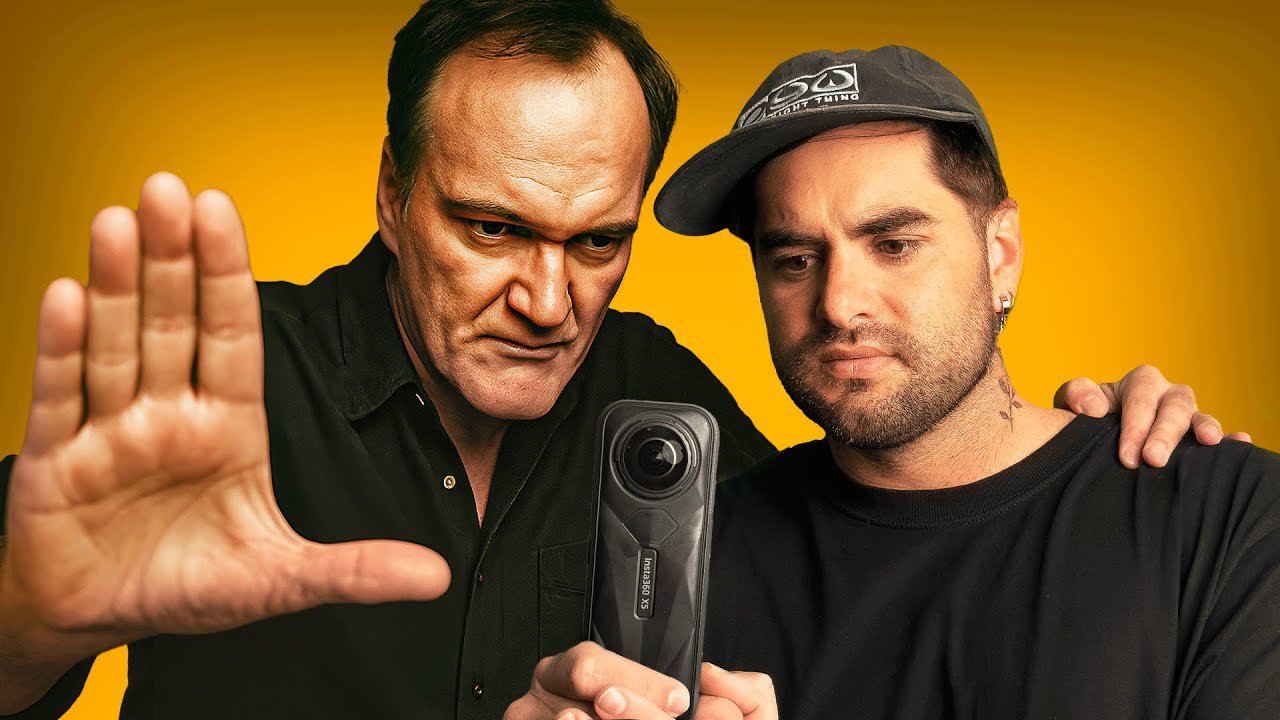
It started at exactly 7:00 a.m. on a favorite bench, with Bang Bang by Nancy Sinatra playing through his ears and a bagel loaded with two thinly sliced pieces of Black Forest ham, Brie cheese, two gherkins, and a touch of mayonnaise. The real stuff. Never salad cream. Dan Mace, sitting there in that precise, almost absurdly specific morning ritual, asked himself a single question: what would a day in his life look like if Quentin Tarantino directed it? What followed was a week of obsessive study, a handwritten script, a printed storyboard, and a low-budget short film that nobody gave him permission to make.
When the real Tarantino did not pick up
Mace’s first move was a phone call. The number came from Facebook, and the voice that answered did belong to a Quentin Tarantino, just not the one from Hollywood. The man on the line was from Kam Flucker in Albania. That was the end of Plan A. Plan B was doing it himself, which meant rewatching Tarantino’s films in extreme detail, cataloguing every signature shot: the trunk shot, the extreme close-up, the overhead god’s-eye view, crash zooms, the Mexican standoff, and the long tracking take. Each one was mapped onto a hand-drawn storyboard before a single frame was captured.
The resulting fictional story, shot across his studio and its surroundings, features Mace and his actual colleagues: Keegan, suffering the side effects of a caffeine overdose; Matt, who ‘hasn’t slept in three days, probably legally dead’; Alex, his trusted PA, described on screen as ‘extremely intimidating’; and Tommy, the annoying new intern. The plot’s central crisis is a project deadline incorrectly communicated as today rather than Friday, a deception invented specifically to make the team work faster. There is a suspicious oil leak, a colleague who slips and needs to be disposed of, and a Mexican standoff filmed at 240 frames per second.
Ninety-three shots, one day, and a lens that broke
Production split across two days. Day one covered the bedroom morning scene, three shots in two hours. Day two’s schedule was 93 shots across five scenes, starting at 12:23 p.m. Mace put it plainly in his notes between setups: ‘This is low-budget filmmaking. This film has been made for no money.’
The production ran into one physical casualty. A lens broke during a night test. The replacement snapped in, and shooting continued. The shower handle, the water hitting the lens, the soap, the drying of hair, the brushing of teeth, feet being followed, a hand pulling through a shirt, curtains opening, a coffee machine gurgling through its cycle. Cutaway after cutaway, assembled into something that mimics the choppy, detail-obsessed grammar of the director Mace had spent all week studying.
Before the finished short played, Mace offered one honest disclaimer: ‘Please lower those expectations because it is nothing like the great Tarantino.’
The bagel that started everything
Keegan’s coffee, somewhere on a desk in the studio, sits untouched after the poisoning scene wraps.
The short film that came out of all of it begins, in proper Tarantino fashion, with a title card: ‘On paper, it was a regular Tuesday. In reality, everything was about to change.’ Which is almost exactly what Mace had been thinking on that bench at 7:00 a.m., with Bang Bang in his ears and mayonnaise, the real stuff, on his bagel.
 Wake up to Only Happy News!