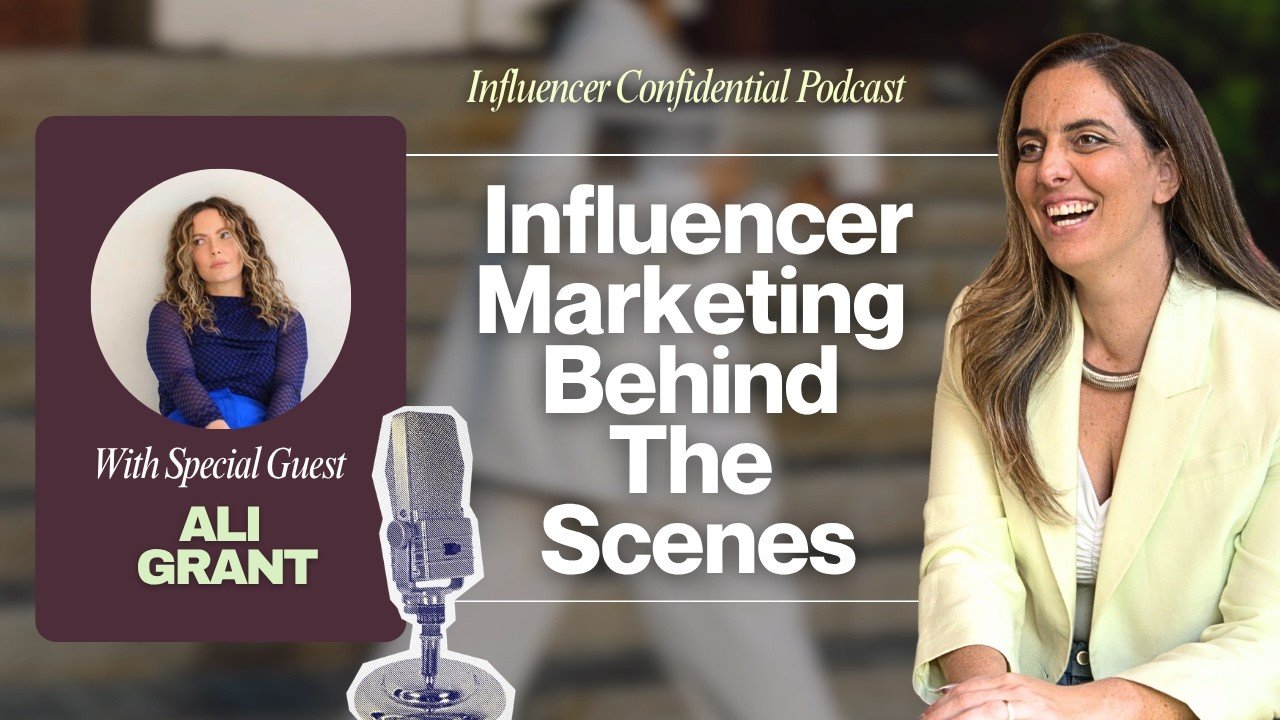
Ali Grant was on a flight to Chicago when she decided to change everything. She had been consulting for creator friends for free, answering brand rate questions, helping them navigate gifting versus paid partnerships, and she suddenly realized she should build a business around it. That instinct, acted on somewhere over the Midwest, eventually grew into a talent management company with nearly 400 creators on its roster and a team of more than 80 employees. For any creator who has wondered what it actually takes to get signed, what a manager does all day, or how brands are thinking about influencer budgets right now, Grant’s answers are the ones worth sitting with.
The number that actually matters when you want representation
Most creators assume agencies are scanning follower counts. Grant, who serves as co-CEO and CMO of the Digital Department, is more interested in something else entirely. ‘You must be nice and good to work with,’ she said, with a directness that caught the conversation short. ‘This industry as it may seem big, is small and everyone talks.’ Beyond character, she looks for creators who can articulate a vision, whether that is reaching a million subscribers on YouTube, writing a book, or launching a product. Vague goals do not move her. A creator who says ‘I just want to make money on social media’ is, in her words, not that interesting.
On the revenue side, she does name a number: $100,000 in annual brand partnership income, earned independently, before approaching a talent manager. The reasoning is straightforward. Most management arrangements are commission-based, and a manager doing calendar coordination, contract redlining, affiliate strategy, and business development needs a foundation to build on. The Digital Department has a dedicated legal team, currently around three people, focused solely on reviewing contracts, which frees talent managers from drowning in redlines and allows them to focus on finding new opportunities. Their approach covers affiliate strategy, accounting support, legal review, and even assistance launching off-platform projects like podcasts or product lines.
What brands are actually doing with their budgets right now
The ambassador-program era is not dead, but Grant describes a clear shift. Brands are spreading their spend across more creators rather than locking into one face for a year. The logic tracks: broader amplification, newer audiences, and the ability to test what actually moves metrics. Usage rights have become a meaningful revenue lever inside that shift. As organic reach compresses, brands increasingly need to boost creator content through paid ads, and Grant is direct that creators should be charging for every additional use of their likeness. ‘The more eyes and use of your likeness is an opportunity to make more,’ she said.
On the question of perpetuity clauses, she takes a measured position: always negotiate them out, but take a beat to consider why a brand would realistically want a piece of social content forever. ‘The whole thing about social media is that it is in the now and relevant in the time,’ she noted. ‘There is no way they are using that in 10 years or even one year because it is no longer relevant.’ Her read is that perpetuity language often exists as internal legal cover, not genuine long-term intent, which makes it negotiable rather than automatically a deal-breaker.
Gifting as a strategic entry point also came up. Rather than declining gifted partnerships outright, the Digital Department sometimes uses them deliberately to get a creator onto a brand’s radar, treating the organic post that follows as a warm introduction before pitching paid work.
Among the partnerships Grant’s agency has facilitated: a client co-designing a clothing line with Macy’s, another creating her own sweatshirt with Gap, and a creator becoming a face of Gatorade water. Six- and seven-figure deals move through the roster regularly, but she says the partnerships that still catch her off guard are the creative ones she could not have imagined coming to life.
A survey sitting in two inboxes
The Digital Department’s talent application is a survey on their website, and Grant mentioned that submissions go directly to her and the VP of talent, Natalie, who review them continuously and route relevant fits to the wider team.
Ten years into an industry she joined straight out of college, Grant still describes waking up excited for the workday, framing each quarter as essentially a new job. That restlessness, the same quality she looks for in the creators she signs, turns out to be what kept her building in the first place.
 Wake up to Only Happy News!