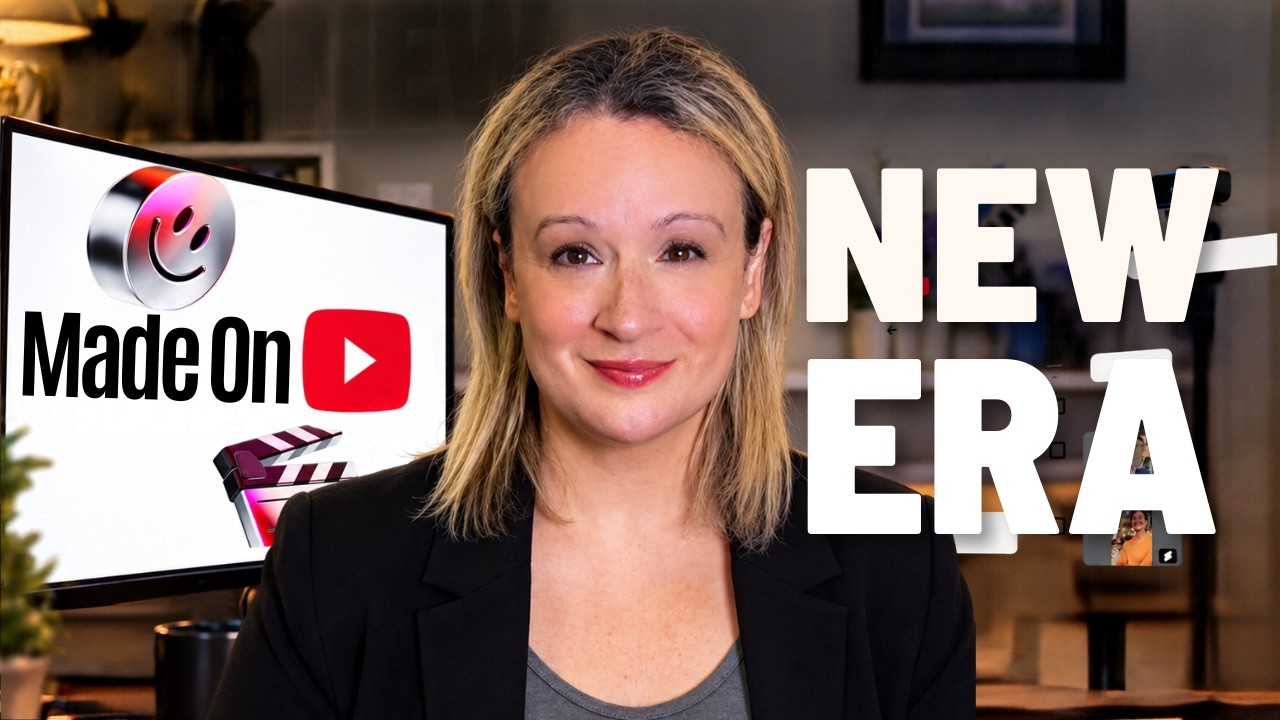
Daryn Strauss had been watching the pattern build for months before YouTube’s Made on YouTube event finally snapped the pieces together. Shorts being organized into series. Custom feeds letting viewers curate their own programming blocks. Studio tools that read scripts, test cuts, and help pitch sponsors. Taken one at a time, each update looked like a minor tweak. Lined up together, they describe a platform quietly rebuilding itself around a single idea: creators are the new prime time, and YouTube intends to give them the infrastructure to prove it.
When bingeable becomes the point, even for shorts
The feature that stopped Strauss first was short series. YouTube is extending the same organizational structure it recently gave long-form content to Shorts as well, allowing creators to group individual Shorts into ordered series with custom thumbnails and a watch-series button so viewers can follow episodes in sequence. The rollout was announced for later in the month of the event, a timeline Strauss read as a signal of genuine platform priority rather than a distant roadmap item.
The shift matters because it reframes what a Short is supposed to do. The current mental model treats a Short as an interruption: it surfaces in a feed, delivers a dopamine hit, and disappears when someone swipes away. Organizing Shorts into series asks creators and audiences alike to think about them as chapters instead of one-offs. Instagram and TikTok had already moved in this direction, so YouTube closing that gap was not a surprise. But the underlying signal is consistent across every platform: even in a format most people associate with passive scrolling, there is room and apparently appetite for something people will come back to deliberately.
Custom feeds push the same logic from the viewer side. YouTube says users will be able to build saved tabs on their homepage organized around specific interests, moods, or topics. How much granular control that actually gives viewers over recommendations remains to be seen, and Strauss was careful not to overstate it. The feature does not yet guarantee that a viewer can call up a specific creator’s show on demand. What it does suggest is that the platform is moving toward letting viewers tell YouTube what they want rather than relying entirely on the algorithm to guess.
Studio is starting to look like a full production company
On the creator side, YouTube Studio is adding enough tools that Strauss described it as shifting from a place to upload and check views into something closer to an all-in-one production operation. Ask Studio, the AI assistant inside the platform, is expanding to mobile and gaining the ability to give feedback on scripts, hooks, and titles. New research and insight features are being added, along with ways to test different cuts of videos the same way creators already A/B test thumbnails. There are also tools aimed at revisiting older videos from a creator’s library and repackaging them to find new audiences.
The business layer is equally dense. YouTube announced expanded affiliate features, direct shopping from videos, help building media kits and brand pitches, dynamic brand segments that let creators slot sponsor reads in and remove them once a deal ends, and a broader shopping and affiliate system. Dynamic brand segments are currently in a limited pilot in the United States and a few other countries.
Strauss put the platform’s own framing plainly: YouTube CEO Neal Mohan wrote earlier this year that the company is ‘committed to building the most diversified economy in the world, one that turns a creator’s unique vision into a sustainable global business.’
The missing piece YouTube cannot build for you
Strauss also named the question sitting at the center of all of it. If viewers gain more control over what they choose to watch, and the feed becomes more intentional, the pressure on creators to give people a real reason to return grows sharper, not softer. YouTube can build the infrastructure to distribute a show. It can give viewers tools to find it again. It cannot manufacture the reason someone wants to watch the next episode. As Strauss framed it, the shift in thinking is not from ‘what should I post next’ to ‘how do I use every new feature,’ but from reactive posting to deliberately building something people will want to come back to.
The tools announced at Made on YouTube are substantial. The creative IP that makes them worth picking up is still the creator’s job to develop.
A Writer’s Guild Award on a shelf somewhere in the frame
Daryn Strauss’s Writer’s Guild Award credit sits in his introduction without ceremony, mentioned once and not again.
Custom feeds are rolling out later this year. Short series are coming later this month. The infrastructure is being built around creator-led shows. What fills that infrastructure is still an open question, and every creator on the platform is now, in effect, being asked to answer it.