Three months after parking on the shore of Lake Superior and waving goodbye to summer, Nicole and her traveling companion pulled back into that same spot, down to their last pair of clothes, with more than 150 pounds of fish already shipped home and a husky named Maya who had been sick nearly every hour through one of the longest drives of the trip. The pair had just completed one of the most ambitious overland journeys in recent memory: a 90-day loop from Michigan’s Upper Peninsula, across Canada, deep into Alaska, and back, covering everything from class-three whitewater to open-ocean halibut runs in Homer. What they found along the way was less a checklist of destinations and more an ongoing negotiation between ambition, weather, exhaustion, and the kind of beauty that genuinely breaks your ability to describe it.
Mile zero and the drive that rewrites your sense of scale
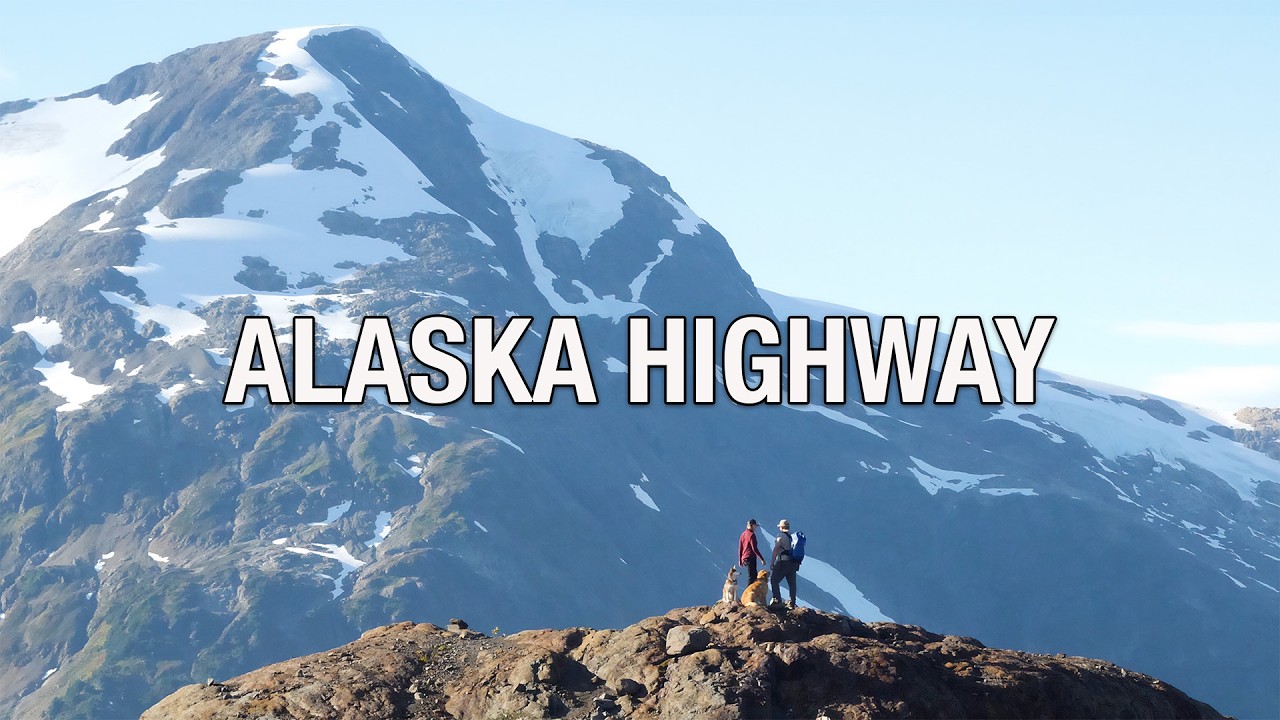
The first real turning point came at the northern end of British Columbia, where the pair pulled up to mile zero of the Alaska Highway. The plains of Saskatchewan and Alberta were already behind them. The air had changed somewhere north of Edmonton, carrying what one of them described as the smell of a newly built log cabin with the truck window down. By the time they reached Muncho Lake in the Canadian Rockies, with its turquoise water pressed up against snowcapped peaks, the trip had shifted from a long drive into something slower and more deliberate. They camped on the lake, hiked the mountain above it while calling out to bears, and let the pace finally breathe.
The Alaska Highway through northern British Columbia delivered what was promised. Five black bears appeared in roughly 20 miles. Stone sheep wandered the road. The scenery changed fast enough that pulling over felt less optional than compulsory. A stop at the Liard Hot Springs offered one of the stranger sensory experiences of the whole journey: cool spring water pooling along the bottom while the upper layer stayed warm enough to soak in, tucked into a stretch of forest that felt genuinely remote.
Three wilderness trips that each demanded something different
The big expedition out of Whitehorse was a nearly 230-mile paddle starting on the Big Salmon River and eventually reaching the Yukon River, ending at the village of Carmacks. Log jams and sweepers filled the early miles. The swift mountain current was less forgiving than expected. By the time the river widened into the Yukon, the nerves had converted into something closer to competence. Sitting by a fire that final night on the Yukon riverbank, the word that kept surfacing was indescribable.
The Alaska leg brought its own recalibration. A whitewater raft trip through the Copper River Valley ran into extremely low water levels, turning stretches that were supposed to run hard into slow, rocky navigation. They made the best of it, pulled fresh sockeye salmon from the river, and took out along the Alaska pipeline. Then came Valdez, two weeks on Prince William Sound with a rental boat, where they limited out on rockfish, king salmon, and coho on the first day alone and eventually shipped more than 150 pounds of fish back to Michigan.
Homer produced the most physically demanding stretch. Friends Dave and Suzanne drove up from Michigan and joined several days on the water. Halibut ran up to 100 pounds. The first morning out, four-to-ten-foot swells pushed them back toward sheltered water, where both humans and one of the dogs were seasick before a king salmon bite turned things around. By the end of the Homer chapter, their fish was hanging at the small-boat harbor and the Sterling Highway had officially run out of road.
The moment a solo river nearly broke everything open
Between the ocean expeditions, a solo drift-boat run of the entire Kenai River stands as the trip’s emotional hinge. Renting a boat from a local and pushing off alone at Kenai Lake, the route ran straight into Kenai Canyon, where four miles of class-three and class-four whitewater waited after a nearly sleepless night surrounded by bear country. Somewhere in the middle of those rapids, the fear and the confidence arrived at the same moment, and he later said he could not help shedding a few tears. The river eventually opened onto Skilac Lake, an eight-hour crossing in calm weather, and then the final run to where the Kenai meets the ocean at the town of Kenai.
A husky who finally found snow again
On the drive south through Hyder, Alaska, Maya the husky spotted a large mound of snow on the mountainside above the road. She took off at full speed, hit the snow pile, and ran circles around it for several minutes. It was the first snow she had seen in months.
The return through the Canadian Rockies brought a surprise extension. Snow flurries at the Columbia Icefields and a tent-only campground that was too good to pass up added one final night to the trip, colder than 20 degrees, with a wood stove in a shared warming cabin and a batch of smoked coho salmon that had been brining since Smithers. Chocolate chip pancakes in the snow the next morning, then east across the prairies, through Saskatchewan, through wicked thunderstorms in Minnesota, and finally back to Lake Superior, where the trip had started 90 days earlier.
 Wake up to Only Happy News!