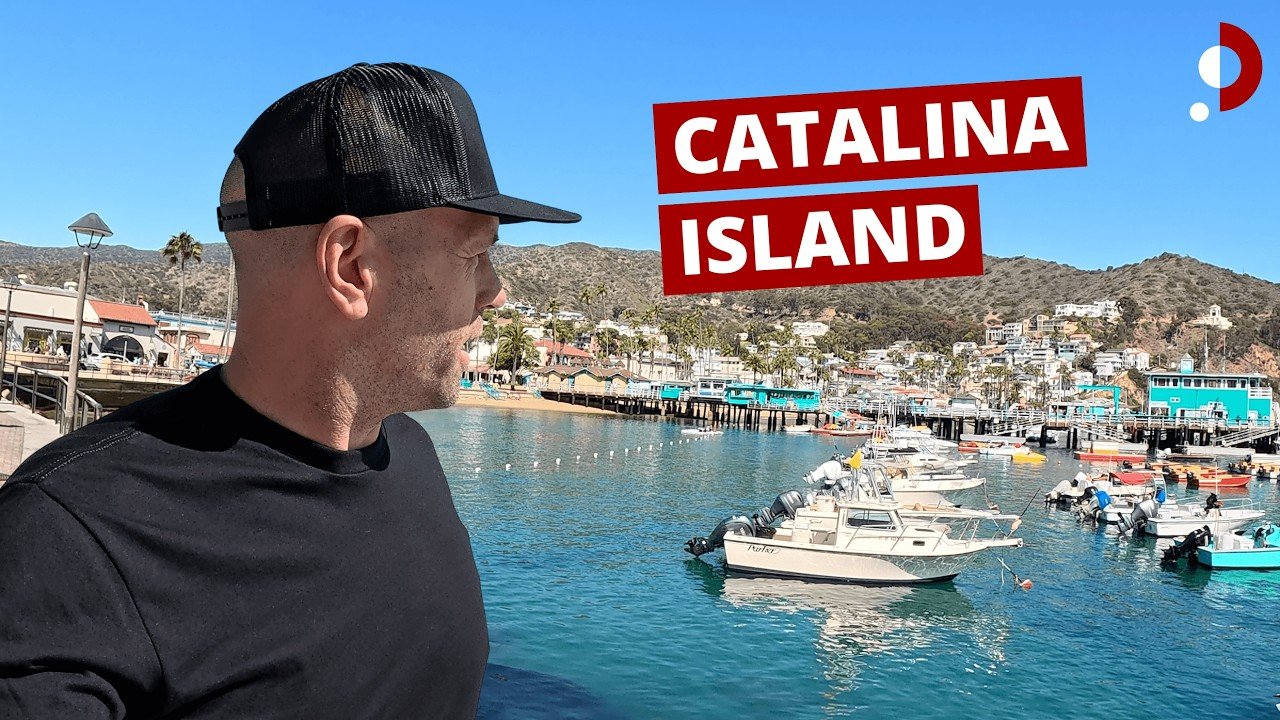
Jonny Q has been waiting 25 years for his car permit, and his vehicle looks it. The mud caking the sides came from a single morning run out to see the bison, just a few miles from downtown Avalon. That kind of patience is the price of admission for life on Catalina Island, 22 miles off the Southern California coast, where roughly 4,000 people share 76 square miles, no stoplights, and a wait list that makes a New York apartment hunt look breezy. What Jonny gets in return is a childhood where his son can be dropped at a city park and told not to get caught doing anything, and a front door that opens onto one of the most intact pieces of undeveloped coastline in the western United States. For the overwhelming majority of Los Angeles County residents who have never made the crossing, that trade-off is completely invisible.
The island William Wrigley built for everyone
William Wrigley Jr. bought Catalina in 1919 with the explicit goal of making it a vacation destination for ordinary Americans, not just wealthy ones. The round-trip boat fare today runs around 80 dollars, which keeps that democratic spirit alive in rough outline. The Casino building he constructed along the harbor never held a card table in its life. The word was used in its original Italian sense, a social gathering place, and the ballroom inside is among the largest in the region. On a weekday morning it sits almost empty, with roller skates available for 10 dollars an hour and a massive mural wrapping the curved walls above a stage built for big bands. The Art Deco details are so dense that standing inside it feels like architecture school delivered as a theme park.
About 90 percent of the island’s land remains undeveloped, held in a conservation trust descended from the Wrigley family’s donation. Jonny, who was born here, went to kindergarten here, and eventually bought his house 12 years ago after the market had already started tightening, drives a muddy car through terrain most visitors never see: fire breaks cut across ridgelines to slow the spread of an invasive weed called Genista that has overtaken much of the east end and is pushing west, deer being gradually removed because they eat native vegetation rather than invasive species, bison that were originally brought over for a film called ‘Vanishing America’ and simply never left. The herd peaked around 300 when Jonny was working the interior at 18 and has since been managed down to roughly 80 through birth control administered to the females.
What the people who actually live here know
Ruben, who has lived in Avalon for 29 years and was having breakfast and a Bloody Mary at a harbor-front spot when the conversation found him, offered the sharpest local summary: ‘Sleep in the beach and you’re gonna have everything. Go sleep in LA, you lucky if you gonna have your socks.’ He counted eight people in the whole town who might be called homeless, then immediately qualified it by saying they keep to themselves and cause no trouble. A longtime resident whose parents still live in one of the original pre-World War II employee houses near the harbor said two of his four children moved to the mainland and he does not want them back, not because he loves them less, but because Sea World and Sunday soccer leagues and swimming pools with the in-laws are things the island genuinely cannot offer.
Steve Bray, whose family arrived before the Wrigleys and whose relatives watched the 1915 fire take out the entire front street, runs Steve’s Steakhouse four generations in. He described the two kinds of restaurant owners: the one who buys a busy place on a Saturday night and waits at home for the blue bag, and the one who comes in at six in the morning to cut the fish and the meat and do the desserts and then goes home for a nap and comes back to work the floor. ‘This is my first marriage,’ he said, nodding toward the dining room.
A filet served by the man who butchered it
Late in the afternoon, at a table facing the harbor with the Casino lit up across the water, Steve personally carried out a filet mignon, medium rare, with Bearnaise sauce, broccolini, mushrooms, onions, and steaming sourdough. The fish on the menu came in that day from boats moored in the same harbor visible from the window. A commercial fisherman named Eric, who gave a short boat tour as the sun went down and pointed out that a single mooring buoy in the harbor can sell for 250,000 dollars in property with annual taxes attached, put the supply chain plainly: his buddy catches it, sells it to the restaurant, and the restaurant puts it on the plate. The fish does not touch the mainland at any point.
Jonny Q’s dog Salty, sitting on a ridge above the world
A dog named Salty, riding in the back of the muddiest permitted car on the island, looking out over Mount Baldy and the San Bernardino Mountains from a ridge that most tourists in Avalon below have no idea exists.
The boat back to the mainland leaves whether you are ready or not, and the 80-dollar round trip starts to feel less like a toll and more like a filter.
 Wake up to Only Happy News!