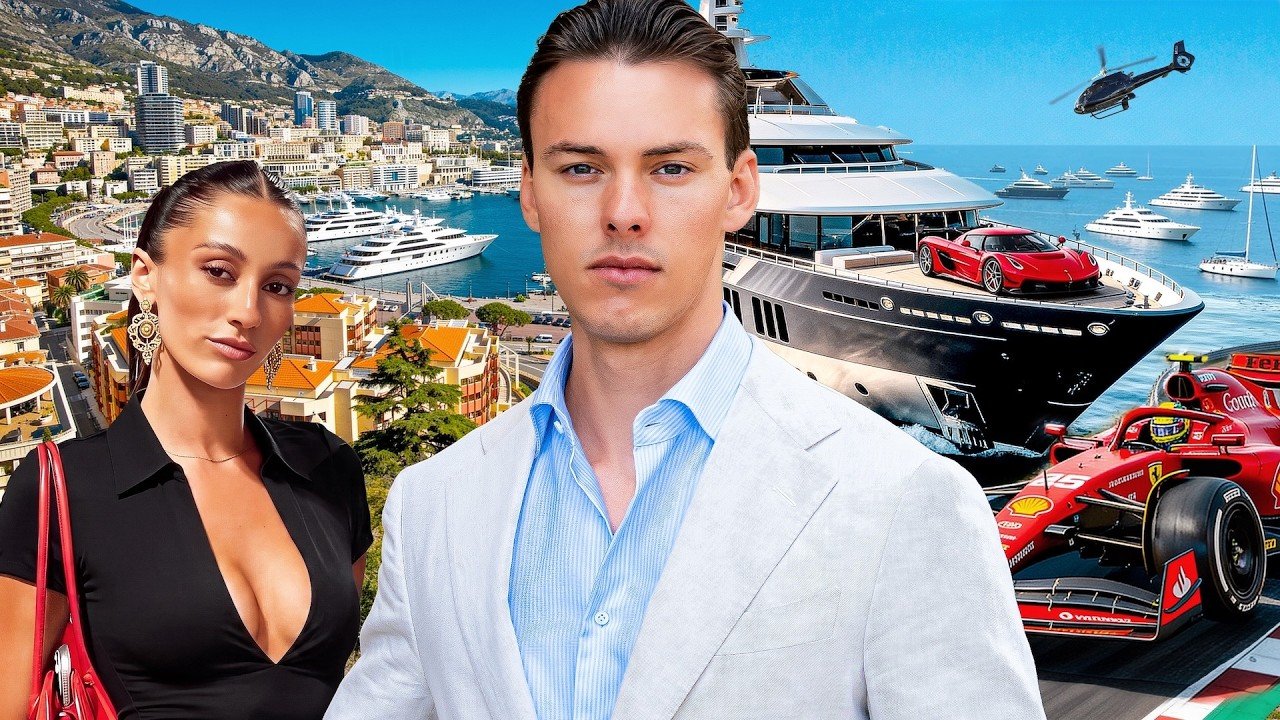
The helicopter kept flying well past where anyone expected to land. Twenty minutes past the first glimpse of a small track, past the point where someone joked they were practically in Spain, until a massive private airport appeared below with a circuit running right alongside it. That gap between expectation and reality is exactly what makes Monaco Grand Prix week something ordinary planning cannot manufacture. For a group of entrepreneurs and creators traveling with the experiential travel company Beyond, the circuit was not a backdrop for a party weekend. It was the first stop on a schedule that included legitimate F3 cars, Porsche paddock access, astronaut-grade food cooked by a multi-Michelin star chef, and race day on a 72-metre super yacht anchored trackside in the Port of Monaco.
What it actually feels like to brake too late at 200 km/h
The F3 cars waiting at the private circuit were not simulator rigs or glorified go-karts. They were unmodified F3 cars, older-year models but stock in every mechanical sense, which meant a hairpin that demanded dropping from sixth gear and 200 km/h down to second gear and roughly 40 km/h in the space of a few hundred metres. One instructor watched the telemetry and delivered a verdict with the diplomatic patience of someone who has seen this before: the helmet was not turning, the steering angle was going in before the car was straight, and the clutch was being released too soon. Luke Davis, who was behind the wheel for the first time with a manual gearbox, put a finer point on it: ‘It’s a nice way of saying I’m [expletive].’ The runs improved. By the end, both Davis and his traveling companion Braden had the hang of the power delivery coming out of third onto a long straight, the rev climb through fourth, fifth, and into sixth, and the slightly terrifying moment when sixth gear arrives and forward motion becomes abstract.
Astronaut food, Porsche paddock mornings, and a 72-metre race day view
The day after the circuit came Porsche Mobil 1 Super Cup paddock access, where 28 cars were staged for a field that included 17 drivers who had never raced Monaco before. A team representative explained the logistical reality plainly: every spare part, every tire, every tool that might be needed had to make the journey to Monaco, because the track is 2 km from the paddock and there is no running back to a warehouse. Between the two motor racing days, the group sat down to a lunch featuring food developed for the European Space Agency’s astronaut program, with a stock of one thousand cans in total, one hundred of which were present for the occasion. The food, prepared to a recipe from a world-famous multi-Michelin star chef, prompted genuine surprise around the table. One guest admitted: ‘Sometimes people lie. They don’t give you the real feedback. It’s actually good.’
Race day belonged to the 72-metre yacht. The only traffic visible in the harbor was tenders shuttling guests between super yachts parked along the circuit. Nineteen-year-old Kimi Antonelli, who had qualified on pole the previous day, led the Monaco Grand Prix and held it through a red flag stoppage and the final ten laps to take the win, his fifth consecutive Formula 1 victory. The result landed differently on board than the betting had suggested it would.
The gala dinner table that took two years to set
The closing dinner on the final evening gathered the full group for what the organizer described as ‘a masterpiece of logistics.’ The table centerpiece, a flower arrangement estimated at roughly one thousand dollars, set the tone for a speech that was less about the race week and more about what the accumulation of two years had produced. He addressed Davis directly: ‘You made that video and those videos that impacted my life, my business, and you showed Beyond in the most tasteful way.’ At 3 a.m., the same point was made again with less ceremony: ‘If he didn’t make the video he did, none of us would be here right now.’
Back at the start of the week, the helicopter had finally descended over that private airport in the south of France, and someone on board looked down at the circuit beside the runway and could not quite believe it was real. By the final morning, after a race day, an afterparty, and some members of the group not making it back until 10 a.m. by helicopter, that initial disbelief had not worn off so much as it had been replaced by something harder to name. Davis said it on the super yacht during the race: ‘Last year was just like absorbing it all, seeing it all for the first time. And then now I’ve been to two F1 races since, flown in probably 12 different helicopter trips.’ The track was still down there. The tenders were still running.
 Wake up to Only Happy News!