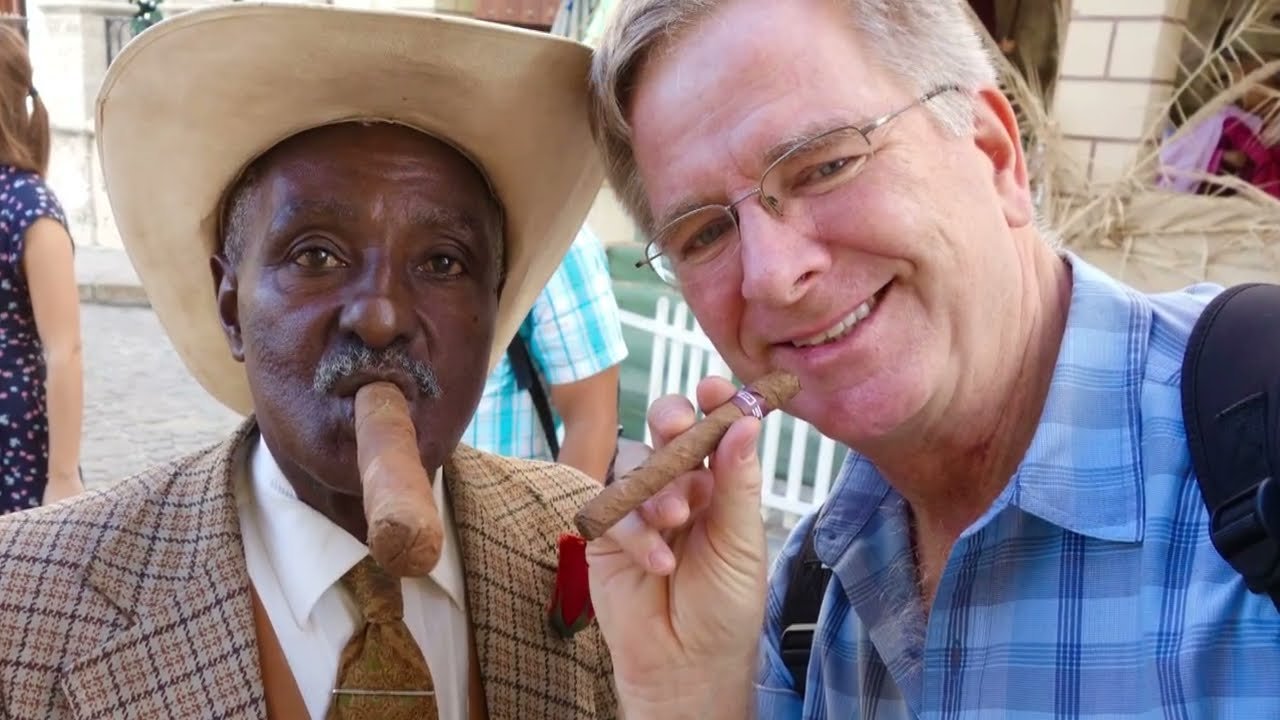
Rick Steves stood at a customs desk in Houston, fresh off a flight from Havana, bracing for trouble. He had cigars. He had been to Cuba. He decided to say something. The agent passed him through without a second glance, and when Steves mentioned the cigars anyway, the reply was simply: ‘Welcome home.’ That small, almost comic anticlimax captures the whole spirit of his 10-day family trip: a destination built up by decades of political anxiety that turned out, on the ground, to be full of warmth, rum, and open doors.
Steves went with his partner Trish, his son Andy, and his daughter Jackie, traveling on a general license under the professional research category, one of 12 qualifying reasons Americans could use at the time. His first and loudest piece of advice for anyone following the same path was to hire a private guide in Havana for the first few days. He paid a guide named Rainier $100 a day in a country where the average monthly wage was roughly $50. ‘Maybe I was getting ripped off,’ Steves told the crowd in Edmonds, Washington, where he gave this talk, ‘and I was so happy about getting ripped off like that.’ Rainier was there at breakfast and stayed until the family turned in at night, and after four days with him, Steves felt confident enough to manage the final six days independently.
Havana on $40 a person, rooftop included
The family skipped hotels entirely and booked casas particulares through Airbnb instead. In the Miramar embassy neighborhood, they got the entire top floor of a mansion with a rooftop garden for $150 a night split four ways, roughly $40 per person. Each morning a host came in to cook breakfast. Each evening the family sat on the rooftop with the owners, mojito in hand, talking politics. The beds were small, Steves noted cheerfully, but the couple who ran the house became genuine friends.
Havana itself rewarded the simplest approach. A four-hour taxi circuit let the family tick off the Christopher Columbus Cemetery, which Steves described as likely the largest in the hemisphere, the Afro-Cuban cultural lane of Hamel with its dancers and murals, and the harbor market stacked with hand-carved souvenirs. The classic American cars from before the 1960 embargo were everywhere. A ride in one of the more aggressive cabs ran $10 to $20. The cheaper shared cars meant watching out for springs that could catch your trousers on the way out.
Tobacco country, Trinidad, and a New Year’s Eve that cost nothing
A three-hour bus ride from Havana cost the four of them about $60 and dropped them in Vinales, the tobacco-growing valley where a cigar roller at a farm took raw leaves, sealed the finished product with honey, and packed 20 cigars into a bundle right in front of the group. Steves said that single moment nearly made him want to return with a film crew.
From Vinales, a private car to Trinidad ran $150 for the roughly three-to-four-hour trip. Trinidad was deep into the 80s even in mid-winter, a two-story colonial town anchored by a church on the main square where live music played every night for free. A mojito from any nearby bar cost $2. The family happened to arrive on New Year’s Eve. Steves wandered the streets, struck up a conversation with a local man, and within minutes was invited into a multi-generational family party. There were no party favors, no ticketed dinner. There was one bottle of rum, at about $3, passed around a room where the children were showing their guests Abraham Lincoln quotes on cracked cell phones. Two blocks away, tourists were paying $100 each for the poolside countdown at the hotel.
A barber chair on a back-street sidewalk in Vinales
Andy wanted a souvenir that was not a carved box. He found a barber who operated from a single chair set up on the sidewalk and asked for a Cuban haircut. He got one. His sister spent the next half hour back at the B&B trying to repair it.
Steves left Cuba the way he arrived: a little uncertain about what the rules actually were, and surprised to find the reality far gentler than the politics suggested. The people he met were not interested in debating flags. They wanted to know if you could dance, and whether you needed more rum.
 Wake up to Only Happy News!