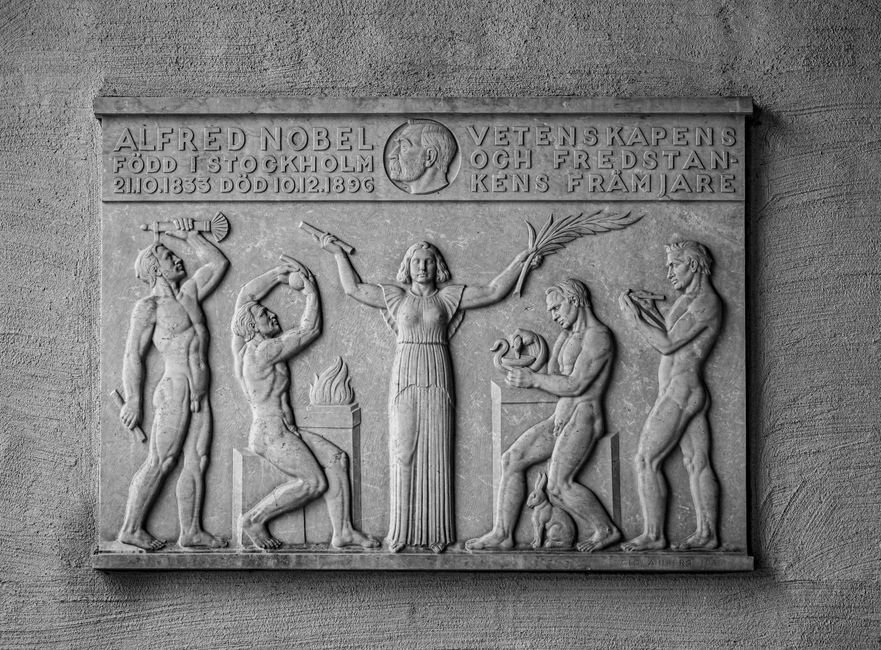
On July 15, 1955, eighteen Nobel laureate scientists gathered at Mainau Island in Germany and signed a formal declaration calling for an end to nuclear weapons – not as protesters, but as the very physicists and chemists who understood exactly what those weapons could do. Within a year, 34 more scientists joined them, bringing the total to 52 signatories who collectively represented the sharpest scientific minds of the postwar era.
Here is what the declaration said, who signed it, and why the names Otto Hahn and Max Born – both German nuclear scientists – carried particular weight in that moment.
What 52 Scientists Actually Put Their Names On in 1955
The Mainau Declaration did not hedge. It stated plainly that a war fought with nuclear weapons would likely destroy large parts of humanity – and it called on nations to renounce force as a tool of policy. Otto Hahn, the German radiochemist who discovered nuclear fission in 1938, was among the original eighteen signatories. Max Born, the physicist who helped develop quantum mechanics and won the Nobel Prize in Physics in 1954, signed alongside him. These were not outsiders criticizing technology they did not build. They were the architects warning about the structure they helped design.
The declaration emerged just months after the United States and Soviet Union had both tested hydrogen bombs, weapons many times more destructive than the atomic bombs dropped on Japan a decade earlier. The timing was not accidental. The signatories knew the escalation curve and chose to say so publicly, on the record, with their names attached.
How the Mainau Declaration Connected to the Russell-Einstein Manifesto of the Same Year
July 1955 was an unusually dense month for scientific anti-nuclear statements. Just eleven days before the Mainau signing, Bertrand Russell and Albert Einstein released their own manifesto – also signed by Nobel laureates – urging world governments to seek peaceful resolutions to international conflict given the catastrophic potential of nuclear war. The two documents reinforced each other across the same summer, creating a rare moment where the global scientific community was speaking in a single, consistent direction. The Mainau Declaration grew from 18 to 52 signatures in under twelve months, a rate of adoption that signaled the statement had traction well beyond its original signatories.
What the Mainau Declaration’s 52-Signature Count Tells Us About Scientific Consensus as a Public Tool
Fifty-two Nobel laureates signing a single political statement in the mid-1950s represented something that had no real precedent – credentialed experts using their collective reputation as a direct form of public pressure on governments. The declaration did not stop nuclear proliferation, but it helped establish a model: that scientists carry a specific obligation to communicate risks that fall within their expertise, even when those risks are politically inconvenient. That model showed up again in later decades in debates over chemical weapons, climate science, and pandemic preparedness. The Mainau signatories were not the last scientists to try this approach, and the 1955 declaration is a direct ancestor of how expert consensus statements are deployed in policy debates today.
Seventy-one years later, the original eighteen signatures on that document still represent a moment when the people closest to the science decided that staying quiet was not an option – and fifty-two of them, eventually, agreed.
Source: Read original
 Wake up to Only Happy News!