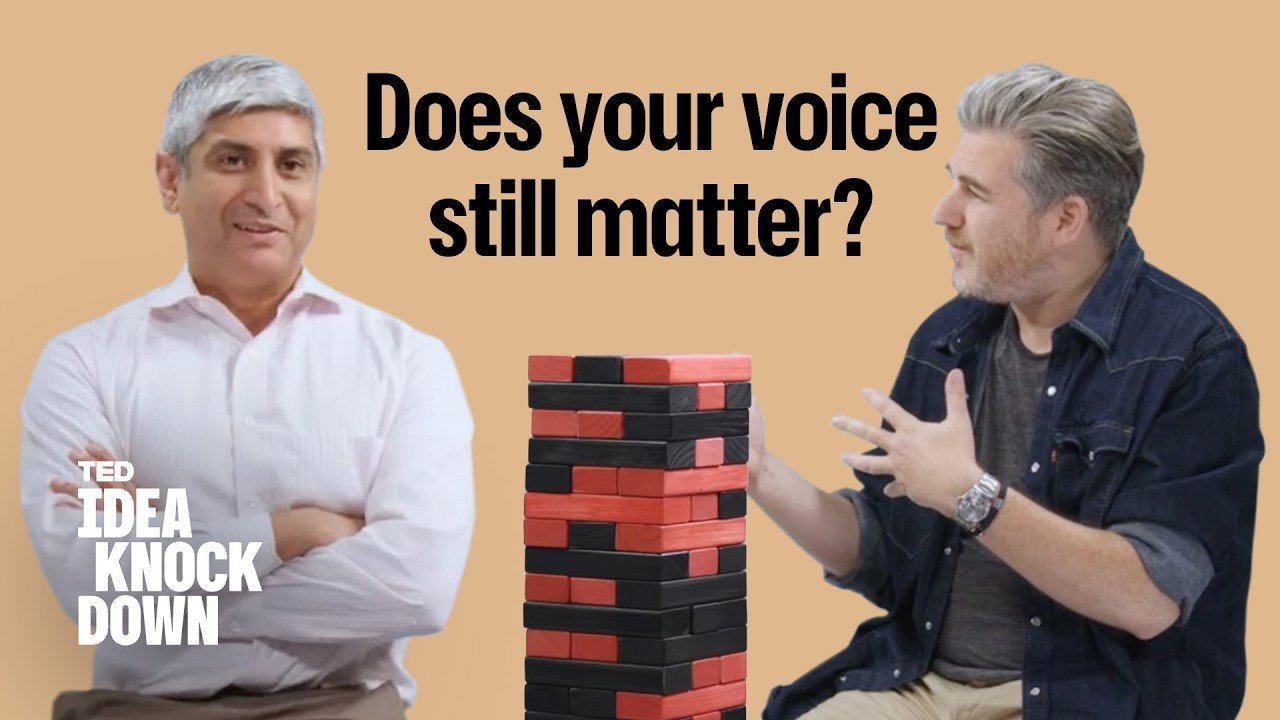
Anush Gupta still remembers exactly what it felt like to pull the weekly constituent report. As a former chief of staff to a member of the House, he asked his team every week to compile the emails, phone calls, faxes, and handwritten letters that had come in on any given issue, and he read them. That detail matters now, because Gupta and Neil Fringlass, chief marketing officer at Visit Philadelphia, sat down together not for a panel or a press conference, but for a game of Jenga-style block-pulling that turned into one of the more honest conversations about civic power you are likely to hear.
The constituent email that actually moved a bill
The game, called Idea Knockdown, works simply: red blocks carry rapid-fire questions, black blocks go deeper, and whoever topples the tower faces a mystery challenge. The stakes were light. The answers were not.
When the question came up about what ordinary people have more power over than they realize, Gupta did not reach for an abstraction. He went back to his time on Capitol Hill. Every week, that constituent report landed on his desk, and he factored it directly into which bills he put the congressman’s name on to support. ‘All it took,’ he said, ‘was that one constituent to draw my attention to it, and I put the congressman on the bill.’
Fringlass nodded and added the street-level version: every morning while walking his dogs, he spots something in his neighborhood and emails his council member before he gets home. He is not waiting for a movement or a petition drive. He is doing it daily, the way someone might text a friend.
That gap, between the scale of what people assume is required and the scale of what actually works, was the through-line of the whole conversation.
Why Philadelphia’s voter turnout fell from 70 to 30 percent
Fringlass pointed to Philadelphia as a case study in what disconnection looks like in real numbers. Within their own lifetimes, mayoral election turnout in the city has dropped from above 70 percent to around 30 percent. Neither of them is old enough to find that trajectory anything but alarming. The explanation they landed on: people started checking out not because they stopped caring, but because they stopped believing their issues were being addressed.
Gupta framed it plainly: most people want to participate and simply do not know how to do it in a way that feels meaningful. Writing to a council member, following local news, rallying neighbors. None of it is exotic. The system, he argued, can still work. It just requires someone to keep reaching into it.
On the bigger fractures, both men agreed that division is largely a symptom of disconnection, and that one more question in a conversation is often enough to find that the person across from you wants most of the same things. As Fringlass put it, ‘It takes a lot of animals to make up a zoo,’ which was his way of saying that understanding other opinions is not optional in a functioning democracy.
Compromise, they agreed, is a sign of strength. Social media, Gupta said flatly, is not: ‘N-O, no, period,’ one of the most destructive forces toward an effective democracy he has seen in his lifetime.
A kite, a stranger, and a breeze that kept stopping
Gupta knocked the tower, so his mystery challenge was to fly a kite with a stranger. He walked out, approached people who mostly looked the other way, and eventually found one woman who said yes. The breeze died the moment he handed her the kite. They fumbled it, laughed, called anything that lifted off the ground a partial success, and agreed they had done it.
The kite barely left the ground. The conversation was harder to knock down than the tower.
Back on that Philadelphia sidewalk, early in the morning, Fringlass is already composing his next email to his council member, walking his dogs, watching the neighborhood for something that needs saying.
 Wake up to Only Happy News!