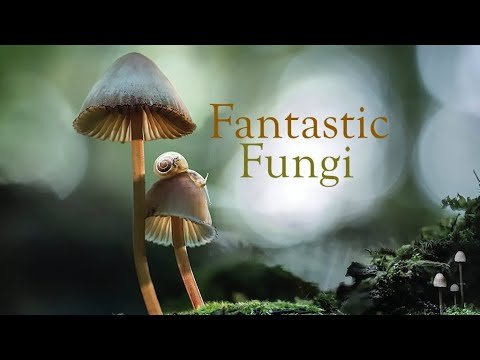
Paul Stamets was a logger in September 1974 when he rounded a corner in the woods and stopped cold. A purple mushroom unlike anything he had ever seen was growing there, enormous and vivid, and something in him broke open on the spot. It was the kind of moment that mycologists, ecologists, and researchers keep circling back to, because it points at something larger: the organisms most people step over without thinking may be the ones holding the living world together. The science, it turns out, is catching up to that intuition fast.
Fungi constitute their own kingdom, separate from plants and separate from animals, yet genetically closer to animals than either is to the other. There are over 1.5 million species, roughly six times more than all plant species combined, and of those only about 20,000 produce the visible mushrooms most people recognize. The rest are working quietly below ground, and that work is staggering in scale.
The forest floor as a living internet
Under every footstep in a forest, researchers have found roughly 300 miles of fungal threads. That network, called mycelium, is composed of long branching filaments that grow one cell at a time, spreading three-dimensionally through soil and wood. The density of end-branchings in even a small patch of mycelium exceeds the number of neural pathways in a human brain, and the system operates similarly, using electrolytes and electrical pulses to carry information.
Trees use this mycelial web to move carbon and nutrients between one another. Ecologist Suzanne Simard’s research, referenced in the source, found that mother trees can recognize their own seedlings through these mycorrhizal connections, sending extra carbon to weaker offspring and even adjusting their own root chemistry when they detect nearby threats. The transfer is not passive drift. It is directed, responsive exchange.
Fungi’s role in carbon storage is equally direct. Plants photosynthesize and pull CO2 from the atmosphere, and research cited here finds that roughly 70 percent of the carbon they fix moves below ground through root systems, where it trades hands with fungi and becomes locked in fungal cell walls. Stable soil carbon can remain sequestered for thousands of years. As one researcher involved in the work put it, ‘it’s right in front of us,’ a natural engine already running.
From diesel spills to oasis
Stamets was part of an experiment that placed four piles of soil saturated with diesel and petroleum waste side by side. One was a control, one treated with enzymes, one with bacteria, and one inoculated with mushroom spores. Six weeks later the other three piles were, in his words, ‘dead, dark and stinky.’ The fungi pile was covered with hundreds of pounds of oyster mushrooms. The mushrooms sporulated, spores attracted insects, birds followed with seeds, and the contaminated pile became what Stamets called ‘an oasis of life.’ The fungi had produced enzymes called peroxidases that break the same carbon-hydrogen bonds holding hydrocarbons together, effectively digesting the pollutant.
This decomposition capacity is ancient. Fossil evidence found in South Africa places mycelium-like organisms in lava sediments 2.4 billion years old, the oldest known record of a multicellular organism on Earth. When asteroid impacts darkened the sky, killed plant life, and collapsed food chains, fungi survived because they do not depend on sunlight. The organisms that paired with fungi made it through those extinctions. The ones that did not, largely did not survive.
A man who still stares at the ground
One voice in the story is harder to place than the scientists. Growing up, he could not hold eye contact, and nothing in speech therapy reached him. So he stared at the ground, and the ground showed him fossils and mushrooms.
The research and the wonder coming out of that early habit, decades of amateur fieldwork conducted in old-growth forests, chasing new strains and rare species through territories most people never enter, has contributed findings that professional mycologists have taken seriously. As one scientist noted of the amateur tradition, ‘the meaning of the word amateur is a lover, and he loves his mushrooms.’
Stamets was back in old-growth territory recently, working a section of forest with large living snags, hunting for a new strain. He had not found it yet. He noted, with complete sincerity, that it still beat being in the office.
 Wake up to Only Happy News!