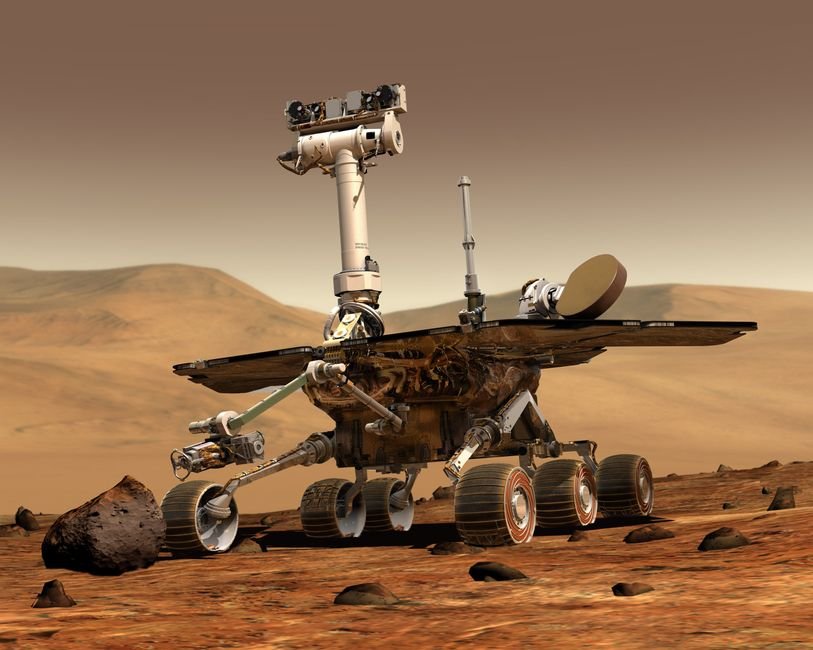
NASA’s Perseverance rover has now rolled 26.2 miles across the Martian surface – a full marathon’s worth of distance – while simultaneously marking five years since it touched down on the Red Planet. That combination of longevity and raw mileage puts it among the most productive robotic missions ever sent beyond Earth. Here is a breakdown of what those five years actually produced, and why the distance number matters more than it sounds.
26.2 Miles Across Jezero Crater and What It Cost to Get There
Perseverance landed in Jezero Crater on February 18, 2021, a site chosen specifically because scientists believed it once held a lake billions of years ago. The rover did not rack up those 26.2 miles quickly – Mars exploration moves at a deliberate pace, with terrain checks, rock sampling stops, and instrument calibrations eating into every drive cycle. Each wheel rotation on Martian soil carries a price tag of years of engineering and billions in mission funding, which makes the odometer reading a genuinely hard-earned number rather than a casual statistic. The rover has conducted hundreds of individual experiments across that distance, collecting rock and soil samples that are being preserved for a future return mission to bring back to Earth.
How Perseverance’s Five-Year Data Set Is Reshaping Mars Science
The rover carries instruments designed to do things no previous Mars mission could manage at scale. It has tested oxygen production directly from the Martian atmosphere using a device called MOXIE – a proof-of-concept for future human life support. Its cameras and spectrometers have helped scientists identify organic molecules in Martian rock, which does not confirm life but does confirm the chemical building blocks were present. Five years of continuous surface data has also refined models of Martian weather patterns, dust behavior, and subsurface geology in ways that orbital satellites simply cannot replicate from above.
What Perseverance’s Sample Cache Means for the Proposed Mars Sample Return Mission
The rover’s most consequential long-term contribution may be the sealed sample tubes it has been depositing at designated spots along its route. Those tubes contain the best-preserved pieces of ancient Martian rock ever collected, and the proposed Mars Sample Return mission – a joint NASA and European Space Agency effort – is designed specifically to retrieve them. If that mission launches and succeeds, scientists on Earth will be able to run tests on Martian material that no rover instrument could perform in the field. Five years of careful sample selection by Perseverance’s science team means the cache already waiting on the surface represents decades of potential laboratory research back home.
Five years ago, Perseverance’s wheels touched down on a cold, dusty crater floor with a checklist of objectives and no guarantee of surviving past the first Martian winter. It has now driven the length of a marathon, filled sample tubes with some of the most scientifically valuable rocks ever collected off-world, and kept its instruments running long enough to watch an entire season of Martian dust storms roll through. The marathon is done. The science is not close to finished.
Source: Read original
 Wake up to Only Happy News!