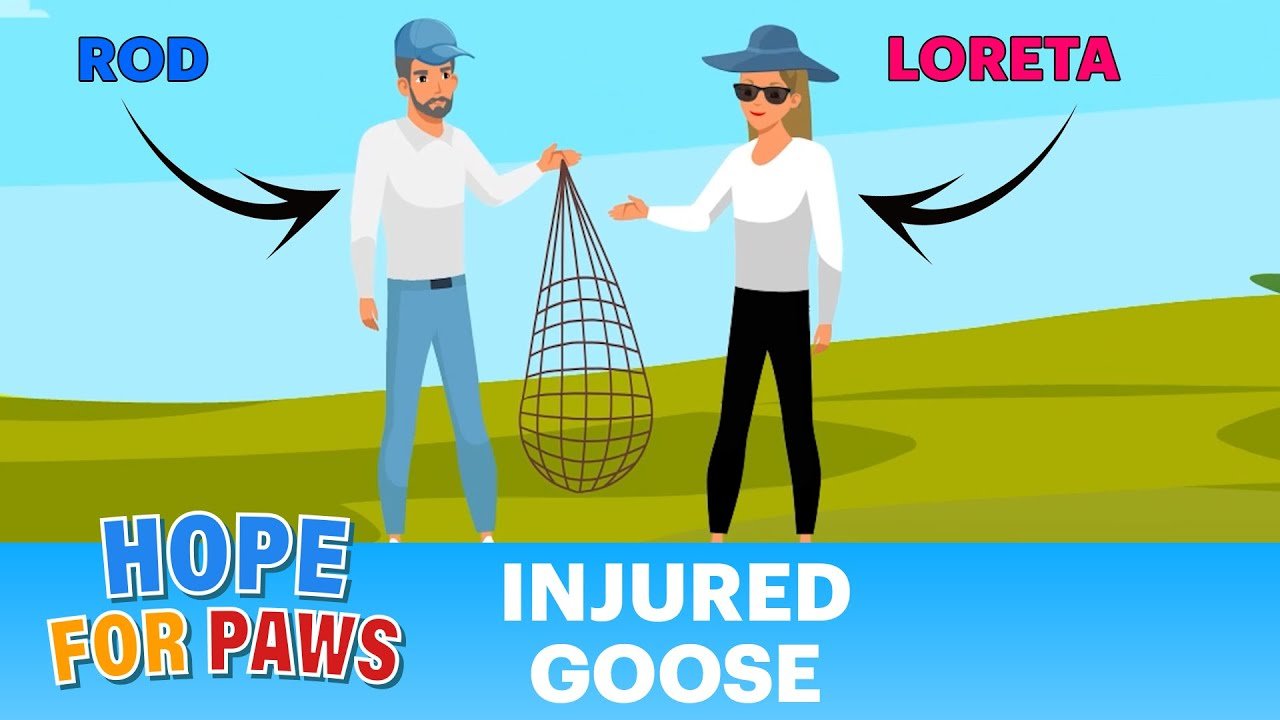
Loreta Frankonyte and her Hope For Paws colleague launched a multi-day, multi-method rescue operation after receiving a distress message about an injured mama Egyptian Goose – a rescue that ultimately required a kayak, a hand-deployed net, a volunteer swimmer, nail clippers, and steady hands to free the bird from what appeared to be deeply embedded entanglement material.
Day One: Building Trust on the Water
Loreta Frankonyte and the Hope For Paws team arrived on the first day with the immediate goal of getting close enough to the injured mama Egyptian Goose to assess her condition. The goose, wary and mobile on the water, kept her distance from the shoreline. The team’s initial approach focused on building trust – allowing the bird time to acclimate to their presence before any capture attempt was made. The kayak proved essential to closing the gap between rescuers and the goose, enabling positioning that would have been impossible from dry land alone.
When a net became available – described by the team as a tool that could have changed the first day’s outcome entirely – the rescue entered a new phase. A volunteer on the scene confirmed he could swim, and without hesitation entered the water to drive the goose toward the kayak in what the team described, with good humor, as ‘Navy Seal style’ maneuvering. The coordinated water effort successfully allowed Loreta Frankonyte and her colleague to bring the mama Egyptian Goose into their hands.
The Medical Intervention: Layers of Entanglement and Dying Skin
Once the mama Egyptian Goose was secured, the severity of her condition became immediately visible. The rescuers discovered what appeared to be deep, multi-layered entanglement – one team member remarked that the material could conceal as many as 20 strands wound into the tissue. The affected area showed signs of necrotic, or dying, skin, indicating the entanglement had been present long enough to cut off circulation to the surrounding tissue.
Nail clippers were called into service as a precise removal tool, with the team working through the material one piece at a time. The mama Egyptian Goose remained in the rescuers’ hands throughout the procedure, with Loreta Frankonyte and her colleague keeping her calm with steady voices. After the final strands were removed, the team allowed the wound area to soak briefly before determining the goose was stable enough for release. By the time the process was complete, the goose was visibly overheated from the stress and handling – a reminder of how physically taxing even a successful rescue can be for a wild animal.
Egyptian Geese (Alopochen aegyptiaca) are highly territorial and protective parents, which makes prolonged entanglement in fishing line or netting particularly dangerous – an injured parent bird left unrescued risks abandonment of her clutch. Hope For Paws, which has documented hundreds of wildlife and domestic animal rescues on its channel, regularly responds to calls involving waterbirds whose legs and wings become ensnared in discarded monofilament line, a material that does not biodegrade and persists in aquatic environments for up to 600 years according to environmental researchers.
When Loreta Frankonyte and the team finally released the mama Egyptian Goose back onto the water, she splashed down immediately and rejoined her flock, triggering an eruption of honking and applause from everyone present. The sound of the geese calling back across the water brought the rescue to a natural, resonant close – the same voice that had honked in distress now honking freely, exactly as it should.