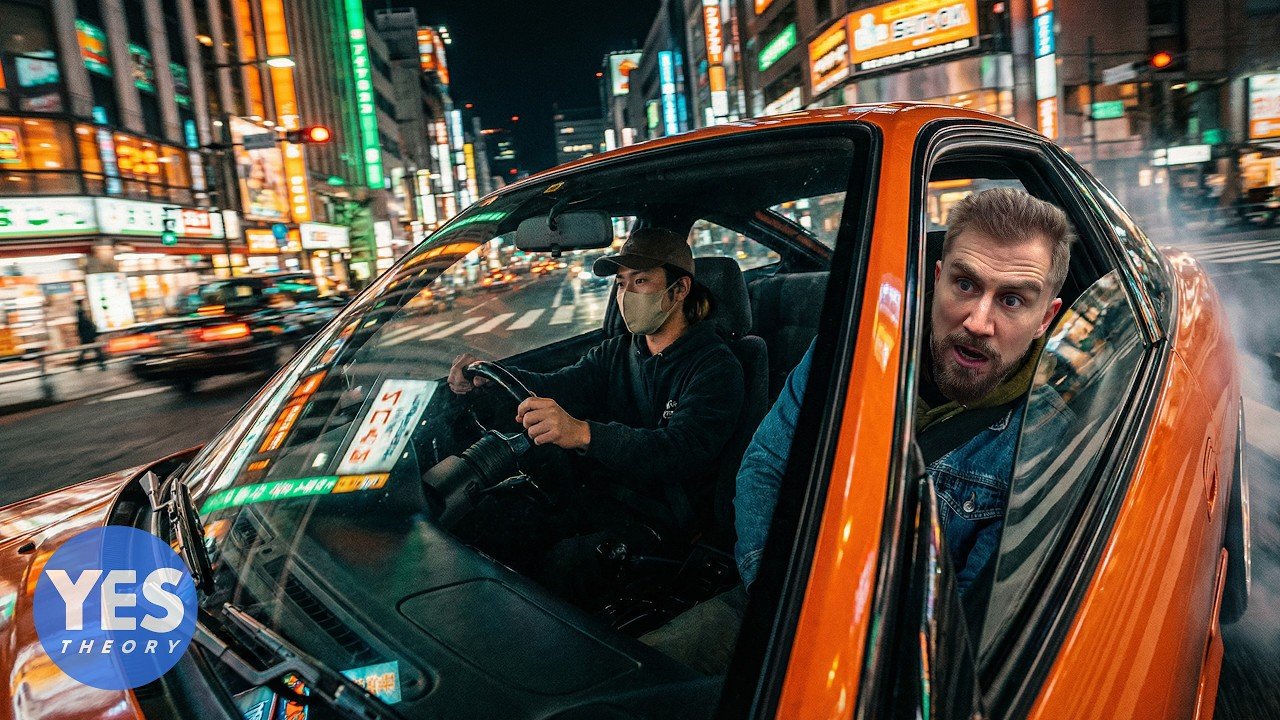
When Yes Theory‘s Thomas and team first heard whispers of an underground drifting community still operating in the mountains outside Tokyo, most people told them it no longer existed. Police crackdowns had pushed the scene so deep into the shadows that even car culture enthusiasts had begun to treat it as myth. But after weeks of careful negotiations, near-cancellations, and a chain of trusted contacts stretching from French YouTube creator and journalist Simon Fresh to a local fixer named Louisie, Yes Theory was granted something almost no outside camera crew has ever received: genuine, in-person access to a secret mountain drift night with Tokyo’s underground drifting community.
From the Shuto Expressway to the Mountain Pass: How Tokyo Built the World’s Most Influential Car Culture
The story of Tokyo’s underground car scene doesn’t begin in a mountain pass. It begins in the late 1960s, when Japan’s postwar economic boom pushed manufacturers like Nissan and Toyota beyond the practical and into the performance era. That’s when the Nissan Skyline GTR first appeared, light, aggressive, and fast enough to turn international heads. By the 1970s and 80s, Tokyo’s Shuto Expressway had become the unofficial proving ground for street racers. At 2:30 in the morning, traffic on this highway, which loops through central Tokyo, would nearly vanish, leaving a continuous circuit where underground clubs reportedly reached speeds of 300 km per hour. Thomas rode those same roads alongside Samir, the owner of a legendary Nissan Skyline GTR R34, who described the highway’s community as “a big family” united by passion.
Drifting itself was born from one rebellious teenager attacking mountain passes in a tuned economy car, doing the opposite of what every other racer did on corners: instead of slowing, he sent the car into a controlled slide. That teenager was Keiichi Tsuchiya, today globally known as the Drift King. Tsuchiya entered professional racing in 1977, filmed his own mountain runs, and spread those videos to an entire generation of drivers. His style directly inspired manga, anime, video games, and eventually the Fast and Furious film franchise, with Tsuchiya himself appearing in Tokyo Drift both as a fisherman actor and as a stunt double driver. By the 2000s, drifting had its own professional series in Japan. But the underground mountain version, done in secret, done for love, never stopped.
One Secret Night on an Abandoned Mountain Road
On the night Yes Theory joined the session, the group met first at Daikoku, the famous open-parking-lot car meet in Tokyo where unique vehicles and their passionate owners gather before police typically arrive within an hour to shut things down. From there, guided by Louisie and with cameras carefully managed out of respect for drivers who didn’t want their faces shown, the crew followed the group into the mountains, losing phone service and leaving street lights behind entirely.
The drifters ranged in age from 25 to 35, all of them veterans of 10 to 15 years behind the wheel. One driver described being chased by eight police cars at once and escaping at 240 kilometers per hour, though fatherhood and a stable office job had since convinced him the risk was too high. Everything on their cars, the engines, suspension, computers, and bodywork, was custom-built by hand because, as one driver explained simply, “we don’t have money, so we need to do it yourself.” Mid-session, a second drifting crew nobody had invited rolled in unannounced, turning what was meant to be a quiet practice night into an impromptu standoff that only intensified the energy. Tires were shredded. One car’s steering shaft broke roadside and was repaired on the spot. And eventually, Thomas and the Yes Theory team were invited into the passenger seats for runs that left them physically shaking.
Context
Tokyo’s underground drifting scene exists within a broader global moment where niche subcultures face increasing pressure from urbanization, stricter traffic enforcement, and the slow disappearance of the empty mountain roads and late-night highway windows that made the original scene possible. Japan’s traffic laws make street drifting illegal, and the community’s survival depends entirely on secrecy, trust networks, and the willingness of participants to accept serious personal risk. Yes Theory’s access, brokered through Simon Fresh’s existing relationships with the drivers, represents one of the few documented Western media entries into this world in recent years. The drifters themselves expressed a clear desire: not to recruit or to boast, but to show the world that what they do is a craft, a culture, and a community worth understanding before it disappears entirely.
Sitting in those passenger seats with white knuckles and ringing ears, Thomas found the same truth that pulls Yes Theory around the globe: meeting people who have built their entire lives around something they cannot fully explain, and cannot live without, makes every risk feel worth it. The mountain pass that birthed the Drift King is still out there. And so, quietly, are his successors.