On a Tuesday lunch break in New York City, Casey Neistat ducked onto the 6 train heading downtown with his friend Jordan, convinced he was about to break a law that turns out was never a law at all. The mission: ride the train past its final stop, stay hidden, and catch a glimpse of a sealed station that most New Yorkers have never seen and most tourists don’t know exists. What happened next revealed something about how one of the internet’s most recognizable independent storytellers actually works, and why a small, almost toy-sized camera is now the piece of kit he couldn’t work without.
The station that closed before your grandparents were born
When the New York City subway opened on October 27th, 1904, City Hall Loop Station was its crown jewel. Arched Guastavino tiled ceilings, skylights, a curved platform that felt more like a ballroom than a transit stop. By 1945, longer subway cars could no longer navigate the curve and the station was shut permanently. The 6 train, however, still runs the loop. The 4 and the 5 do not. Only the 6. So Neistat and Jordan sat quietly as the conductor announced the last stop, passengers shuffled off at South Ferry, and the two of them stayed put. The train rolled forward into the dark curve. A few seconds of flickering light through old tile. Then it stopped briefly before looping back. ‘This is it,’ Jordan said. Then they went back and rode it a second time.
The punchline came immediately after. A subway worker, approached casually on the platform, confirmed without hesitation that riders are fully permitted to stay on and observe the old City Hall station through the loop. ‘You’re allowed to do it now,’ he said. Not illegal at all. The conductor also mentioned he watches the vlogs.
Why the gear room’s best secret is how little of it gets used
Back at his studio, Neistat walked through what he called his gear room, a space lined with equipment, and made the observation that almost none of it ever comes out. His real working kit fits in half a backpack: a main camera, a tiny tripod, a zoom lens, an action cam, a 360 cam, a tiny drone, and a selfie stick. The philosophy is tight. ‘Maximum spontaneity, minimal setup,’ as he put it, which is why he keeps a compact camera on his hip at all times. When his wife started fielding calls at the window of a parking garage where she occasionally helps out, he had the camera out before the second ring.
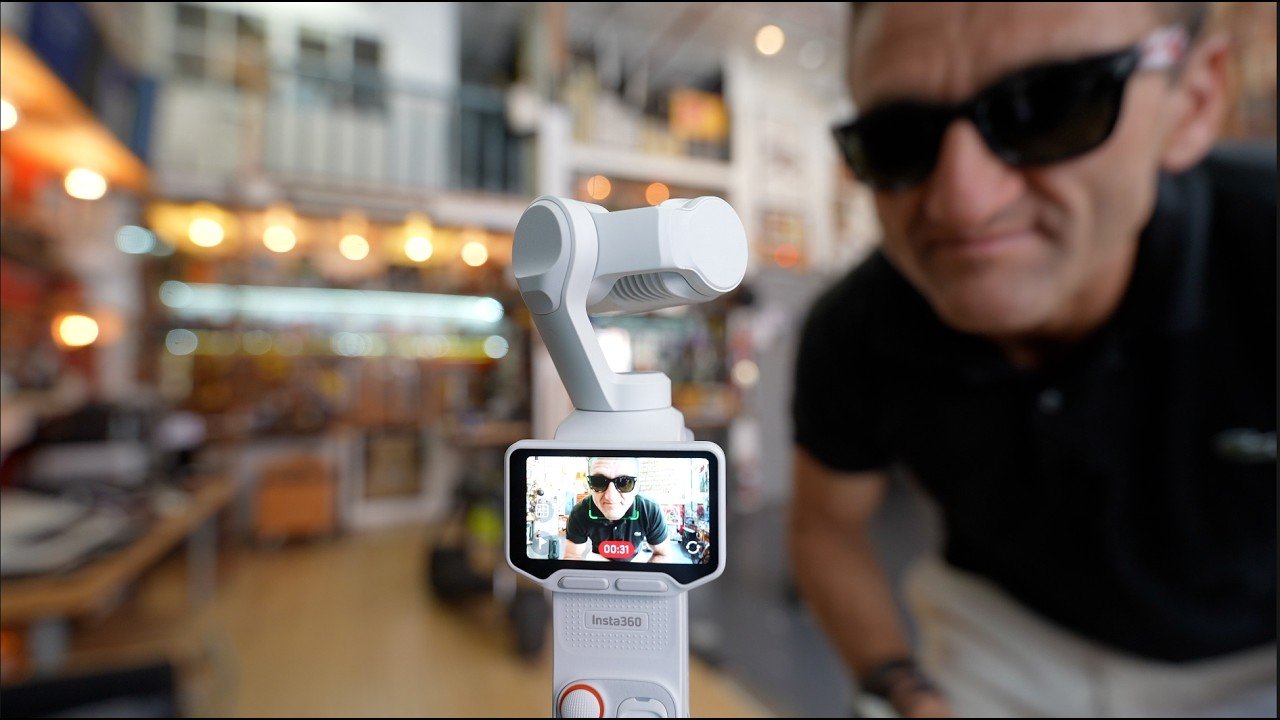
But one gap in that kit had never been solved: how do you get a stabilized tracking shot on a zoom lens without a second operator standing somewhere with a long lens already framed up? The answer arrived in a small, rounded camera he described as looking like something out of a Pixar film. Mounted in his office window, it locks onto him automatically as he moves through the street below, and he can adjust it remotely. The stabilization, he said, is serious. To demonstrate, he pulled up footage from a recent project: a locked, smooth, tracking shot of a poodle running with a tennis ball in her mouth. ‘Do you know how hard it is to get a stabilized tracking shot of a poodle with a tennis ball in her mouth?’ That shot, he confirmed, came entirely from the new camera.
The poodle with the tennis ball
The clip runs only a few seconds: a dog at full stride, the frame holding steady, the ball visible and slightly ridiculous in her mouth.
The 6 train still makes the loop every day, arching through the curved ghost of a station that opened before commercial flight existed. Anyone who stays in their seat can see it, free, no risk, no crouching required.