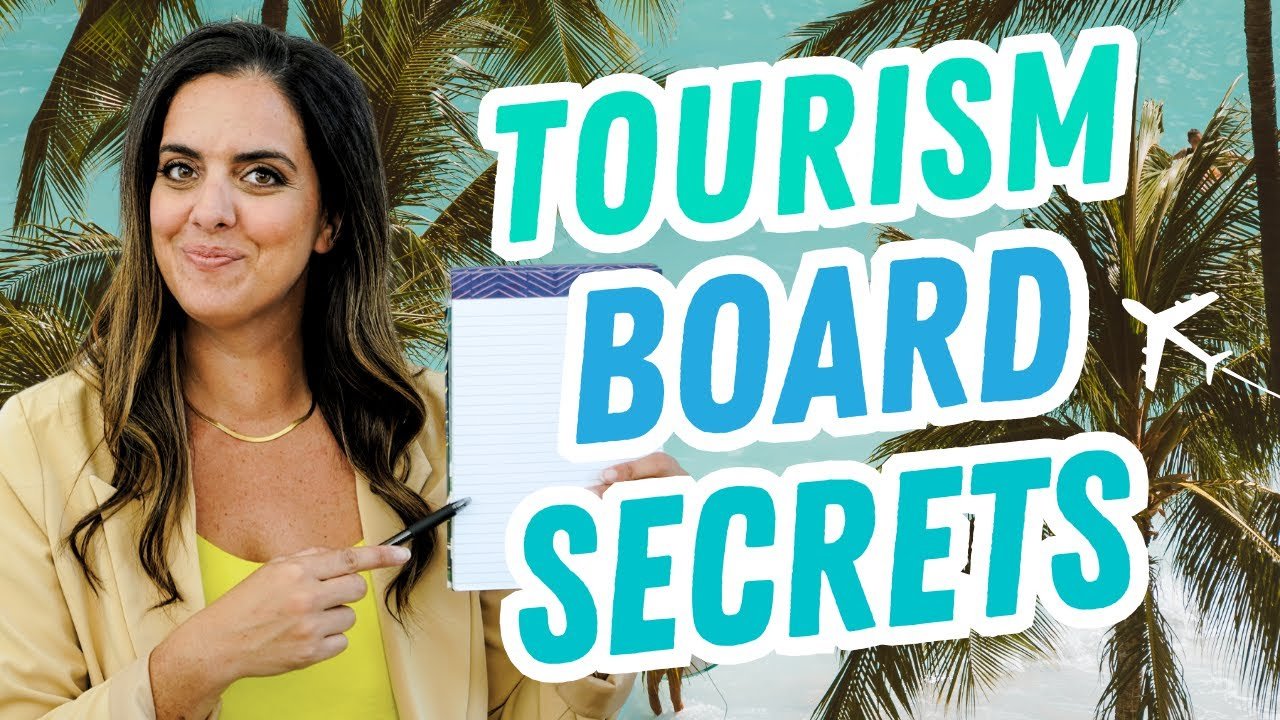
The smallest creator on the press trip sent a spreadsheet nobody asked for: every piece of content she had produced, every link, organized into an Excel sheet and emailed before anyone else thought to follow up. She was not the biggest name in the group. She got remembered anyway, and she kept getting work. That is the kind of detail that separates a tourism board partnership from a polite rejection, and it is the kind of detail that Rachel Jimenez of Sidewalker Daily spent years collecting from both sides of that equation, as someone who has sat in the tourism board seat, run press trips, and paid creators for content and influence.
Her core argument is that tourism boards are not a single category of client. Some want your audience. Some want your camera work. Some want both. Pitching without understanding which one you are selling is where most creators lose before they start.
When your audience is the product you are selling
If you are pitching influence, the first thing a tourism board will audit is whether your audience actually travels to their destination. A creator based in Europe with a million followers pitching a Caribbean tourism board may be a non-starter if no direct flights connect the two regions and that city does not historically send visitors to that island. A smaller creator in Miami pitching the Bahamas, where the flight is under an hour, has a more compelling case simply because the geographic alignment is real.
Demographics are not the only lever. A board promoting a destination with a serious culinary scene wants food-focused followers. One pushing adventure travel wants an audience that already books hiking and diving trips. Jimenez described a recent consulting engagement where the board was specifically seeking adventure travelers, and creators who could demonstrate that their community fit that profile walked through the door ahead of everyone else.
Once you establish audience alignment, the metrics that matter are not always the obvious ones. Follower count and engagement rate are standard checkboxes, but Jimenez recalled reviewing a TikTok creator whose share numbers were extraordinary. ‘Your content is so shareable,’ her team noted, and that single metric made the pitch. Saves, conversions, brand loyalty, and shareability can all carry more weight than a raw follower number depending on what the board is trying to achieve.
When your content is the product you are selling
Content-side pitches work differently. Jimenez pointed to a creator who was paid by a tourism board to write a single blog post, and to others who license video content or produce itinerary guides published directly on a board’s website. High production value matters for trade show reels and billboard campaigns, but a well-structured, genuinely useful informational video that earns steady YouTube views can be equally attractive to a board that wants helpful digital content for its own channels.
What ties both sides together is authentic storytelling. Tourism boards are government entities, funded by tax dollars, and they tend to favor creators who carry minimal controversy and demonstrate cultural sensitivity. A creator who has worked with other boards can name-drop those relationships as social proof, which carries real weight because it signals the creator has already been vetted by a peer institution.
Consistency came up as a hard filter. One creator Jimenez worked with recently lost a board placement because of a visible content gap on her page. The board asked where she had been. That absence read the same way a resume gap does to a hiring manager.
Professionalism in correspondence matters more than creators expect. One pitch landed in a colleague’s inbox with ‘LMK’ in the body. That kind of shorthand may land fine in some contexts, but to a government communications office, it signals a mismatch in register that can quietly close a door.
A single Excel sheet nobody requested
The creator with the spreadsheet is still on Jimenez’s list years later. She was the smallest name on the trip. She followed up with documentation nobody asked for and came prepared in a way that made her easier to trust than people with larger audiences who did not bother.
That spreadsheet is sitting somewhere in a sent-mail folder, all its links still live, attached to a name that keeps coming up when new trips get planned.
The detail that tourism boards return to, again and again, is not the follower count on the pitch deck. It is whether the person on the other side of the email feels like someone you can hand a press trip to and not have to worry about.