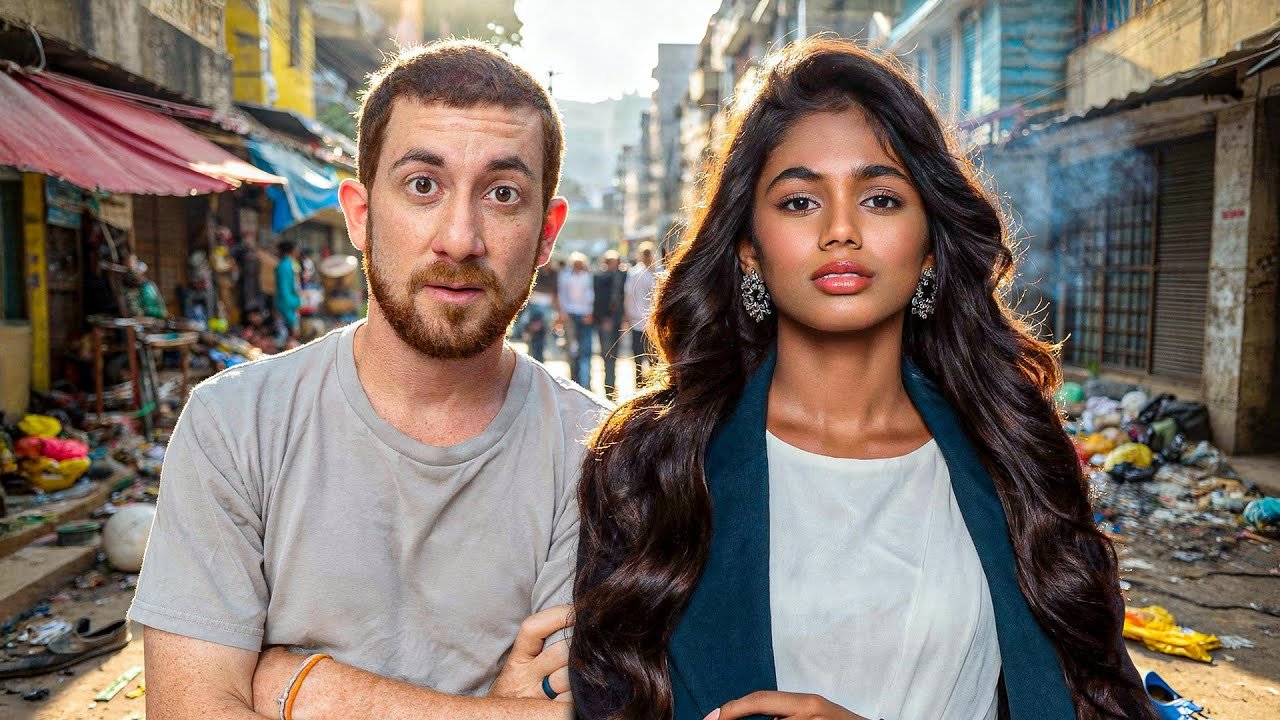
The only way to reach Maleesha’s home in Mumbai is to walk across a line of large rocks set into the waterfront – rocks that, as it turns out, were placed there by the government to stop her family from rebuilding. They had bulldozed the house more than twelve times. The rocks were meant to be a barrier. Her father built around them instead.
Maleesha Kharwa is seventeen years old. She has appeared on the cover of Cosmopolitan and Vogue. She grew up in one room on the edge of the Arabian Sea in what residents call a slum neighborhood, where the tide sometimes covers the floor, the roof leaks during monsoon, and the family charges its power bank by paying a neighbor. The photographs of those magazine covers are pinned to the wall inside. Her father put them up himself.
What the Rocks Outside Her Door Actually Mean
The waterfront boardwalk that runs past Maleesha’s childhood home is wide and active – people exercise there in the mornings, street vendors set up along the path, and the coastline opens out behind them. The contrast between that public promenade and the cramped interior of the one-room home just steps away is immediate and hard to process without standing in it.
Inside, the walls hold a careful arrangement of family photos, cut-out magazine covers, and small decorative objects assembled over years. Her father made most of them. When it rains hard, plastic sheeting goes over the roof gap. Showers happen outside with a bucket. The community water tap is a ten-minute walk away, and filling bottles has to happen late at night – if a guard sees it, the complaint travels up a chain and another bulldozer visit becomes possible.
Maleesha started selling tissues on the street when she was five or six years old. She worked a patch near a cafe. Her English was already good enough that customers would stop and remark on it. At her peak, she was earning around 400 rupees a month – more, she notes plainly, than her father was bringing in from his day labor. She stopped selling at around nine or ten.
Her parents separated when she was eight or nine. With her father away looking for work, she took on the household for her younger brother Sahil, who is now twelve and describes his sister in three words: ‘She is supermodel.’ A childhood friend named Liza, who now attends the same dance classes, stepped in during those years and tied her hair for school. Maleesha calls her more than a mother.
A Foreigner Doing Exercise and a Question About Passion
The break came through a chance encounter on the boardwalk. A foreign woman was exercising near the water. Maleesha and her cousin ran over – as they always did when they saw foreigners – and said hello. Within two minutes, they were friends. The woman asked what Maleesha wanted to do with her life. Maleesha said she wanted to dance. The woman said she knew someone who needed a girl for a dance video and that he would audition candidates and choose one.
Maleesha expected her cousin to be chosen. The cousin was, by her own account, the better performer. But when the man – who would eventually become her manager – finished watching both of them, he turned to Maleesha and asked what she wanted to become. She said dancing and modeling. He told her he could make her a model and that he needed to speak to her parents.
That conversation started a process that eventually put her on newsstands. Her manager began posting photos and video to Instagram. The account grew. Brands came. Magazine covers followed. She now has around half a million Instagram followers, takes ballet, contemporary, and jazz classes – disciplines she had never heard of before this began – and is studying at college while fitting shoots and rehearsals around her coursework. She rarely wears makeup outside of work. Her wardrobe at the apartment is a few items for school. The clothes from shoots go back after the job.
The new apartment – the one without any risk of government bulldozers – sits at the end of a passageway so narrow there is barely enough width for one person to pass through sideways. Food delivery drivers apparently find it without difficulty, which Maleesha reports with quiet satisfaction. The apartment runs on electricity that works ‘good enough.’ There is a water source, but the tap water is not drinkable. She carries drinking water up. The toilet is communal, shared with neighbors in the building. She sleeps on a mat with pillows she picked out herself.
Her aunt, who has been present through most of her career, helps with makeup before shoots and always wanted to be a makeup artist. She describes Maleesha as her daughter. When asked how she feels about the success, she says only that she smiles every time she thinks about it, and that she is happy because Maleesha is happy.
Lunch on the boardwalk is Vada Pav – a fried potato fritter in a bread roll – eaten sitting on a parked motorbike outside a small stall, because Maleesha says no one will say anything if she eats there. She finishes hers. The spicy chicken and potato curry her father cooks for dinner that evening takes two hours and earns a 10 out of 10 without hesitation.
A jewelry line was already in development at the time of the visit – an ‘Infinity Heart’ design she sketched herself and showed her manager over a video call. The design had already been made.
Sunset on the Rocks Before Dinner
As the light drops over the water, a man plays guitar on the rocks outside. A small group sits around him. There is no particular occasion. The same rocks the government placed to stop construction serve as seats. Maleesha sits among the people she grew up with on a stretch of waterfront that is, despite everything, genuinely beautiful in the evening.
That first walk across the boulders to reach her door – the only way in, whatever the weather – turns out to have been the right introduction to how she moves through the world. She has been stepping carefully across unstable ground her entire life, and she keeps going anyway.