
A few months before the crew arrived, the hospital in Kulagaun sat at more than 2,700 meters above sea level in a remote stretch of Nepal with no electricity. Surgeons worked by flashlight. Complex procedures happened in the dark, with basic tools and no reliable equipment. When a case exceeded what the facility could handle, the nearest better-equipped hospital was hours away on foot, a journey that became impossible in monsoon conditions.
That gap had already cost lives. Sanjay, a local engineer working with GivePower, told Darren the story of Nira, a woman from the village who had lost a child. Unable to reach the nearest birthing center through flooded seasonal roads, she lost the baby before help was possible. According to the project team, government funding is not scheduled to bring electricity to the hospital until at least 2030.
What Darren and Dan found when they landed in Kulagaun
Darren and Dan had worked with GivePower on three previous Beast Philanthropy projects. When GivePower asked them to join the Kulagaun mission, they arrived to a village that greeted them with a warmth that several crew members said they had not encountered anywhere else. Families opened their homes. A local resident lit a fire on a cold morning, disappeared briefly, and returned with cups of black Himalayan tea with ginger, a detail Darren described as the best tea he had ever tasted.
Melissa, founder of the Green Program, had brought a group of students and volunteers from across the world to help complete the solar installation. Her reasoning was specific: when people are shown the beauty of the natural world firsthand, they want to protect it. Those students showed up to do physical work on a mountainside, and the presence of that international group alongside Sanjay’s local team gave the project a pace it might not have found otherwise.
Dan fell ill early in the build. He walked to the local health post to find it closed. Nurse Karuna from Kulagaun was eventually located and examined him. Without electricity, she could run only a basic check. Her conclusion was that Dan had something she called ‘ghati,’ a word that turned out to describe a common cold. The moment illustrated, without embellishment, what the community faced with any condition more serious: a seven-hour trek to the nearest large facility.
Solar panels, a birth suite, and the last bolt
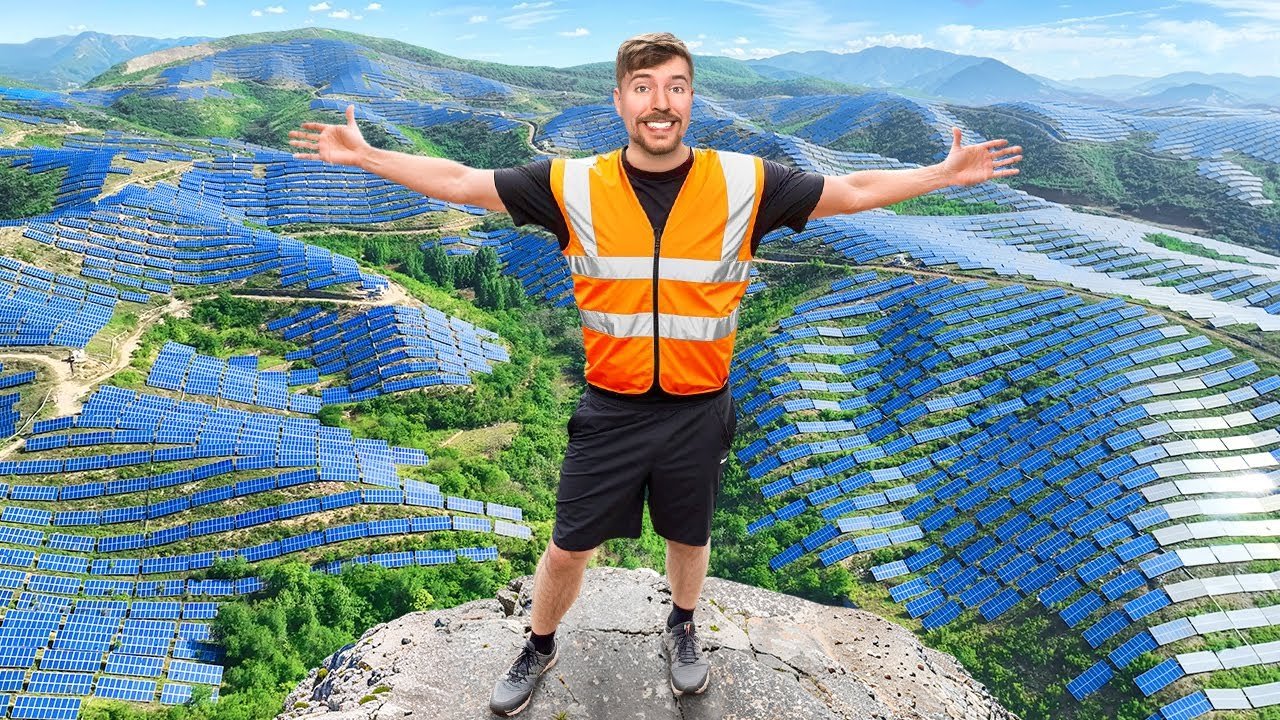
With Dan resting, the rest of the team continued the installation. They finished the structural support work and moved into mounting the solar panels and batteries ahead of schedule. When the final panel was in place, the whole team gathered to sign it. Darren tightened the last bolt himself.
The completed system converted a deteriorating, unlit building into a functioning hospital with a modern, equipped birthing center. According to the project team, it will serve more than 16,000 people in the surrounding community.
Sanjay’s own history added weight to the project. Working at altitude in the Himalayas years earlier, he had found a child in a wooden box kept warm only by a lantern. That image led him to build a device with a local Nepal team, a small infant warmer they named ‘Nyano Nani,’ which translates to ‘warm baby’ in Nepali. According to Sanjay, it won a People’s Choice Award in the United States. When Darren heard the story, he purchased ten additional Nyano Nani warmers on the spot to distribute to other communities with similar needs.
As evening came, the village gathered outside the hospital. When the lights came on for the first time, the crowd watched in silence and then noise at once. The following morning, Sanjay brought Nira to the hospital to show her the new equipment, including the infant warmers. Through Sanjay’s translation, she said she was hopeful that no one would go through what she had experienced, and that she was grateful the birthing center existed now.
Sanjay on his knees at the top of the world
On the final morning, the team arranged a surprise for Sanjay. Despite being Nepali, he had never seen Mount Everest in person. A helicopter took Darren, Dan, and Sanjay to the highest point accessible by rotorcraft near Everest. Oxygen at that altitude was thin enough that they could stay only about two minutes before risking hypoxia. Sanjay dropped to his knees when the mountain came into full view. He said it had been a lifelong dream.
Source: Watch original
This article was reported in June 2026.
OHN Editorial Note: This article is based on publicly available sources. If you spot an error or have updated information, contact us at editorial@onlyhappynews.com. We correct mistakes promptly.