Strangers kept stopping Thomas Brag on the street. One after another, they would tell him that a parent or sibling was battling cancer, or had already died, and that watching Yes Theory videos had helped them stay hopeful. Each time, Thomas listened, expressed gratitude, and said nothing about what was happening in his own life. He was going through the exact same thing at the exact same time.
In 2023, his mother, Helena Bragg, was diagnosed with an incurable form of brain cancer. She died at the end of 2024. In the same stretch of years, Yes Theory, the project Thomas and his collaborators had dedicated their entire adult lives to building, was in what he describes as pure survival mode, barely making it through. A painful and confusing breakup compounded everything. Looking back at footage from a few years ago, Thomas says it sometimes feels like watching a stranger, someone whose life he no longer has.
The fork in the road he describes when the emotions got too big to outrun
Thomas is clear that he is still picking up the pieces. But over the course of processing his mother’s illness and death, he arrived at what he calls the biggest opportunity of his life: a choice about who he wanted to become under pressure. He turned to a quote from Tim Grover, the mental performance coach who worked with Michael Jordan and Kobe Bryant. In Thomas’s words, the quote reads: ‘If you go visit the darkness that you’ve been running from, you’ll have the opportunity to leave a better person. You’ll have a better understanding of yourself. You’ll have a better understanding of your purpose. But if you don’t take that trip and the darkness comes visits you, it’s a guest that will never leave.’
That framing shaped how Thomas approached the years that followed. He stopped trying to outrun the emotions and instead let the tears run, admitted openly that he was not doing well, and went into deeper and more honest conversations with his mother than he had ever had before. He describes this as a form of emotional alchemy: taking the raw energy of anger and powerlessness and redirecting it rather than letting it direct him. He is careful to note that he failed at this repeatedly and stumbled many times, but that the overall direction was one of choosing to sit with the hard feelings rather than escaping them.
What Helena Bragg told him whenever he felt overwhelmed
Before she got sick, Helena Bragg had a phrase she would say to Thomas in what he describes as the most comforting voice, whenever he felt overwhelmed: ‘One step at a time.’ That instruction became a practical operating principle during the years of uncertainty that followed her diagnosis. Thomas, who describes himself as someone who had always enjoyed planning far into the future, had to learn to let go of that habit when the future became too uncertain to map. He says his mother taught him that some periods of life require moving forward without knowing exactly where you are going, that taking the next best step is enough, and that the life rebuilt on the other side, though different from the one before, will have been built by your own hands.
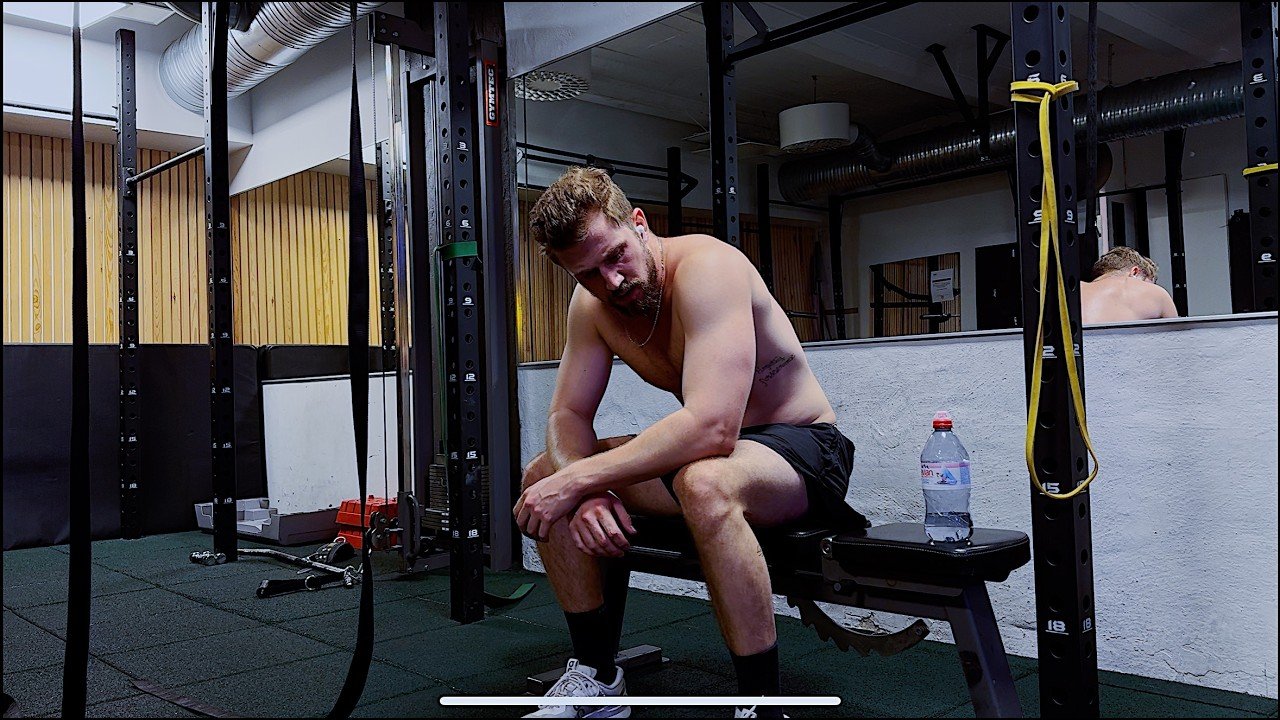
Alongside the emotional work, Thomas made practical changes. He had been neglecting his physical health for a long time, and he noticed that the combination of chronic stress and poor physical condition was making his anxiety significantly worse. He built a habit of going to the gym a few times a week, changed his nutrition to be more aligned with sustained energy throughout the day, quit drinking for a period, and prioritized sleep as much as his schedule allowed, which was often limited by the demands of caring for his mother. He describes the gym habit as having initially felt almost selfish in the context of what his family was going through, but says it ultimately allowed him to show up more present and more useful to the people around him.
He also stopped trying to handle everything alone. Isolation had been his default during difficult periods in the past. During this chapter, his friends refused to let him disappear. They pulled him out of his cave, in his words, and showed him that it was possible to be sad and still find light outside. He now describes learning to ask for help, to be vulnerable, and to be honest about how you feel as an inevitable step in growing up, and, contrary to how it might feel in the moment, a sign of strength rather than weakness.
The moment Thomas finally said what he had not been able to say on camera
For years, while strangers stopped him on the street to share their own stories of loss, Thomas listened and said nothing about Helena Bragg. He did not yet have the strength or courage, he says, to tell them he was living through the same thing in real time. He eventually took those repeated encounters as a sign that sharing the story was worthwhile, even though sitting down to do so was painful. He has since announced plans to host a free live Zoom call where people can come together to talk about grief and support one another, a direct extension of the community that has grown around Yes Theory over the years.
Thomas is direct about what Helena Bragg meant to the existence of Yes Theory itself. ‘There is no Yes Theory without Helena Bragg,’ he says. She was one of the early encouragements behind his decision to chase his own curiosity and creativity. Her legacy, he says, lives on through the stories Yes Theory continues to tell.
A detail that stayed with him about a stranger and a street corner
Someone stopped Thomas on the street, told him a parent had been battling cancer, and said that watching Yes Theory had kept them hopeful during that time. Thomas thanked them. He did not say that his own mother was dying. He kept walking.
Back on those same streets, with Helena Bragg now gone and the grief still ongoing, Thomas is resuming Yes Theory’s travel work and looking forward to being back on the road. The stranger’s words, repeated by so many different people over so many different encounters, turned out to be the thing that finally convinced him to stop walking in silence.
Source: Watch original
This article was reported in June 2026.
OHN Editorial Note: This article is based on publicly available sources. If you spot an error or have updated information, contact us at editorial@onlyhappynews.com. We correct mistakes promptly.