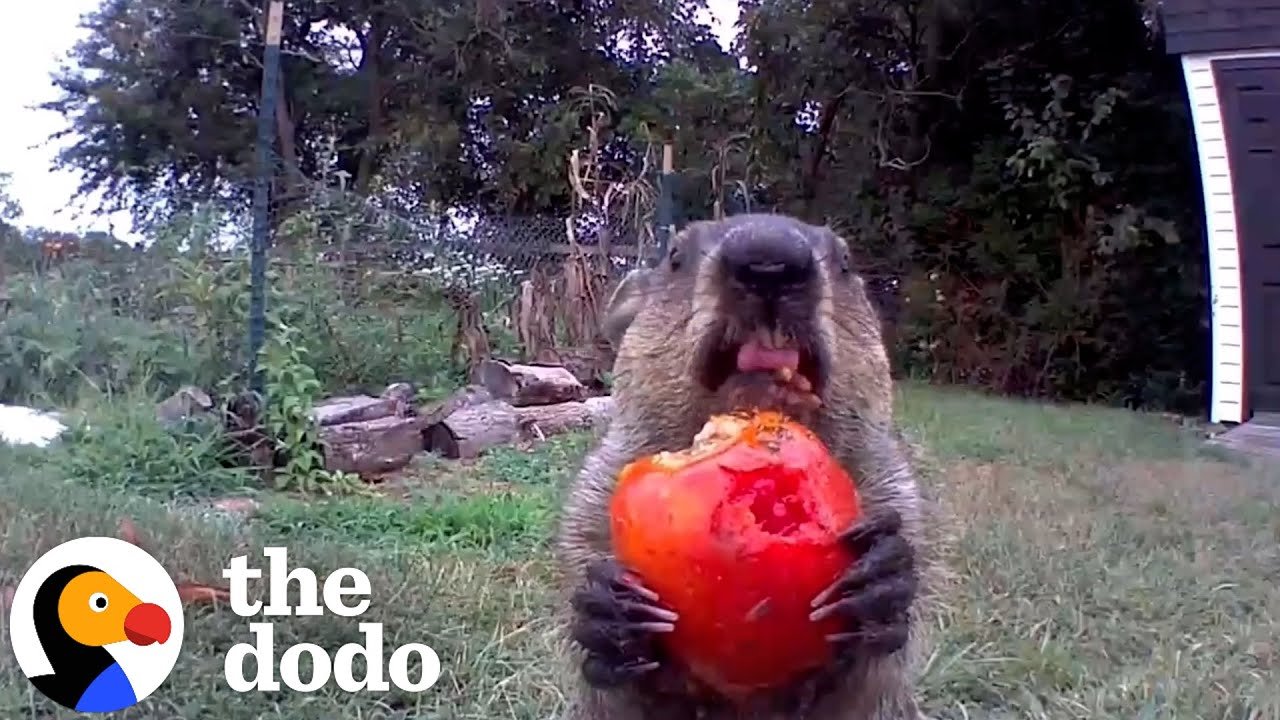
Chunk showed up uninvited, stared directly into the motion-detection camera, and started eating the vegetables without apology. That was how it started in Delaware, where a backyard gardener’s one-sided war against a particularly bold groundhog quietly became something neither of them planned: a thriving wildlife sanctuary built around a picnic table, a 500-pound pumpkin, and the slow realization that the land was never entirely his to begin with.
The groundhog who was always one step ahead
The gardener tried everything first. He built what he called ‘the Chunk Land security perimeter,’ working the fence line, shoring up gaps, doubling down on deterrents. Chunk ignored all of it. The groundhog kept appearing on the camera with what the gardener could only describe as swagger, chomping away with an expression that communicated, in his words, ‘Yeah, I’m the one eating your vegetables. What are you going to do about it?’
The answer, eventually, was nothing. Or rather: something much stranger than nothing. As the months went on, the gardener stopped trying to win and started watching instead. He built a dedicated website called ChunkyGroundhog to share footage and, as he put it, spread awareness of ‘how cool he is.’ Then Chunk brought a girlfriend. The girlfriend had a litter. One of those early babies, spotted nursing and gnawing at the same time, got named Nibbles on the spot. The following year there were five babies. Then litters every year after that, the same cycle repeating each spring.
When the fans started showing up too
Somewhere along the way, the picnic table became a gathering spot, and then a fan mailed a sign. That was the moment the gardener decided to commit fully. He upgraded the setup, added flowers, put in a small water feature so the wildlife could drink and cool off, and placed a 500-pound pumpkin in the background to give the babies extra food through the season. Multiple dens appeared across the property, and his own internet research turned up a detail that genuinely surprised him: groundhog burrows contain a nursery chamber, a sleeping chamber, a designated bathroom area, and a pitfall trap designed to catch predators while the groundhog escapes through a separate exit.
The gardening itself adapted too. Rather than trying to wall off the entire perimeter, he learned to protect only the runners at the base of each plant. The groundhogs prune the low-hanging growth while the fruit develops on top, out of reach. ‘They’re getting to eat and I’m going to get the fruit,’ he explained. ‘The chunks are going to get the low-hanging fruit.’
Now foxes, skunks, squirrels, possums, deer, and the occasional coyote all pass through what he calls Chunk Land. Nobody starves. Nobody gets seriously hurt in the territorial squabbles the siblings have among themselves.
A gap nobody had thought to fill
The project has pointed toward something more permanent. Delaware currently has no wildlife sanctuary, and state law prohibits transporting wild animals across state lines for care. The gardener has started talking publicly about building one, starting from Chunk Land itself, funded and staffed by volunteers.
Chunk, for his part, keeps showing up.
The water feature, left running
The small water feature sits in the corner of the yard, put there so animals can drink and cool off on warm days.
The gardener described the shift plainly, somewhere between a confession and a shrug: ‘I have so many animals that come through here and I just share the space with them. This is their land, too. I just put a garden on it and it works out.’