Somewhere around season five of his latest full rewatch, CinemaWins hit a wall he had not expected: too many thoughts, not enough outlet. The solution was to start talking about them. What followed was a winding, affectionate, and occasionally brat-adjacent love letter to a show that has been on the air since 2013, anchored by one specific season eight episode that he believes contains everything the show has ever been good at, all at once.
The improv problem nobody wants to admit out loud
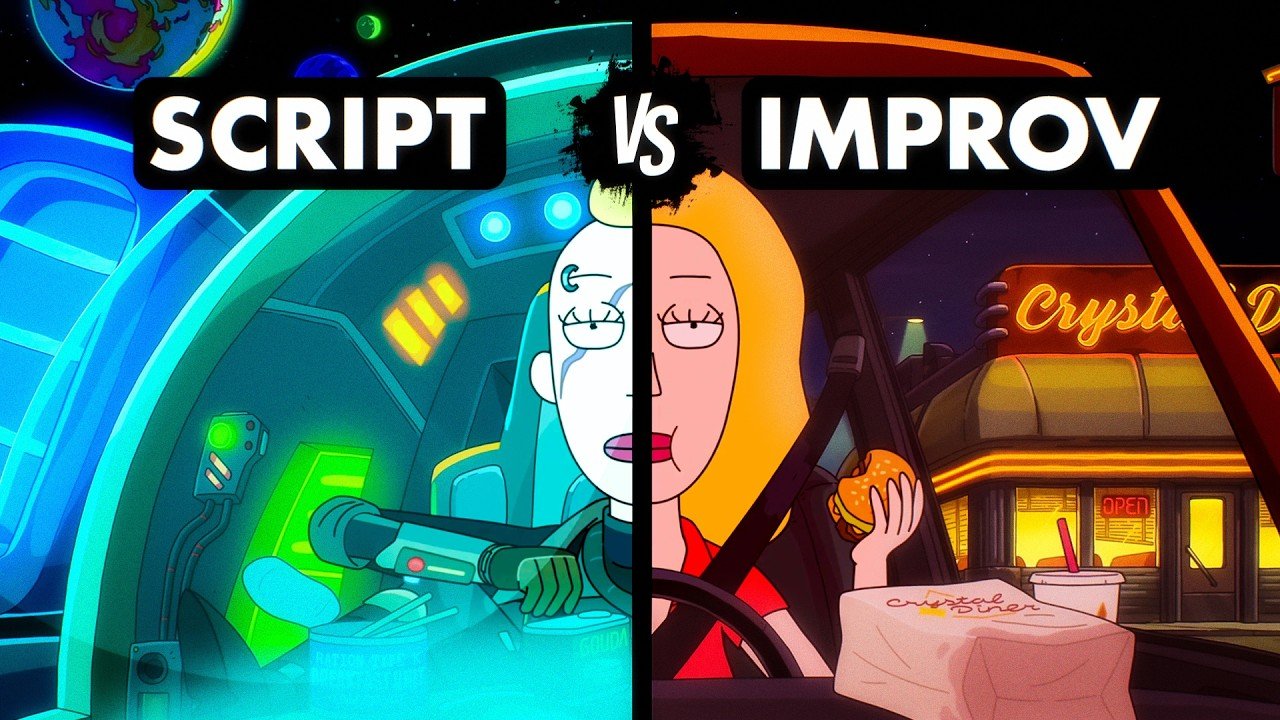
CinemaWins has done a full rewatch of Rick and Morty roughly three to four times now, possibly five or six by his own uncertain count. During the most recent run, something that used to feel chaotic and brilliant started feeling different. The early-season improvised segments, the Interdimensional Cable stretches where Justin Roiland would name things on the spot and the animators scrambled to keep up, had lost their charge. ‘The glurp zone is for flurping and unflurping only,’ Roiland improvised in one such moment, and that is, as CinemaWins put it, ‘the amount of effort that went into the names of things he improvised on the spot.’
The hot take, which he freely admits has gone cold, is that it could have used just a little more effort. There is a line between the Gilmore Girls style of rapid-fire dialogue that no human actually speaks and whatever Roiland was doing in a van from an asteroid. But his broader point is more generous than it sounds. He and a friend have talked about it, and their shared theory is that the probably-intentional sloppiness of that early improv was one of the reasons the show took off at all. It was chaotic enough to be surprising. You would find yourself jaw-dropped because something so stupid made it into the final cut.
One episode, one watch party, one wife who gasped twice
The episode that pulled everything together was season eight’s ‘The Curicksous Case of Bethjamin Button.’ A few years ago, CinemaWins and his wife Julia made a habit of sharing their separate favorites with each other, the things they would usually watch alone. He loves Pantheon but she is not the biggest animated show fan. She introduced him to the film Past Lives, which he found beautiful and smart and thought about for days, and also developed a mild conviction that he was the wrong guy in it, which he attributes entirely to his own inferiority complex.
For this episode, he sat Julia down and explained things as they went. She laughed at least six times, gasped twice, and produced at least one ‘oh god.’ Her best question, by his ranking, was not about why the teddy bear has organs or why there are two Beths or why Rick’s original Beth is dead. It was: ‘So she’s just a horse surgeon, not a vet?’ Exactly.
What makes the episode work, even for a first-time viewer with no lore knowledge, is that the two Beths mostly explain themselves while trying to figure out why they are drowning their sorrows in youth. The emotional engine is straightforward: they are sad their dad was not around. It does not really matter which version of Rick or which version of Beth. As CinemaWins framed it, the ending works regardless, but viewers who have followed for a decade feel the stakes much harder. When Rick tells his clone daughters he is proud of them, something he likely never got to say to his Beth, who died before any of this, the scene carries a specific weight that years of canon have been quietly building toward.
The laugh that made things worse
The episode also contains what CinemaWins described as one of the funniest bits that had him crying the first time through. ‘I’m sh-tting. I’m not joking. Stop making me laugh. It’s making me sh-t more.’ That is the show in miniature: you are going to experience every possible emotion while laughing the entire time. It sounds simple. It is not easy to pull off.
Julia was also surprised by how gory the episode was, and while the instinct was to reassure her that this one was unusual, it is, as CinemaWins acknowledged, pretty much just par for the course.
Jean’s Achilles tendon
The feedback loop that led to Jean’s Achilles tendon being severed and his house burning down sits inside the episode without explanation, a consequence of two genius psychopaths finally occupying the same space.
The show has been running since 2013, and somewhere in that span it quietly became something different from what Roiland was improvising into a microphone in those early sessions. The fans ate up Evil Morty. The writers wrote toward the hunger. And a show that started as a man riffing while animators kept up became something with actual emotional stakes for actual recurring people. The line ‘nobody exists on purpose, nobody belongs anywhere, everybody’s going to die’ lands differently when you have watched Rick spend eight seasons acting against that belief every single episode without once admitting he is doing it.
 Wake up to Only Happy News!