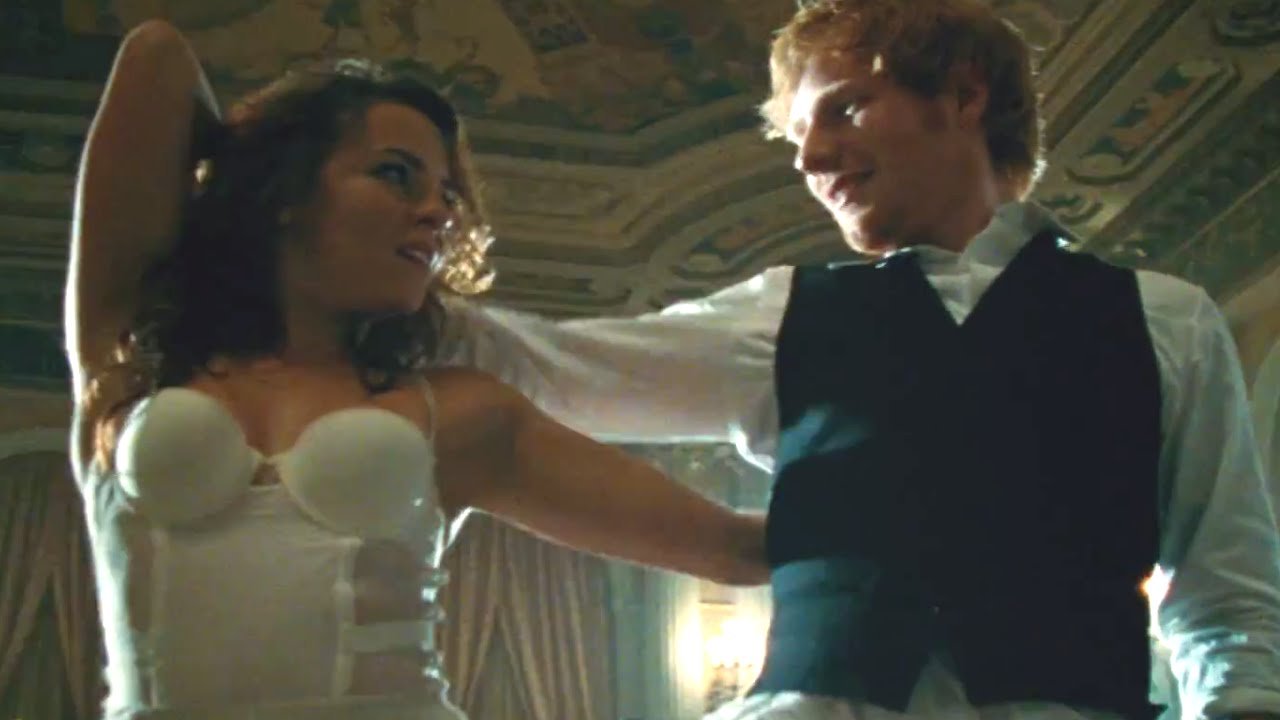
The opening note arrives before anything else, a single sustained tone that settles the room before a word is sung. ‘Thinking Out Loud’ is one of those songs that has crossed so many occasions, weddings, anniversaries, quiet evenings, that it risks becoming furniture. This performance does not let it. From the first verse, the delivery earns the lyric back.
When the words do the heavy lifting
The song opens on a specific kind of fear: the body slowing, the hair thinning, the hands losing their grip on guitar strings, and still asking whether love holds. ‘When your legs don’t work like they used to before,’ the lyric begins, and it does not reach for sentimentality to make the point land. It reaches for candor instead. The verses catalogue the small erosions of time, failing memory, fading crowds, a name no longer recognized, and then pivot on a single act of faith. ‘I know you will still love me the same.’ That line is not a question. It is a decision.
The chorus lifts out of that quiet into something more open: arms, stars, a heartbeat, the physical anchors of closeness. ‘Kiss me under the light of a thousand stars’ is a line that could tip into greeting-card territory, but the melody holds it honest, pulling it down before it floats away.
The part of the song people quote without realizing it
The bridge that returns in the final movement, ‘la, la, la, la, la, la,’ earns its place because of everything that came before it. By the time the words drop away, the feeling has already been made precise enough that syllables are enough to carry it. The song closes three times on the same phrase, ‘right where we are,’ and each repetition means something slightly different: a location, a choice, a conclusion.
The lyric ‘your soul could never grow old, it’s evergreen’ is the song’s most unguarded moment, the one line where the writer stops hedging and simply states a belief. It lands because the rest of the song has spent two verses earning the right to say it.
A specific image from the final verse
The detail that stays is ‘when my hands don’t play the strings the same way.’ It is a songwriter writing about losing the ability to write, a loop that would be precious if it were not so plainly true. It is the kind of line that only lands when the person singing it could actually mean it.
The final chorus lands on ‘right where we are,’ and the performance holds that last note a beat longer than expected, not for drama, but because the song has not finished deciding something.
The opening note, the one that arrived before anything else, is still in the room when it ends.