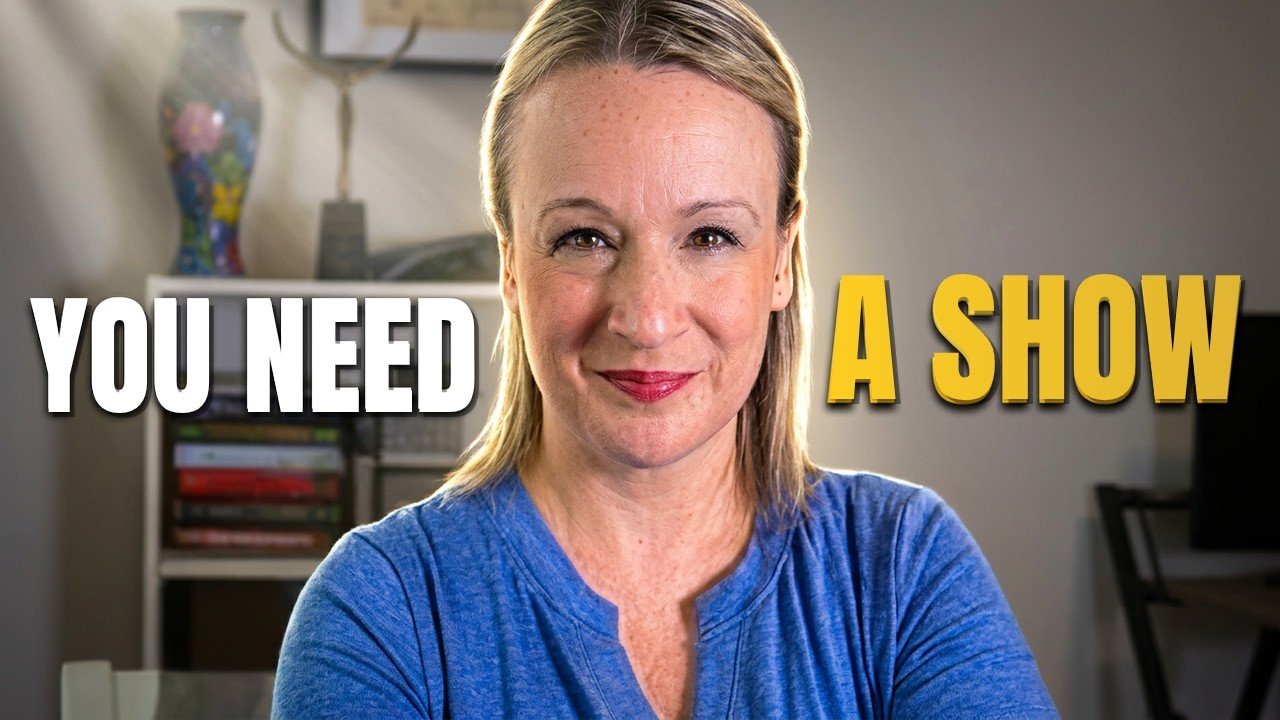
Daryn Strauss had been making what he called a bold claim for about a year before YouTube handed him the proof. The claim was simple: social media is becoming television, and the platforms are quietly rewarding the same things television has always rewarded, meaning shows, recurring formats, recognizable characters, and reasons to come back. Then YouTube shipped its new Shows feature, and most creators immediately started asking how to use it. Strauss, a Writers Guild Award-winning creator and producer, thinks that is the wrong question entirely.
What YouTube actually built and why it matters
The Shows feature itself is, on a technical level, a cleaner playlist. YouTube Partner Program members can now designate playlists of related videos as official shows, complete with a dedicated show page, seasons, episodes, and a made-for-TV banner that surfaces the content on the YouTube TV homepage. Strauss read the platform’s own announcement language aloud, and three phrases jumped out: ‘high-quality videos, consistent themes, and stories across episodes.’ Those are YouTube’s own words in their own rollout post, and they land less like a feature description and more like a platform philosophy statement.
The deeper context is what YouTube has been optimizing for over the past several years. The platform is now the number one TV streaming service, and its engineering priorities have shifted from individual video discovery toward session time: not just getting someone to click, but keeping them watching the next video, and the one after that. For YouTube, longer sessions mean more ad revenue. For business owners, that has historically meant a problem, because the standard playbook was to use YouTube to drive viewers somewhere else, toward a sales page, a funnel, or a community. Strauss puts the conflict plainly: ‘YouTube wants viewers to stay on the platform, but your business model has always depended on driving them off.’
The showrunner mindset that changes the math
His argument is that most business owners are thinking like marketers, which means treating each video as an ad optimized for a single conversion. A show works differently. ‘Almost nobody buys from someone after watching one video, no matter how well you structure it for a conversion,’ Strauss noted. ‘They buy after they’ve watched five videos, or 10 videos, or even 20 videos, not because you convinced them, because they started to know you.’
The practical shift he recommends is picking one of four narrative quests to anchor a channel: being in a life transition, battling an antagonist, solving a mystery, or being on a mission. That quest stays consistent across every piece of content, and then the creator identifies a character role, whether that is a visionary, a problem-solver, an underdog, a rebel, or a sage. The format that follows can be modest: a weekly trend breakdown, a client journey from problem to breakthrough, a documented company build. The point is that when the structure exists, the weekly content question changes from ‘what should I post?’ to ‘what is the next episode?’
The trend is not isolated to YouTube. Instagram has been shifting toward longer-form serialized viewing, TikTok is investing in what it calls mini-dramas, and Substack has launched a TV app. At YouTube’s recent Brandcast, the platform also announced on-platform revenue streams for creators including memberships and in-stream shopping. Taken individually, these are product updates. Taken together, they point toward a single direction: platforms are being architected for return visits, not one-time clicks.
The moment the shift clicked into focus
Straus recalled sitting with the realization that YouTube’s new infrastructure, the show page, the TV banner, the episodic structure, was essentially the platform building the scaffolding for something it had already decided to reward. The feature is not an invitation to become a Hollywood studio. It is an infrastructure signal about which kind of creator survives the next few years.
A made-for-TV banner on the YouTube homepage, attached to a series a single consultant or coach built from their living room, sits quietly on a platform that has already decided who it is becoming.
 Wake up to Only Happy News!