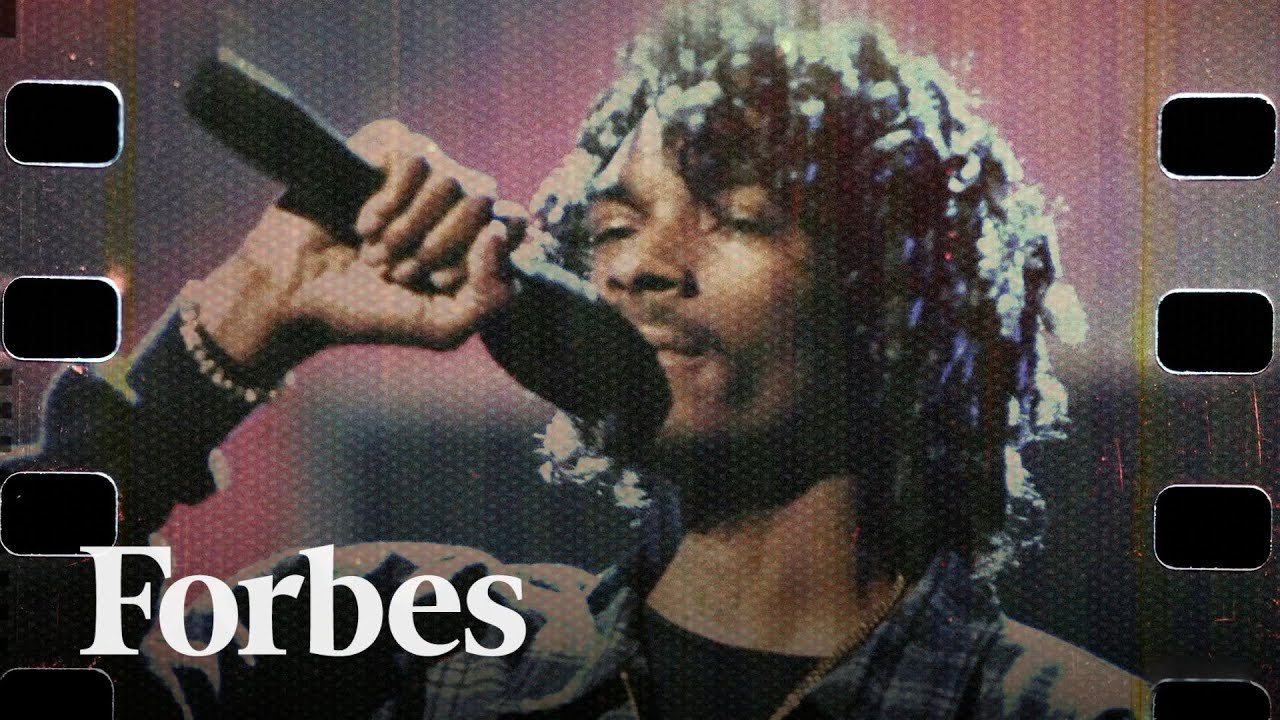
Snoop Dogg settled into his chair at the Forbes Life interview just a few weeks after the 2024 Summer Olympics in Paris, still carrying the energy of a run that had taken him from Death Row Records to the Olympic torch relay and every unexpected stop in between. For anyone watching him work a global stage with that unmistakable ease, the admission that followed was genuinely startling: he used to be terrified of the camera. Thirty years of reinvention, from convicted felon to children’s music creator to cannabis industry advocate, hinge on a single discipline he had to teach himself without any help.
Learning the spotlight on the fly
There were no media training sessions at Death Row in the early ’90s. No etiquette classes, no coaching on how to hold a camera’s gaze. ‘We had to learn on the fly,’ Snoop said plainly, ‘through experience and doing it over and over again.’ The breakthrough came when he borrowed something from his playing days: in a big game, when the lights were brightest, that was when he performed at his highest level. He consciously transferred that same competitive instinct into every camera he faced after that, treating the spotlight not as a threat but as a cue to elevate.
The preparation behind the apparent effortlessness is just as deliberate now. Before any appearance, he studies the topic until he can move freely around it, jump into a tangent, absorb an unexpected question. ‘I like to keep my hands on the pulse of what’s cracking,’ he said, and the formula is the same whether the subject is cannabis policy, grandparenting, or Olympic broadcasting.
From a $100,000 St. Ides check to gin in the grocery aisle
The business evolution follows a clear internal logic. His first real lesson in brand power came when St. Ides Malt Liquor wrote him a check for $100,000 in the early ’90s. ‘I was excited because I had never seen three zeros on a check,’ he recalled. That early deal planted a seed: rappers were being used as marketing engines for other people’s companies, and the math, he eventually realized, never worked in the artist’s favor.
His gin and juice partnership is the corrective. The song from 1993 had kept growing across genres for three decades without anyone actively tending to it, which made the case for the product almost self-evident. He also chose gin deliberately, a lane of the spirits market that, in his assessment, does not perform well commercially, leaving room for a new entrant to own it. The same ownership logic drove his reacquisition of Death Row Records. ‘When you start off as a player, the dream one day is to be a coach, and then the next dream is to be an owner,’ he said. Taking a $10 million endorsement check on a brand that earns $500 million, he pointed out, leaves you with roughly $200,000 after taxes, a spouse’s share, and the children’s share. Ownership changes that arithmetic entirely.
The Snoop Youth Football League (SYFL), which he ran hands-on for the first eight years before building a team to run it without him, is the emotional engine underneath all of it. Watching kids between the ages of 5 and 13 grow into young adults, some eventually reaching the NFL, is what he named as his primary motivation for operating across so many industries at once. ‘They’re inspiring me while I’m inspiring them,’ he said.
The man who turned down escargot at Martha Stewart’s table
When asked what a 19-year-old Snoop Dogg would say about eating escargot with Martha Stewart, he shut it down without hesitation: ‘You can put a pretty word on it all you want, try to make it cute, fry it, put seasoning salt on it. I’m not with no snails.’
The full-circle image he offered for where he is now came through the Olympics metaphor: when he was handed the baton, most people were already four or five laps in. But at the pace he has been running, he has lapped them. The race he is focused on winning now is not just financial. It is stability, peace, harmony, and self-knowledge, and the goal is to hand that baton to his grandchildren far enough ahead that when his spirit drifts away, they keep moving in it.
See why Snoop Dogg Built Doggyland So Kids Could Learn That Love Is Already in Their Hearts
 Wake up to Only Happy News!