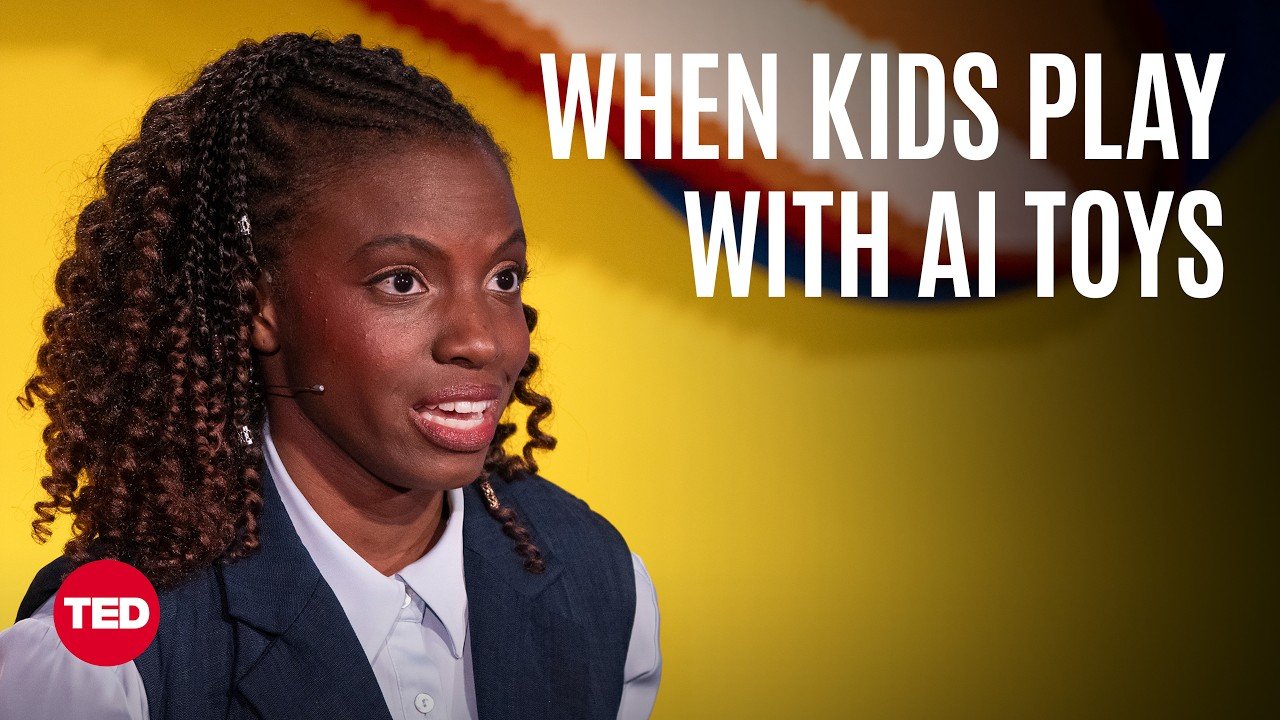
Randi Williams was standing in a study room at MIT, ready to introduce a kindergartener to Tega, a fluffy social robot built to help young children learn to read, when the five-year-old stopped her cold. ‘No thanks,’ the girl said. ‘I know all about robots. I have an Alexa at home, and she’s my best friend. Watch this.’ Then the child proceeded to demonstrate how Williams’s own robot worked. For any parent who has watched a small child navigate a voice assistant with more confidence than they navigate a dinner fork, that moment will land like a bell. Williams, an MIT researcher and founding member of Day of AI, a nonprofit building AI literacy opportunities for millions of children worldwide, has spent the better part of a decade watching exactly this dynamic play out, and she has a very specific idea about what to do about it.
When the machine disappears inside the toy
Williams opens with a piece of design history that reframes the whole problem. In the early 1900s, radios were tangles of exposed wires and glowing vacuum tubes, and hardly anyone wanted one. Then, in 1929, manufacturers hid the machinery inside a sleek Bakelite plastic shell, and the radio became a cultural phenomenon overnight. The tradeoff was transparency: once the machine vanished behind the shell, people stopped being able to see what was going on inside. Today’s AI devices, Williams argues, have been ‘Bakelited’ in exactly the same way, hidden behind frictionless interfaces, friendly voices, and children’s toys.
To understand what children actually make of this, Williams ran a study with 30 children between the ages of three and eleven, putting them in a room with toy robots, talking dolls, text-based chatbots, and virtual assistants including Alexa and Google Home. One girl, passionate about sloths, asked an Alexa what sloths eat and received a polite non-answer. She thought for a moment, then picked up a second Alexa. ‘I’ll see if this one knows,’ she said. The confusion was genuine, and, Williams notes, that confusion carries real risk: research in child-robot interaction shows that the limitations of AI can make children vulnerable to manipulation, accidental exposure to inappropriate content, and security breaches.
Teaching a robot the wrong rules on purpose
The practical answer Williams has developed is to use the thing children already do naturally: break stuff. Kids probe AI devices constantly, asking an Alexa how old it is, asking a toy robot car whether it can jump, asking Google Home whether it is acceptable to eat it. Williams channeled that instinct into a robot she built called PopBot, whose body is made entirely from LEGO bricks and which teaches machine learning through Rock, Paper, Scissors. Children first teach PopBot the rules of the game, then play it repeatedly while PopBot identifies their patterns and tries to predict their next move. For children between four and six, it quickly becomes very difficult to win.
One frustrated boy became the unlikely centerpiece of her most useful lesson. Williams suggested he teach PopBot the wrong rules so he could win every time. He loved the idea. Afterward, she asked him a single question: ‘If you can teach your PopBot the wrong rules of Rock, Paper, Scissors, how do you know Alexa was taught the right ones?’ What followed, she said, was a real conversation about trust, verification, and the fact that AI is not magic. It is, as she put it plainly, ‘a set of rules written by people.’
The question worth asking at dinner tonight
Williams’s practical advice requires no engineering background. The next time a question gets answered by a smart toy or AI chatbot at the dinner table, instead of accepting the response, ask aloud whether the family agrees with it, and wonder together who wrote the rules that made it answer that way. ‘You don’t need to know the answers to all these questions or become some sort of AI expert,’ she said. ‘What children need is a model of what it means to be a curious user of AI.’
When the talk’s moderator, Chris Duffy, pressed her on the gap between parenting ideals and the messy reality of a child encountering AI in places a parent cannot always control, Williams reached back past the current panic: ‘There were books and then the radio and then TV and then the internet, and now it’s artificial intelligence. The advice from then still rings true now: don’t leave children on their own to figure it out.’
A LEGO robot sitting on a table, waiting for its next move
In a corner of the MIT study room, PopBot, assembled entirely from LEGO bricks, sits ready for another round of Rock, Paper, Scissors, its rules currently accurate, its patterns not yet learned.
The kindergartener who once showed Williams how her own robot worked is somewhere out there, probably still talking to an Alexa. The difference, if Williams’s work lands the way she intends, is that the next child in that chair will know they are allowed to teach the machine the wrong rules, and ask why it believed them.
 Wake up to Only Happy News!