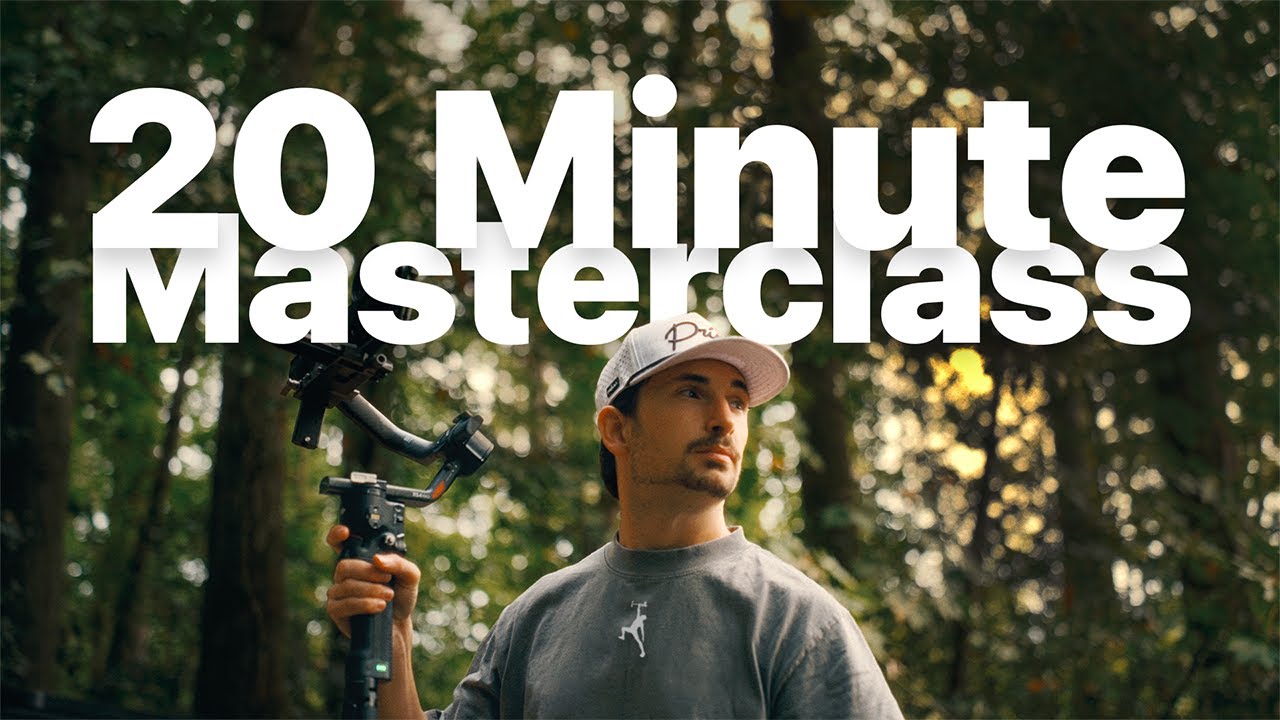
Casey Neistat built some of his earliest viral work with nothing more than a point-and-shoot camera and a clear idea of what he wanted to say. That origin story sits at the heart of what Full Time Filmmaker founder and educator Kyle Shurtz set out to prove: that gear price has almost nothing to do with whether a video is worth watching. For anyone standing at the beginning of a filmmaking path, feeling crushed by the gap between their setup and the work they admire, the roadmap Shurtz lays out is blunter and more practical than most tutorials dare to be. It moves from camera buying to client closing in seven steps, and it starts with the camera already in your pocket.
What to buy when you have almost nothing to spend
The first practical move Shurtz recommends is opening Facebook Marketplace and searching for entry-level bodies: the Canon EOS Rebel series, the Sony a6000 series, or older Panasonic Lumix models that still deliver strong results for beginners. Pair one of those with a sturdy tripod, a basic shotgun microphone for clean audio, and an LED light with a softbox, and the entire rig can come together for a few hundred dollars if you shop carefully. For anyone whose budget is tighter still, the iPhone 15 Pro or newer shoots in a professional-grade codec and color profile called ProRes Log, which gives real control in post-production similar to dedicated cameras.
Once there is a camera in hand, the next step is understanding the three controls that govern every image: ISO, shutter speed, and aperture. Shurtz recommends a specific starting sequence. Set shutter speed first by doubling the frame rate, so 24 frames per second becomes a 1/48 shutter for natural motion blur. Then open or close the aperture to shape how much background blur appears. Finally, push ISO only as high as the camera’s base ISO, the setting where dynamic range peaks, and reach for an ND filter if daylight is still blowing out the image. ‘Think of it as sunglasses for your camera,’ Shurtz says, describing the ND filter’s role in keeping ideal settings intact under harsh sun.
Lighting, story structure, and the edit that turns flat footage cinematic
Lighting, in Shurtz’s ranking, matters more than any other single element. His starting point is a two-light setup: a key light placed at roughly 45 degrees to the side of the subject to build soft shadows and depth, plus a backlight or hair light diagonally behind to separate the subject from the background. The pro shortcut he keeps returning to is shooting on the shadow side of the subject, which adds texture and dimension without any additional gear.
Planning follows lighting. Before turning on a camera, Shurtz maps the shots in a notebook, sketches aside, rough descriptions are enough. Music often drives that process: finding a track that sets the mood first, then visualizing footage to match its rhythm. In editing, the sequence is practical: organize all footage into folders, choose selects that support the story, lay a music track or voiceover as the foundation, then add sound effects like risers or drum hits at key moments and overlays like film grain to add texture. A free LUT applied during color grading can pull flat, dull footage into a finished-looking cut in a matter of minutes.
For the business side, Shurtz outlines five steps toward a first month of real income: define the ideal client, build brand identity around what that client responds to, create a package that solves a specific content problem, start pitching people you already know, and close with a prepared proposal and a clear question about what success looks like to them.
The book a burned-out filmmaker kept coming back to
Early in his own career, Shurtz found himself in a loop of believing he had no original ideas and was not improving fast enough. The book that shifted his thinking was ‘Steal Like an Artist’ by Austin Kleon, which reframed the problem: nothing is original, every creative idea is built on something else, and there is no finish line where you have finally made it.
The full course Shurtz built around these principles, Full Time Filmmaker Premium, carries over 700 training videos and a private community of more than 30,000 members across more than 100 countries. A 30-day money-back guarantee covers the enrollment, and the program’s own data shows only 4 percent of purchasers have ever requested a refund.
For a beginner staring at a borrowed lens and an empty hard drive, the entry point Shurtz returns to is the same one every time: take the camera somewhere, change the three settings manually, and watch what happens to the image. The rest follows from that.