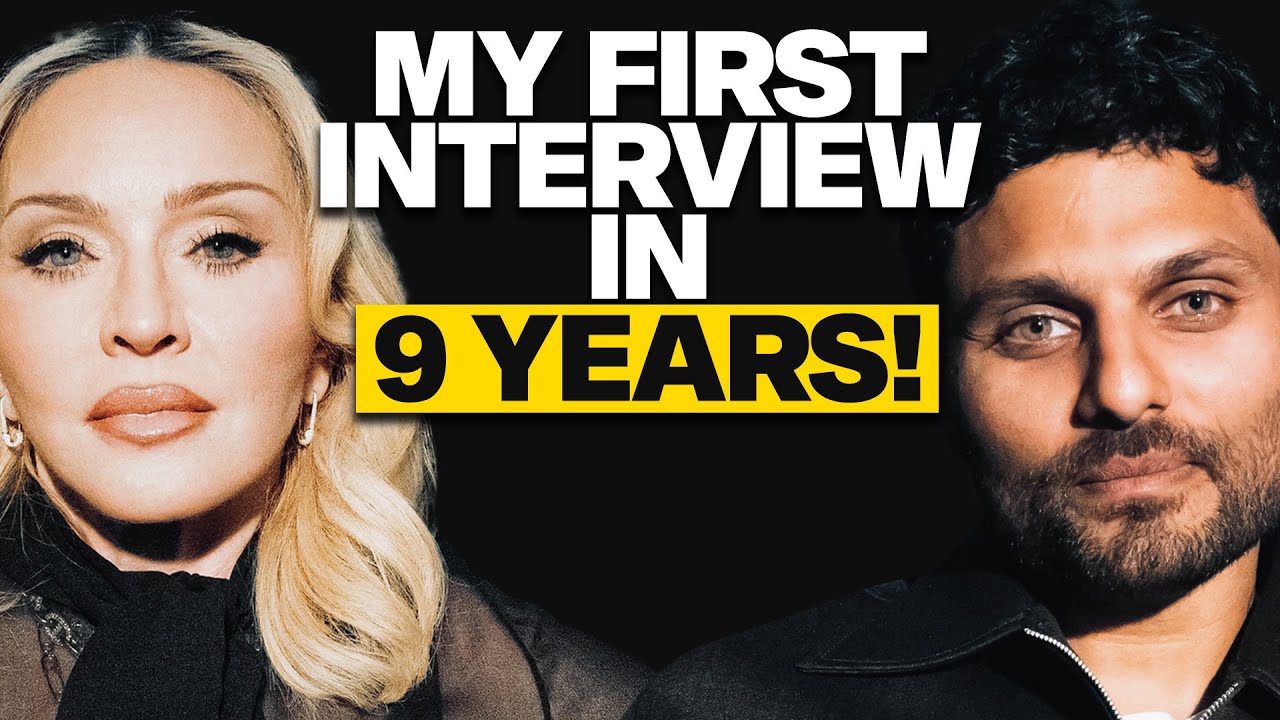
Madonna was sitting in the back row of a Los Angeles classroom on folding chairs, surrounded mostly by men, when she decided nobody there was going to bother her about who she was. For someone who had spent years unable to move through a room without the weight of recognition, that anonymity was the hook. And what followed that first class in 1996 was not a phase or a celebrity detour into wellness trends, but a 29-year daily practice that she credits, plainly and without drama, with saving her life.
Why she started asking questions she had no answers to
By the mid-1990s, Madonna had the career, the money, the fame, and the physical things people assume will make them happy. She had none of the happiness. She had studied Ashtanga yoga with teacher Eddie Stern, who once told her that as long as she was breathing, she was practicing. A painting on the wall of his studio read ‘desire and detachment,’ and the idea that you could want everything in life while refusing to be enslaved by its absence began to take root. But it was pregnancy with her oldest daughter Lola that cracked everything open. She describes it as the moment she realized she was ‘just a meteor’ moving through the world on survival instincts and ambition, with nothing real to pass on.
A woman she knew vaguely, a costume designer at a dinner party, mentioned a class near a synagogue and a teacher named Eitan. She went. She sat in the back. She kept going for years.
She has studied with that same teacher ever since. Her journals from those early classes fill what she calls ‘a zillion notebooks.’
The custody battle, the ICU, and what radical acceptance actually costs
Madonna was direct about the moments when the practice was not an abstract comfort but a lifeline. During a custody dispute over her son, she would lie on the floor of her dressing room sobbing before walking out to perform every night on tour. She described feeling as though someone was trying to kill her. ‘I really thought it was the end of the world,’ she said. The lens she eventually found was that her own early abandonment, losing her mother when she was five, made the threat of losing a child feel like life repeating itself at full volume, and that not being able to accept that reality was the source of the suffering, not the event itself.
The harder example came more recently. She was rehearsing for a tour when a bacterial infection put her in an ICU, unconscious for four days, on a ventilator. After waking, she was too weak to stand and had no timeline for recovery. Her teacher told her: ‘The sooner you accept what’s happening to you and that you don’t know when it’s going to end, the sooner it’s going to end.’ She said it made immediate sense and immediate practice were two completely different things.
Forgiveness followed a similar arc. For years she did not speak to her brother, someone she had come to feel was an enemy. When he became ill and reached out saying he needed help, she went. She held his hand. ‘I love you and I forgive you,’ she told him. The relief, she said, was physical, like setting down weight she had forgotten she was carrying. He has since died. She wrote a song for him called Fragile, and another called Forgive Yourself, whose chorus she put simply: ‘If you can’t forgive me, forgive yourself.’
Teacher Eitan, joining the conversation after sitting in on the full exchange, put the practice into four steps for anyone in a moment of lack or fear: pause and name it as an opportunity, embrace the difficult feeling rather than rushing to fix it, tell yourself that all the light you need is already within you even when logic argues otherwise, and when the reactivity settles, ask what the lesson is. He described the condition that makes this hard as ‘certainty beyond logic,’ a trust that the struggle is for your best before any evidence arrives to confirm it.
Madonna described the ongoing work plainly. ‘I go to that sooner,’ she said, talking about the question of what a difficult moment is trying to teach her. ‘Than I did before.’
The notebook she still carries
A specific detail sat quietly in the middle of the conversation: those handwritten journals, stacked from nearly three decades of weekly classes, full of notes taken in a room where nobody asked for her autograph.
She still takes notes. The roof of her London house has a burst pipe. She is trying not to be attached to how it gets resolved.