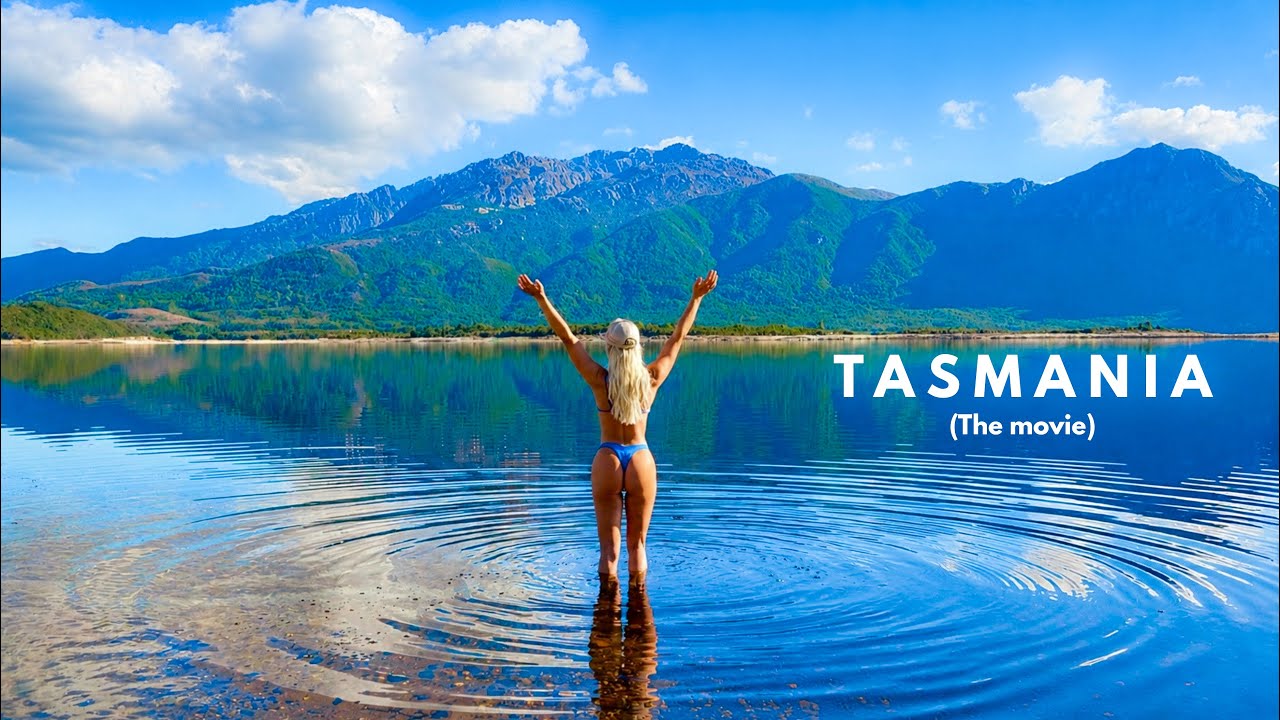
Molly Dixon stepped off the Spirit of Tasmania in the north of the state at Devonport, vehicle loaded, fishing rod stowed, and 150 days of Australia‘s only island state stretching out ahead of her. For anyone who has ever wondered whether a place can genuinely exhaust superlatives, Tasmania answers that question fast. The crossing alone costs around $2,000 return for a traveler with a vehicle and a deluxe cabin, a figure that sets the stakes before a single campfire is lit.
Free camping unlike anything else on the continent
The free camping in Tasmania operates on a different level than the rest of Australia. Dixon used Hea Maps, Wiki Camps, and Google Maps to find spots that would, in most other states, cost money and still deliver less. Her first night landed her at Lake Cathina out on the west side of the state, a total fire ban in effect across the whole region, dinner a simple veggie soup cooked quietly in the warmth. The pattern repeated itself for months: lakefront sites entirely to herself, beachfront campgrounds at Dora Point where the sites are undesignated despite having numbers painted on them, a stretch of sand on Bruny Island at Cloudy Corner hard and compact enough to drive straight onto without dropping tire pressure. When a crowded campground at the Bay of Fires left no room along the five beachfront sites, she simply drove fifteen minutes and found a lakefront spot with the whole place to herself instead.
The Bay of Fires drew her east before she looped back west: 29 km of white sand, crystal clear turquoise water, and the vibrant orange granite boulders the stretch is famous for. Further south, a ferry from Kettering costing $55 and taking around fifteen minutes delivered her to Bruny Island, home to roughly 800 permanent residents, renowned for oysters, cheese, honey, and premium whiskey. Walking the rocks near Jetty Beach Campground one morning, she spotted two abalone, measured one against the legal gauge, pried it free, and cooked it that night in butter with a garlic and herb blend. ‘That is actually way better than I thought it was going to be,’ she said, calling it sea bacon.
The trout, the switchbacks, and the southern lights
The fishing obsession ran the full length of the trip. A one-year trout license cost $93.50, and Dixon learned from the issuing officer that a tagged trout somewhere in the river system was worth $25,000. It took weeks, multiple lures, waders she bought specifically to wade waist-deep, and a switch to a floating lure before a wild brown trout finally took the bait. ‘Trouts are real, guys,’ she said, still catching her breath. The fish she kept measured just over the 22 cm legal minimum for that river system. She pan-fried it riverside in lemon and butter with lemon and herb seasoning and gave it ten out of ten.
The west delivered different rewards. The road into Queenstown carries 99 distinct switchbacks, the town recording over 2,400 mm of average annual rainfall and housing only 1,800 residents. Dixon hit it on a rare clear day. She pushed a further 40 km to Strahan, Tasmania’s most remote town, population 650, arriving just in time for a beach sunset backed by mountains. A traveler named Craig from Queenstown had gifted her Red Rock Lobsters, which she cooked that evening into a garlic chili pasta over a backdrop she called the nicest she had ever had while cooking dinner.
The final nights took her to the South Arm region, south-facing coastline where surfers chase big swells. The clouds thinned enough that her phone camera, held up in night mode with a long exposure, pulled vivid green out of the sky. The southern lights were visible. She had spent the entire trip wanting to see them.
The chair someone stole and folded the towel for
At Cockle Creek, the literal end of the road in Australia at 148 km south of Hobart, Dixon returned from a 15 km return hike to find her camp chair gone. Whoever took it had gone to the effort of folding her towel neatly and draping it over the fence rail beside where the chair had been sitting.
The crossing back to Victoria was rough enough that she took motion sickness tablets and slept through most of it. Standing on the mainland again, she said she already could not wait to return, that six months had barely touched the surface, and that she had cleared only one of the four islands of Tasmania.