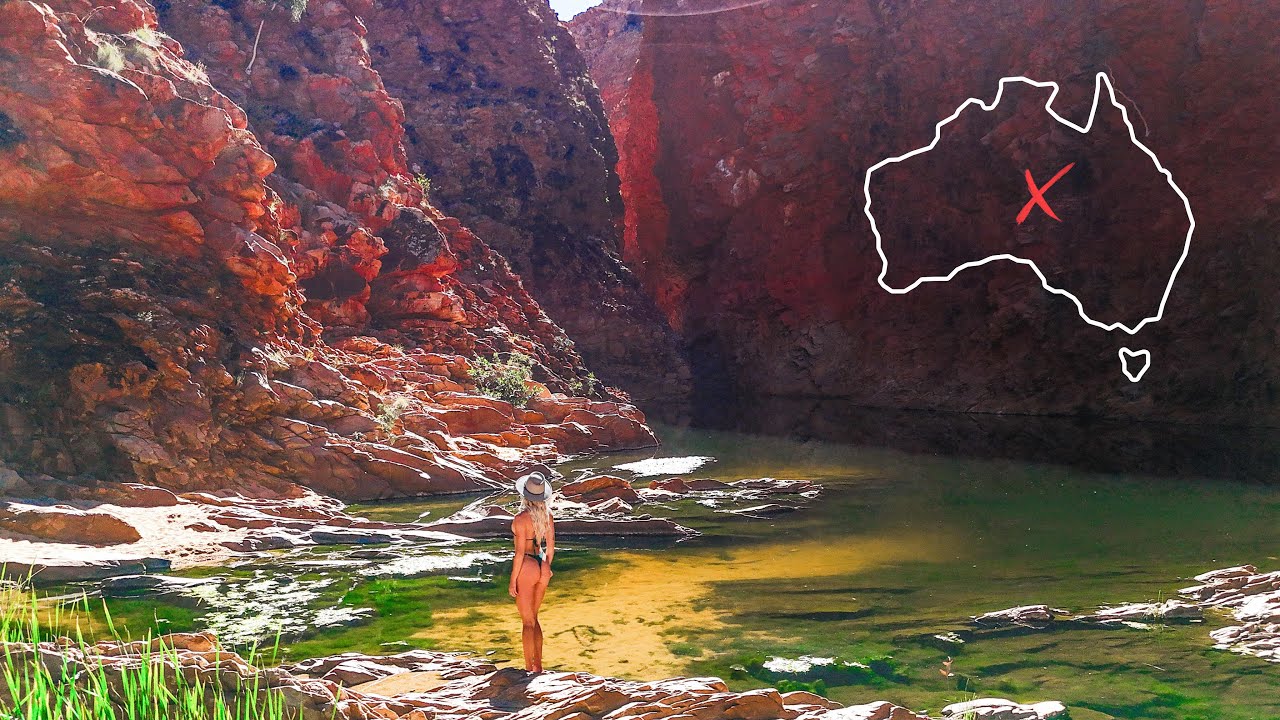
Molly Dixon woke up in a desert gorge with the sun on her skin, birds calling, and not another person in sight, roughly 150 km west of Alice Springs and thousands of kilometres from the nearest beach. With 87% of Australia‘s 28 million people clustered within 50 km of the coast, the vast red interior gets left to its own silence, and that silence turns out to be the whole point. This is what happens when you drive into it anyway.
Red walls, dirt roads, and a gorge all to yourself
The journey east toward Alice Springs began at Ormiston Gorge, where the stillness was immediate and total. From there, a $10 campsite booking at a nearby gorge set the tone for the trip: cheap, close, and utterly unhurried. The campfire that evening served triple duty: warmth against the chill, ambience, and a coal-based oven for a loaded sweet potato stuffed with black beans, diced tomatoes, a chipotle spiced mince, sour cream, and cheese. Cooking it took closer to an hour than the optimistic 20 minutes first attempted, and Dixon laughed at herself for it. ‘This is actually so bloody yum,’ she said, forking into the finished result. ‘I would not add anything different or change anything about this either.’
The temperature swing alone makes Central Australia feel like two different places sharing one postcode. Daytime sat in the comfortable mid-20s. By night it dropped to 2 degrees Celsius, with thermals and tracksuit pants on well before dinner. The region’s recorded extremes run from a high of 50.7 degrees Celsius down to -7.5 Celsius overnight, and the annual rainfall of just 150 to 250 millimetres tends to arrive not as steady showers but as sudden, heavy storms.
Serpentine Gorge, Simpsons Gap, and a road into Alice
Redbank Gorge came next, reached via a dirt road that kept most caravanners away even in peak season, when winter-fleeing travellers from the south flood the dry northern interior. That same crowd-filtering logic applied at Serpentine Gorge, a 2 km return walk that ends at a lookout high enough to see the whole formation from above. Both spots were visited with no one else present. A final free roadside camp on a hill with a sunset lookout, and leftover chipotle mince from the night before, closed out the gorge loop before the drive into Alice Springs.
Alice is home to around 25,000 people and carries a complicated reputation. Dixon addressed it directly: property crime, car theft, and alcohol-fuelled violence are documented concerns, and the caravan parks and shops lock their gates at sundown. Surveillance cameras cover the streets and strict liquor restrictions are in force. She noted she has never personally felt unsafe across several visits, keeps her vehicle locked with belongings out of sight, and has never walked around after dark.
One detail the landscape does not advertise: the camel is the most commonly encountered large animal in Central Australia. Introduced rather than native, the population has grown to an estimated one million and is the largest concentration of purebred camels in the world. Aboriginal and Torres Strait Islander people make up 45% of the region’s total population and speak roughly 20 to 30 distinct traditional languages across the area.
A sweet potato still wrapped in foil
Somewhere in the coals of the first night’s fire, a foil-wrapped sweet potato sits at the centre of the whole trip: the part that took twice as long as planned, refused to rush, and tasted better for it.
By the time Simpsons Gap got its short walk and Alice Springs its brief survey, the overwhelming impression of Central Australia was the same one Dixon kept returning to: a region most Australians live 50 km of coastline away from, where the gorges are free, the crowds are thin, and the temperature drops so fast after sunset that you are in thermals before you have finished dinner.