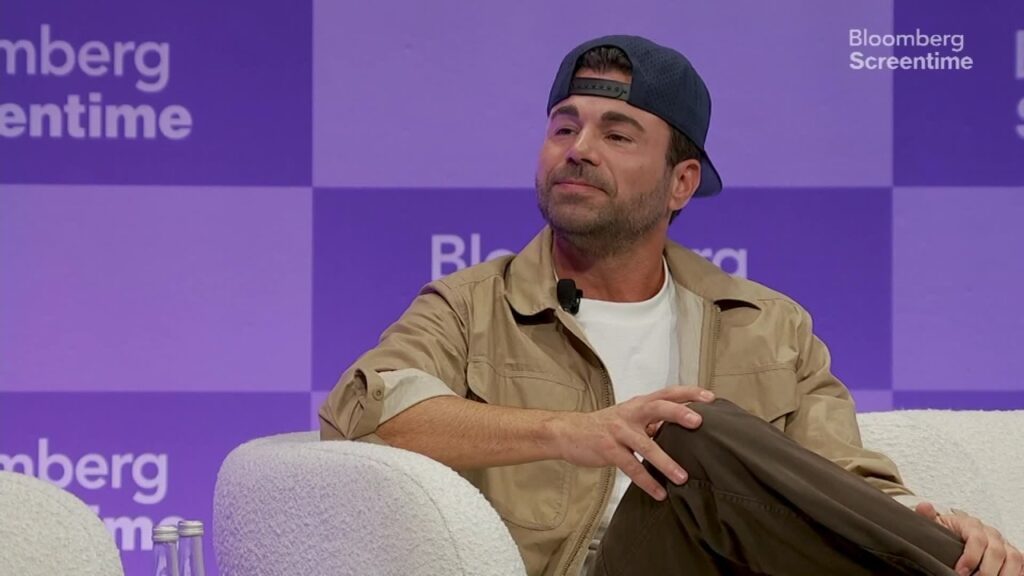
Charlie Chang was 33 years old, working out of his home, and managing a team of more than 50 people spread across Indonesia, the Philippines, France, Germany, and Russia, none of whom he shares an office with, when he decided to explain, in plain terms, how a media company built entirely on educational YouTube content generates roughly $300,000 every single month. For anyone who has ever wondered whether YouTube is still a real business or just a hobby with occasional upside, the answer sitting inside his operation is more concrete and more counterintuitive than most people expect. It starts not with chasing views, but with deliberately avoiding them.
From piano covers and premed rejection to 50 channels
Chang traces the origin back to 2008, when he ran a music channel where he played piano and guitar and had his sister sing. That channel carried him through high school and college before he pivoted toward personal finance and business content around 2017 and 2018. The entrepreneurial instinct had always been there. He sold candy in school, ran a lemonade stand, tutored students in Los Angeles for years, started a marketing company, and launched a clothing brand. His parents had pushed him toward medicine. He went the premed route, did not get into medical school, and eventually decided to work entirely for himself.
The media company that exists today operates roughly 50 channels spanning business information, website building, e-commerce, software-as-a-service, crypto, insurance, personal finance, VPNs, recruiting, course reviews, and music, plus versions of many of those channels translated and manually voiced over in multiple languages. He does not use YouTube’s built-in dubbing feature. Instead, he pays translators in each country to record actual voice-overs and manages the localized titles, descriptions, and thumbnails separately, because, as he put it, ‘YouTube’s dub feature is okay. It’s really not that good if you compare it to an actual voice over.’
Why 80 percent of the revenue comes from affiliate links, not ads
The income breakdown is where the business model diverges sharply from what most people picture when they imagine a successful YouTuber. Ad revenue accounts for roughly 10 percent of the total. Brand deals bring in about 8 percent, and Chang keeps those infrequent by choice. Miscellaneous sources, including course sales, make up around 2 percent. The remaining 80 percent comes from affiliate marketing, links in video descriptions that generate a commission when a viewer makes a purchase.
His reasoning for weighting it that way is deliberate. Brand deals pay a flat fee regardless of how well a video converts. Affiliate marketing pays nothing if the video flops and potentially hundreds of thousands of dollars if it performs. A single video in his catalog has, on occasion, crossed that threshold. He prefers not knowing the ceiling going in. That uncertainty, which he acknowledges is ‘a little bit scary,’ is precisely what he believes removed the cap on his income.
The company hit seven figures for the first time in 2021 and has held around $1.5 million annually for a couple of years before continuing to grow. Monthly revenue can dip into the mid-$200,000s or climb into the high $300,000s depending on the period.
His counterintuitive advice for anyone building toward similar numbers is to stop chasing broad views entirely. On his recruiting channel, 200 highly specific views can generate more revenue than a general video with 10 million views, because those 200 viewers might include one or two paying clients. If a client is paying several thousand dollars, he noted, ‘you can quickly see how the math maths.’
The moment one channel stopped meaning anything
Somewhere inside a ClickUp calendar, there is a content schedule for a channel with only a few thousand subscribers that quietly outearns channels with hundreds of thousands of followers. No name is attached to it publicly.
The fuller picture is a business built on volume, patience with failure, and the discipline to measure output rather than revenue. Chang wakes around 6 a.m., hits the gym, and spends his day moving between filming, planning sessions, and a CEO dashboard built inside a Google Sheet, where his team logs the key performance indicators for every active channel. Most of his direct communication runs through his COO, who joined the company originally as a personal assistant. The rest flows through Slack, ClickUp, Frame.io, and WhatsApp, across time zones, without a single shared office. The 50-channel operation can spin up a new channel with fresh content in a matter of weeks. Most of those new channels will fail. That, Chang has decided, is the point.