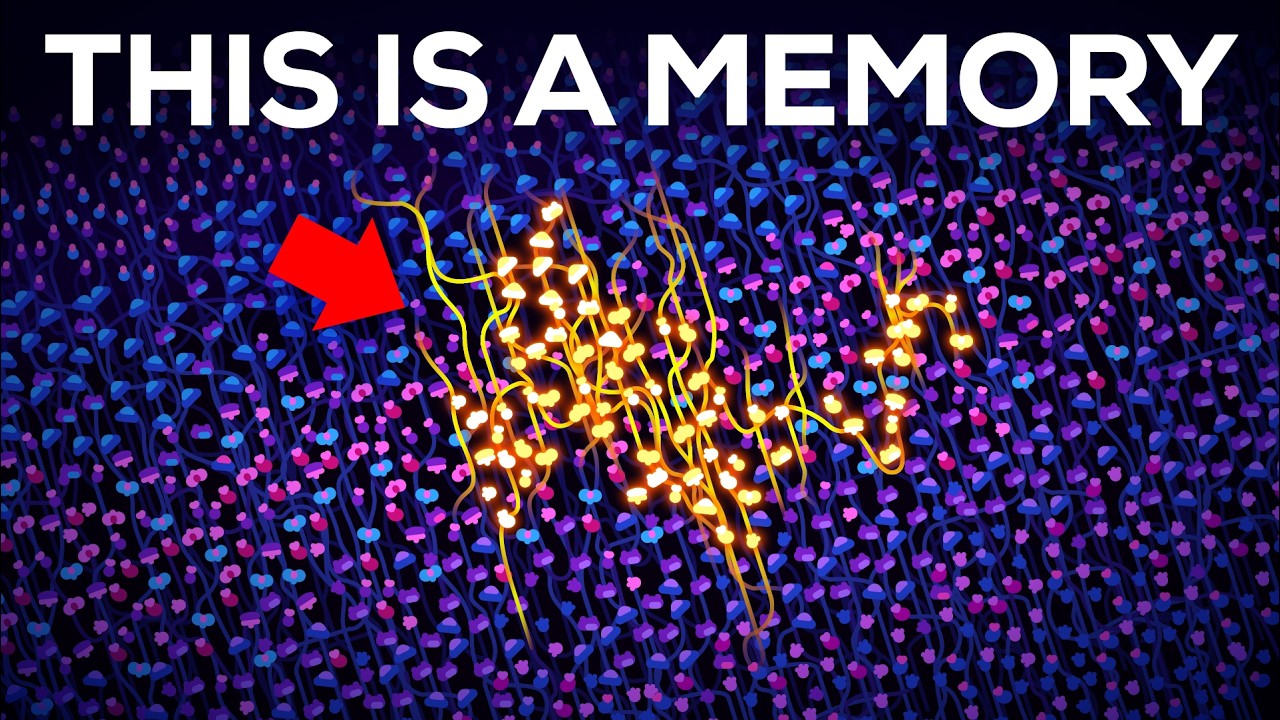
Somewhere in your brain, roughly 86 billion neurons are quietly doing something extraordinary: turning a fleeting moment into something you can relive years later. That process, which feels effortless from the inside, is one of the most complex mechanisms in the known universe, and it comes with a catch that most people never suspect. Every time you pull up a memory to examine it, you are also, without realizing it, changing it.
The assembly that fires together, wires together
The basic unit of thought is not a single neuron but a pattern. When you perceive any moment, neurons across multiple regions fire in a coordinated burst: your visual cortex handles color and shape, your auditory cortex processes sound, language areas decode words, and other networks track your body and emotional state. Vastly simplified, this synchronized pattern is called an assembly, and it is the biological equivalent of ‘you, right now, having this experience.’
Without intervention, that assembly fades like ripples on a pond. The hippocampus, which acts as the brain’s memory librarian, steps in to save it. It creates a rough blueprint of the assembly’s configuration and indexes it alongside related memories. But the new memory is fragile. To survive, it has to compete.
Three forces dramatically improve a memory’s odds. Novelty: an unexpected event, like watching a crow and a squirrel fight over a nut only for a mouse to steal it, fires the assembly strongly enough to demand attention. Repetition: thinking about that animal fight all day and retelling it to everyone deepens the synaptic grooves. And emotion: the humiliation of acting foolish in front of a crush, the joy of beating a parent at Mario Kart, the devastation of losing a pet. The brain’s ancient survival circuitry treats strong feeling as a signal that something matters, regardless of whether it actually does.
When any of these forces are present, something physical happens. Neurons in the assembly literally grow new synapses, fitting together more tightly, like wax warming and melting into a new shape. Much of this consolidation happens during sleep, when the hippocampus replays the day’s assemblies over and over. As Kurzgesagt put it, without proper sleep ‘you’ll be wasting your time’ studying, because the consolidation that converts short-term activation into long-term structure simply does not complete.
Why retrieving a memory quietly rewrites it
Here is the part that changes how you think about your own past. Remembering is not like pressing play on a saved file. The moment you activate a stored assembly, the neurons involved are bathed in chemicals that make them temporarily moldable again. The diorama, in their framing, softens under the spotlight of attention.
And the context flooding in at that moment is almost never the same as when the memory was first formed. If you originally encoded a bizarre animal theft on a tired weekday morning before work, and you are now recalling it at a dinner table while making your friends laugh, that social warmth and humor seep directly into the memory’s structure. New synaptic connections form, others weaken, and when the memory re-consolidates, it has literally changed shape. The next time you recall it, you will remember it as funnier than it actually was.
This is not a malfunction. The brain’s memory system was never designed to produce accurate recordings. It is designed to update your past in light of your present, keeping your personal narrative coherent and useful. The sharpest irony is that the more confidently and vividly you remember something, the more often you have retrieved and therefore altered it.
The wax figurine that keeps melting
On a shelf somewhere in the architecture of a memory, there is a small wax diorama of a squirrel, a crow, and a mouse. It has been retold so many times that the squirrel is probably larger now than it was.
What that scene actually looked like on the morning it happened, nobody can say for certain anymore.