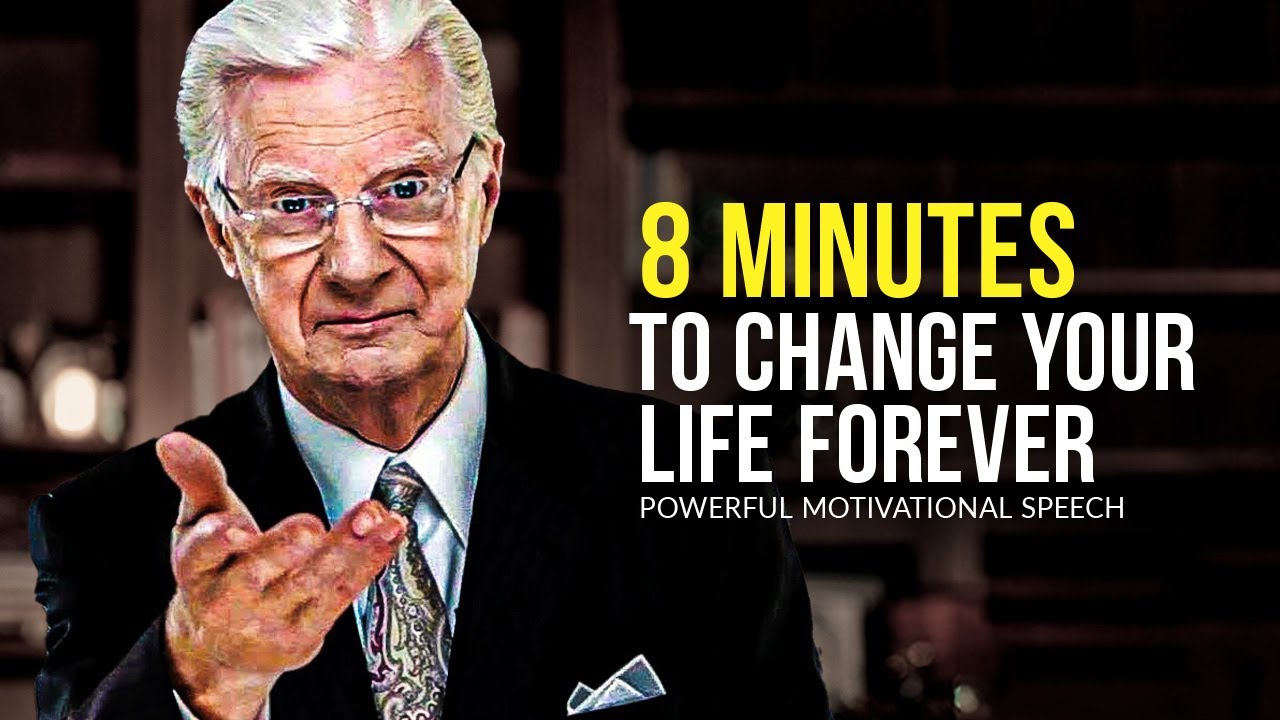
Bob Proctor was earning $4,000 a year and owed $6,000 when a mentor handed him a card and told him to write down what he wanted. If he had pooled every dollar from every person he knew at that time, they probably would not have scraped together $25,000. He wrote $225,000 on the card anyway. What happened next is not a story about luck or hustle. It is a story about frequency, and why most people never tune into the right one.
The law you have never heard of
Proctor is direct about the gap in popular thinking on attraction: the Secret introduced the Law of Attraction to millions of people, but nobody explained the mechanism underneath it. ‘Attraction is a secondary law,’ he says plainly. ‘The primary law is the law of vibration.’ Everything in the physical world, including the table that appears completely still, is moving. Thought, he argues, places a person on a specific frequency, and that frequency determines what they can pull toward them. A person who concentrates on debt stays tuned to debt. A person who concentrates on earning money begins to hear conversations about earning money that were always happening around them, just outside their range.
That is exactly what the card did for Proctor. He had never once thought about earning money before. He had only thought about the debt. The card pointed his attention in a different direction, and by the end of the first year he was earning $14,500 a month cleaning office floors. ‘It was almost incidental to what I was doing,’ he said. The work itself was never the point.
Why knowing is not the same as doing
The harder problem Proctor identifies is the distance between what people know and what they actually do. The conscious mind holds every piece of intellectual knowledge a person has acquired. People know how to eat better, save more, treat others with patience. The subconscious, however, runs on what he calls a Paradigm: deep conditioning installed over years by environment, parents, schools, and employers. The Paradigm controls behavior. The intellect watches. A person who cannot explain why they keep repeating the same patterns is not weak-willed. They are simply running old programming.
Changing results, in his framework, means changing the Paradigm, not studying harder or working longer hours. Napoleon Hill put the same idea into Think and Grow Rich in terms Proctor quotes directly: ‘Riches, when they come in huge quantities, never come as a result of hard work. They come in response to definite demands based upon the application of definite principles.’
The practical method Proctor describes is specific: relax the body fully, visualize the version of yourself you want to become, write a description of that image in the present tense beginning with ‘I am so happy now that,’ then carry it and read it every single day. The repetition is not ceremony. It is how a new pattern gets pressed into the subconscious beneath the existing one.
The card on the table
Somewhere in Proctor’s account is a small index card with $225,000 written on it in his own handwriting, read so many times the edges must have softened.
He never stopped being fascinated by what happened to him after that card. Everything visible in a room, he points out, was first an image in someone’s mind. Every creation happens twice: once in thought, once in the physical world. The tide goes out and comes back. Winter never follows winter. He treated these not as motivational phrases but as expressions of the same precise, studiable laws that govern the rest of the universe, laws he spent decades convinced that almost no one around him had been taught.