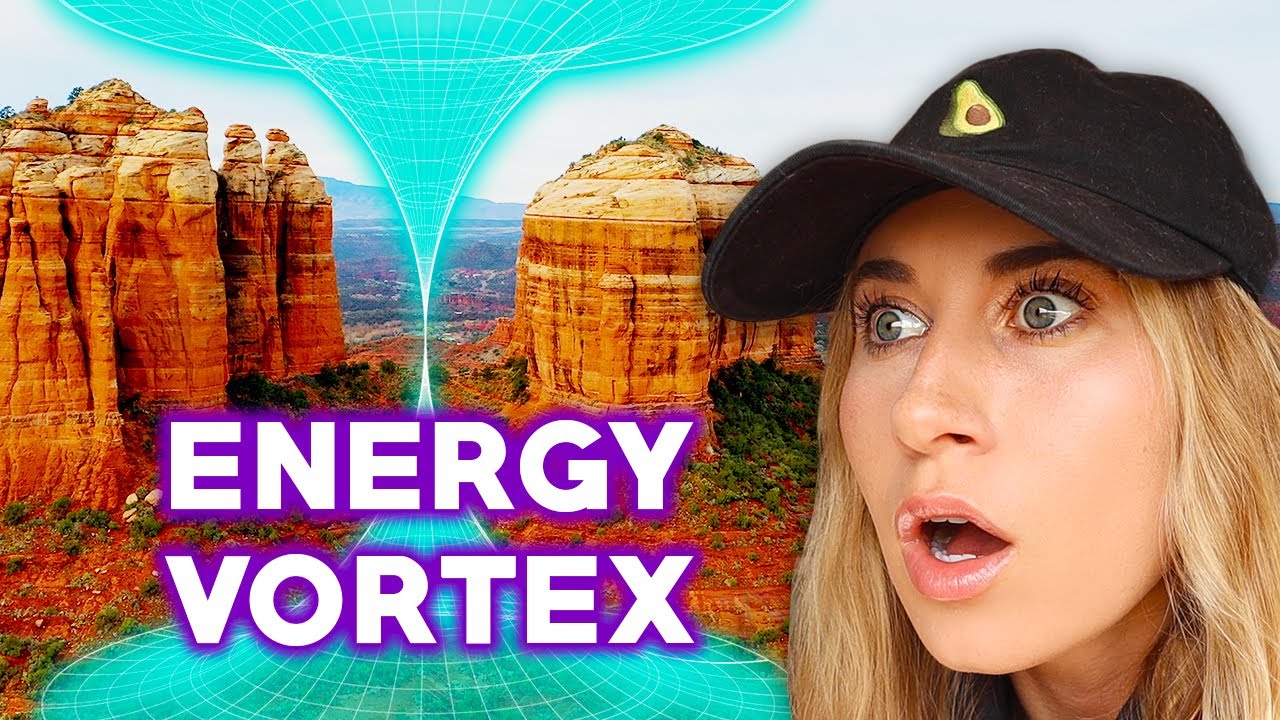
Rahilio pressed the drum and the beat moved through the rock floor, through the canyon walls, and through the body of the person lying in the middle of the mountains outside Sedona, Arizona. For anyone who has ever felt the pull of a place they could not rationally explain, this small desert town about two hours north of Phoenix keeps answering calls it never placed. The explorer from Sky Life had come with a notebook full of conflicting research, a healthy dose of skepticism, and a week to find out whether Sedona’s famous energy vortexes were genuinely transformative or an elaborate marketing scheme aimed at lost souls.
What the MIT-trained scientist actually said
The first stop was a lecture called Scientific Vortex Information, led by Pete Sanders, a well-known Sedona local with an MIT background who has spent decades studying the sites. Sanders was quick to correct a widespread assumption: ‘Does everybody know that before 1979 there were no vortexes in Sedona? Not a single one.’ He paused for the reaction, then clarified that the high-energy meditation sites were always there. What arrived in 1979 was the word ‘vortex’ as a label, imported from Southern California. His working definition stripped away the mystical branding: a vortex is simply a site that makes it easier for people to do prayer, meditation, mind-body healing, or creative thinking. He pointed to superstrings physics, which posits that everything exists in ten or more dimensions, as the framework that makes the idea scientifically credible rather than purely faith-based. The two most accessible upflow vortexes, he said, are Airport Mesa and a second mountain site. Upflow sites, he added, are associated with mountain peaks and are the places to go for stress reduction.
The first attempt to reach Airport Mesa ended in darkness and a wrong trail. By the time the group found the actual site, the cameras were off and the desert was black. But the two traveling companions reported feeling light and grounded at the same time, a state one of them described as ‘superb bliss.’
Scenic Drive through Sedona, AZ by Sandtastic Travels
A canyon ceremony and an altered state
The more revelatory experience came with Rahilio, an original Sedona local who runs spiritual vortex tours and carries a hand-drawn grid map marking intersections of what he calls power spots, including lesser-known canyon sites that do not appear in any Google search. He noted that Native people were forced to leave the Sedona area in 1875 and that many of the area’s more than 100 recognized power spots belong to a tradition that local communities are often protective of, for good reason. ‘For me it is sacred to be on the mountains,’ he said simply.
Deep inside a canyon surrounded by red rock formations, Rahilio conducted a healing drum ceremony. About ten minutes in, something shifted. The mind seemed to switch off, and it became harder to tell where the body ended and the mountain began. Afterward: vivid clouds, sharper color, and a physical release of congestion that had been building all week. Rahilio called it activating the dream mind.
A morning at the Divine Grace Yoga Ashram, suggested by Radika, the owner of a vegetarian restaurant and organic fair trade chocolate factory called the Chocolate Tree, added another layer. The ashram sits beside a year-round river and describes itself as coin-operated in no way, with no interest in worldly gain.
The vortex that stuck around longest
After visiting five sites across the week, the conclusion was measured: single vortex points as literal portals to other dimensions is probably a myth stretched thin by tourism. But the land itself is genuinely different. Meditation came easier. Stillness arrived faster. The more durable discovery was the people Sedona seems to collect, the scientists, the swamis, the mystics with hand-drawn maps, the chocolate makers asking whether every decision supports clean water for children.
John the Uber driver had promised at the start that stepping foot in Sedona’s vortex would change a person forever. That turned out to be mostly true, just not in the way the brochures suggest.
Rahilio’s drum, still in the canyon
The drum sits somewhere in that unnamed canyon, away from the Airport Mesa crowd and the vortex map most visitors carry. The canyon around it does not appear in search results.
The Sky Life journey began with more questions than answers and ended the same way, which, according to almost every person met along the route, is exactly the point. What makes Sedona work is not a power grid beneath the red rock or an intersection of electromagnetic ley lines. It is the particular kind of human being the place keeps drawing in, and what happens when they start talking to each other.